

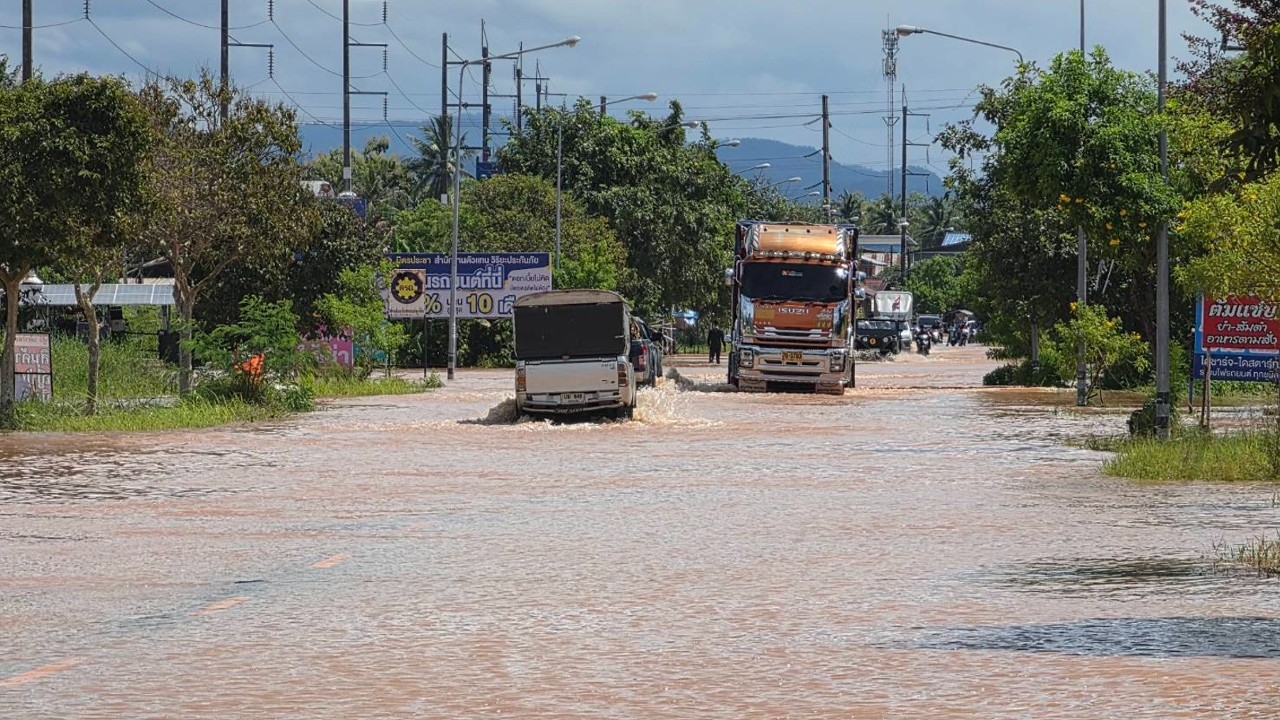
The Director-General of the Royal Irrigation Department has adjusted the water management plan to expedite water discharge through the Chao Phraya Dam to receive floodwaters from upstream areas following persistent heavy rainfall across multiple regions.
On 21 Sep 2026 GMT+7, Mr. Witthaya Kaewmee, Director-General of the Royal Irrigation Department, chaired a meeting to monitor and analyze water situation trends. Relevant agencies attended, including the Meteorological Department, Department of Disaster Prevention and Mitigation, Department of Water Resources, Bangkok Drainage Office, and the Water Resources Information Institute. The meeting took place at the Smart Water Operations Center (SWOC) meeting room at the Royal Irrigation Department in Samsen and was broadcast live via video conference to Irrigation Offices 1 through 17.
After the meeting, Mr. Witthaya Kaewmee stated that the Royal Irrigation Department has been closely monitoring conditions such as weather, rainfall, reservoir levels, and runoff in key river basins, especially the Chao Phraya basin. They have evaluated trends and prepared to adjust water management plans in line with changing conditions to accommodate inflows from upstream areas and minimize impacts on people and agricultural land.
Regarding weather and rainfall, in the past week, many parts of the country experienced heavy to very heavy rain, especially on 19–20 September, with rainfall exceeding 100 millimeters in Phrae, Chiang Rai, Kamphaeng Phet, and Sukhothai provinces. This caused increased runoff in various watercourses. Most recently, Kamphaeng Phet recorded 146 millimeters and Phitsanulok 136 millimeters of rainfall.
In the southern region, the Royal Irrigation Department remains vigilant due to ongoing heavy to very heavy rainfall in many areas, with the possibility of accumulated rain leading to floods or waterlogging in some locations. They have instructed irrigation projects nationwide to closely monitor rainfall, water volumes, and flow trends, particularly in areas with accumulated rain, to effectively manage water and promptly warn at-risk areas.
Regarding reservoir conditions, large and medium reservoirs nationwide currently hold about 55 billion cubic meters of water, representing 73% of their capacity, and can still accommodate approximately 20 billion cubic meters more. The four main dams in the Chao Phraya basin—Bhumibol, Sirikit, Kwae Noi Bamrung Dan, and Pasak Jolasid—hold about 16 billion cubic meters, or 68% of capacity, with about 7 billion cubic meters of additional storage available.
The Royal Irrigation Department continues to monitor reservoirs with high water levels under watch, including Kiew Lom, Pasak Jolasid, Khun Dan Prakarn Chon, and Kaeng Krachan dams. They coordinate closely with the Electricity Generating Authority of Thailand (EGAT) and the Office of the National Water Resources to jointly consider water management measures. The goal is to ensure appropriate water discharge aligned with the situation, prioritizing dam safety, flood mitigation, and impact reduction while maintaining sufficient water reserves for the upcoming dry season.
For the Chao Phraya basin, the recent increased rainfall has raised river water levels. At 06:00 on 21 Sep 2026 GMT+7, the C.2 station in Nakhon Sawan Province recorded a flow of approximately 1,377 cubic meters per second, trending upward from the previous day. The Royal Irrigation Department must gradually increase discharge through the Chao Phraya Dam to about 1,000–1,300 cubic meters per second to control upstream water levels and accommodate incoming floodwater. Currently, the dam discharges around 990 cubic meters per second while managing water through irrigation systems on both east and west sides before releasing it downstream to minimize potential impacts.
Discharging water through the Chao Phraya Dam at this rate may raise water levels along the river downstream by about 0.50–1.50 meters, particularly in lowland areas outside the embankments in Sena, Phak Hai, Bang Ban, Phra Nakhon Si Ayutthaya, Bang Pa-in, and Bang Sai districts of Phra Nakhon Si Ayutthaya Province. However, these water levels do not currently affect communities within the embankments.
The Royal Irrigation Department continues close monitoring and manages water to minimize impacts on the public. They will inform the governors of the 11 provinces in the Chao Phraya basin about the water situation and discharge trends to ensure provinces and relevant agencies can prepare and warn residents in risk areas appropriately.
Additionally, the department has prepared 5,732 units of machinery and equipment—including water pumps, water pushers, water trucks, and various support machines—staffed nationwide to respond promptly and assist people in affected areas. Since 1 May 2026, assistance has been provided to 55 provinces with 647 units deployed.
Mr. Witthaya added that he emphasized all irrigation projects to proactively assess the situation, especially toward the end of the rainy season, by closely monitoring weather, rainfall, and water volumes. They should manage reservoirs appropriately using actual data from water and rainfall monitoring stations, runoff, reservoir levels, and model forecasts as the basis for planning and adjusting water management to suit each area's conditions. This includes both water discharge and conserving water reserves for the coming dry season.
He urged people living along rivers and in lowland areas to closely follow official announcements. The Royal Irrigation Department will continue monitoring the situation and, if conditions change or water discharge adjustments are necessary, will notify provinces and relevant agencies to promptly warn the public.

