

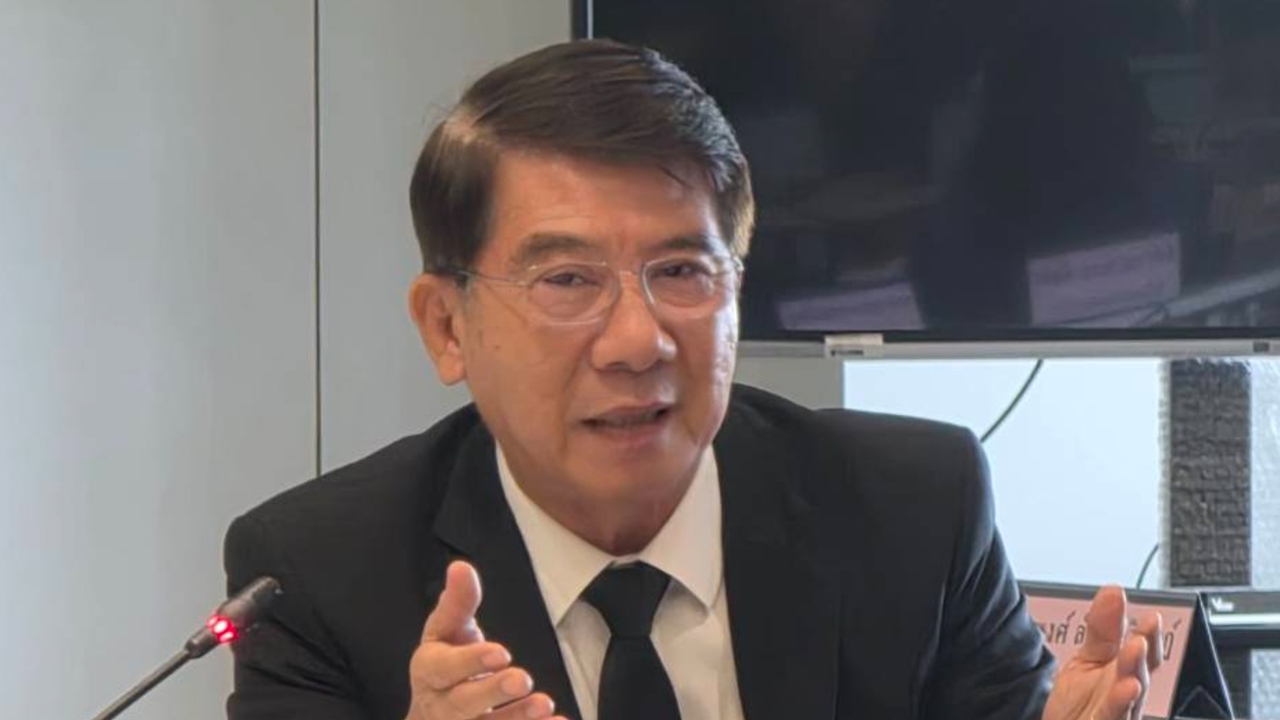
Chaiwut urges the Department of Primary Industries and Mines, Ministry of Industry, to coordinate with the Anti-Money Laundering Commission to unmask the Myanmar mineral import network used as a front for cross-border money laundering and scams.
On 21 Sep 2026 GMT+7, Chaiwut Bannawat, party-list MP of the Democrat Party and former Minister of Industry and MP for Tak, provided information to the Anti-Money Laundering and Drug Suppression Commission (AMLC). He highlighted facts and sent a positive signal for cooperation to tackle illegal importation, transportation, and processing of lead ore along the Thailand-Myanmar border, which may be linked to a network of scam groups and transnational money laundering.
Chaiwut said he came as a representative with decades of local experience. He noted that many operators conduct business honestly and legally, but recently abnormalities appeared among certain individuals buying lead ore at prices higher than the market—about 150,000 baht per unit compared to the normal 120,000 baht. The ore was processed in factories across the border, including nearby Shwe Kokko, before being re-imported or passing through transit procedures for export. The rapid circulation of over 4 billion baht in a short time harmed legitimate operators and risked becoming a channel for scam groups to launder money. Additionally, heavy ore trucks have damaged main roads. Beyond economic and security concerns, Chaiwut stressed environmental and public health impacts, especially from ore processing plants along the Moei River. Waste and residue flow into the main river used by people in Tak and Mae Hong Son provinces for consumption and water supply. He proposed that the Department of Primary Industries and Mines expedite issuing certificates of environmental compliance to strictly control contaminants, alongside continuous pollution standard monitoring by the Pollution Control Department.
Chaiwut added that he sympathizes with frontline officers like Customs Department staff, who face manpower shortages along the extensive 500-kilometer border. He encouraged all officers and suggested enhanced cooperation to intensify inspection frequency and rigor of containers and transit goods, preventing vested interests from exploiting logistical loopholes that harm the economy and Thai traders.
“I am not here to blame anyone. Working in this area is difficult with real obstacles. But when we know where the gaps are, we must help fill them and raise our voices to protect the people, preserve natural resources, and restore a transparent and fair border trade system that benefits everyone,” Chaiwut said.