

The Ministry of Finance spokesperson confirmed the government is ready to fully allocate budget support. A board meeting is planned for 24 Sep to adjust the funding framework to assist over 12,000 students who applied beyond the target, ensuring all can study.
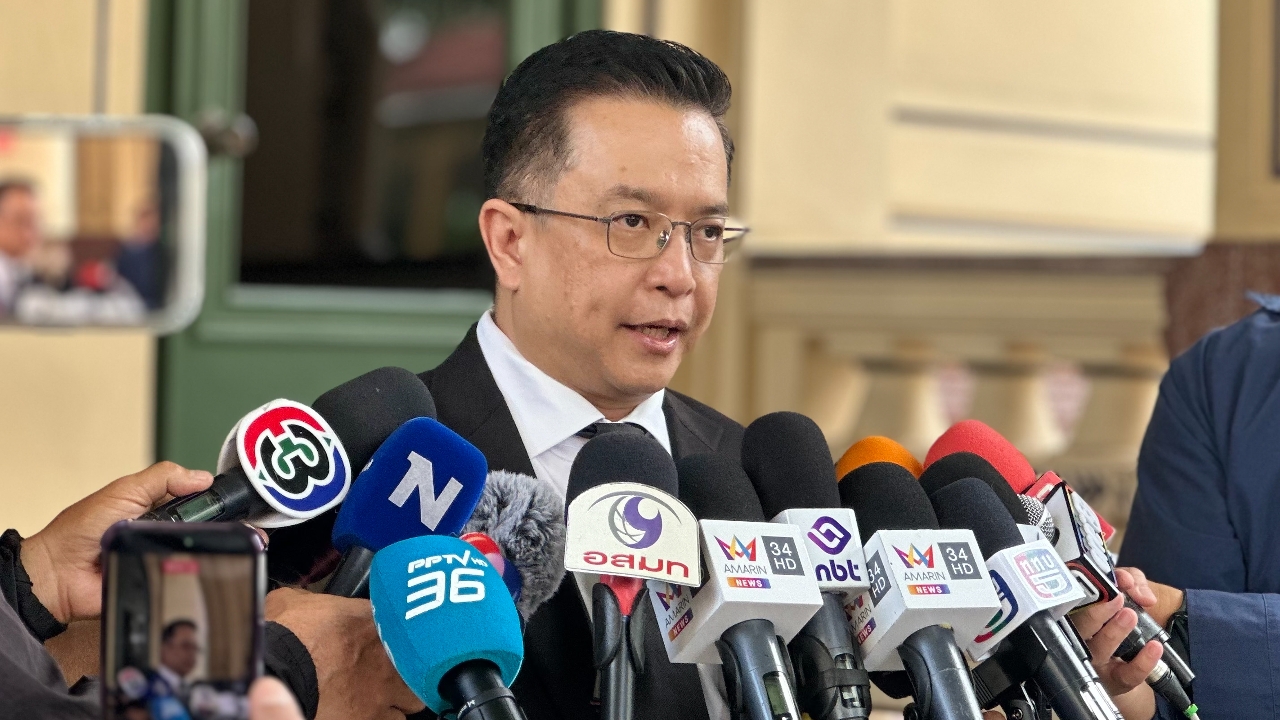
At 12:50 PM on 22 Sep at the Government House, Mr. Winij Wisesuwanphum, Director of the Fiscal Policy Office and Ministry of Finance spokesperson, addressed the liquidity issue of the Student Loan Fund (SLF). He said there are two main points: first, liquidity. This morning, Deputy Prime Minister and Minister of Higher Education, Science, Research and Innovation Yotsanan Wongvasit and Minister attached to the Prime Minister's Office Pradorn Prissanantakul discussed with the Budget Bureau Director. SLF’s liquidity will be managed by allocating sufficient monthly budgets alongside adjusting debt recovery plans to replenish the revolving fund.
"I assure that no one will lose educational opportunities because we will manage budgets adequately and timely alongside SLF’s operations. Currently, 36% of students, or about 77,000, are in the process of universities submitting data for consideration, which might seem slow. Therefore, I have ordered SLF to expedite coordination with universities to return the lists. There are about 12,000 applicants exceeding the planned target. SLF will meet on 24 Sep to adjust the framework and revolving fund to ensure all applicants receive educational opportunities," Mr. Winij stated.
When asked whether the funding source would be from the central budget, Mr. Winij said this is one issue to be addressed. Allocation will proceed as the Deputy Prime Minister confirmed that no one will lose their rights due to budget limits. So far, 137,874 applicants (64%) have been approved, while 77,164 (36%) are still being processed by universities compiling names, which may appear slow but is part of verification procedures. This year, SLF has adjusted poverty verification data without requiring certification if criteria are met, using the same data set as the state welfare card, speeding up the process compared to past years.
Mr. Winij added that among the 12,786 applicants exceeding the framework (about 5%), there are two types of costs: tuition fees and living expenses. He reaffirmed that the government policy will cover all cases. Existing borrowers in years 2 to 4 will retain their rights and be supported through the entire process.
When asked whether the policy-designated market-demand fields will be exempt from criteria, Mr. Winij said the criteria follow SLF law reflecting two dimensions: first, priority is given to fields in demand; second, efforts will be made to cover the remainder fully. This approach has been well received, and there will be expansions on upskilling and reskilling in the future.
Asked about cases of fraudulent SLF loan claims, Mr. Winij said SLF has developed by linking government databases. Such cases are individual incidents, but overall, the entire system is being reviewed. Any violations will be investigated and addressed accordingly.
Explanation of Cabinet’s shadow budget increase to 9 billion baht.
Ms. Lalida Pertwivatana, Deputy Spokesperson of the Prime Minister's Office, added that Minister Pradorn Prissanantakul clarified to the House of Representatives that the government’s SLF budget allocation must be distinguished from the 5.162 billion baht figure cited, which is a commission proposal during committee consideration—not the government’s proposed budget—and is separate from the 9 billion baht allocated by the government for SLF in fiscal year 2027.
"It is important to distinguish the figures clearly. The 5.162 billion baht is a committee-level proposal, not a government budget cut. In fact, for 2027, the government has increased SLF funding from 5 billion to 9 billion baht. Therefore, using the committee’s proposal to conclude that the government did not add any funds to SLF is mixing separate data," Ms. Lalida explained.
The Deputy Spokesperson of the Prime Minister's Office stated that Minister Pradorn also outlined SLF management principles: as a revolving fund, it must manage both government support and repayments from existing borrowers. Currently, about 3.6 million borrowers are in the system, with around 1 million repaying regularly and about 2.6 million in default. The government does not intend to pressure those without jobs or income, but those employed with income who can repay should return funds to maintain the revolving fund for future student borrowers.
"Those without jobs or income need assistance, but those who are employed and able to pay should repay the fund. Returned money represents educational opportunities for the next generation of students. Supporting current student borrowers and recovering repayments from those able to pay are two concurrent tasks," Ms. Lalida said.
Regarding proposals to use an additional 7 billion baht from the central budget, Ms. Lalida said the government is ready to consider the data but requires clear details on how many borrowers need funds, how many have been approved but not yet received money, and the actual liquidity shortfall of SLF. This ensures decisions are based on facts and consistent data.
"The key goal is that eligible students should not drop out of education due to financial issues, while SLF must maintain a revolving fund to provide opportunities for future generations. Thus, the government must both allocate necessary budgets and recover repayments from those able to pay to sustain the system," Ms. Lalida concluded.