

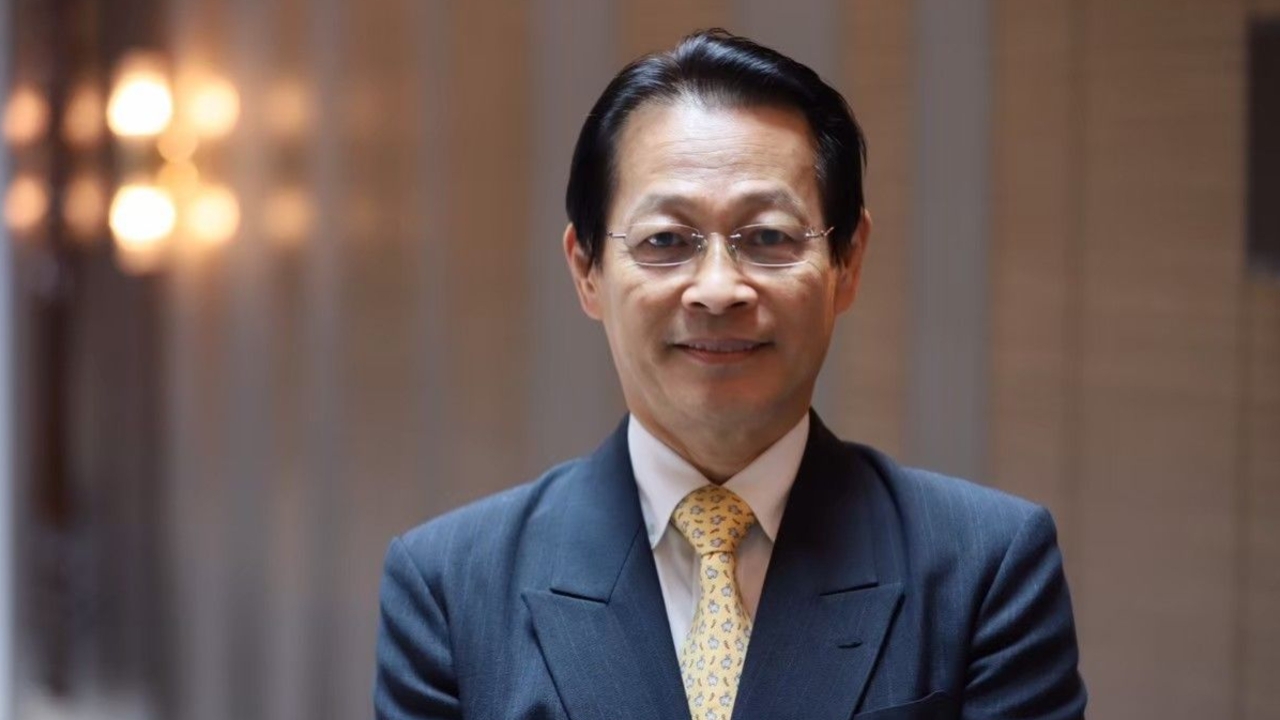
“Suchart,” an MP from the Pheu Thai Party and former Minister of Education, proposed reforms to Thai education by allocating funds based on students, reducing bureaucracy, and increasing public empowerment, believing this will improve outcomes. Tags: [education reform, Thai politics, budget allocation, bureaucracy reduction, public empowerment]
23 Sep 2026 GMT+7Tags: [date] Mr. Suchart Thadathamrongvej, a party-list Member of Parliament from the Pheu Thai Party and former Minister of Education and Finance,Tags: [politician, former minister, education, finance] addressed the issue of Thai education by frankly asking: where should the state education funds flow each year—toward the bureaucracy or directly to the students?Tags: [education funding, policy question]
Historically, Thai education management has been heavily supply-side: the government establishes schools, staffs them, sets budgets and curricula, supervises teachers and administrators, and creates multiple controlling agencies. Over time, this structure expanded to include the ministry, central offices, secretariats, committees, local agencies, and professional and personnel management bodies. Currently, the Ministry of Education’s structure includes many central organizations, and the 2027 budget is still primarily allocated through these entities.Tags: [education system, bureaucracy, government structure, Ministry of Education]
Mr. Suchart proposed a shift from supply-side financing to demand-side financing. The principle is simple: “state funds must follow the child, not the child follow state funds.” Every child should receive educational rights directly from the state, known as Education Vouchers or per-student funding. When a child chooses a school—be it public, local, or accredited private—the funding goes directly to that school, all operating under the same rules.Tags: [education finance, vouchers, per-student funding, school choice]
The expected outcome is that decision-making power gradually shifts from the central bureaucracy back to students, parents, schools, and teachers. Schools that provide quality education and earn parents’ trust will attract more students, while underperforming schools will face pressure to improve. OECD research notes that school choice can motivate schools to compete on quality, though evidence on improving achievement is inconclusive. Thus, the system’s design is crucial—not just voucher distribution. Thailand’s demand-side system requires four guarantees.Tags: [school choice, education quality, OECD, system design]
1. Funds must truly follow each child. The government sets a basic subsidy per student, transferred according to student registration—not based on positions, agencies, or past budgets of institutions.Tags: [funding allocation, student registration, education finance]
2. Poor children must receive higher funding than others. Vouchers should not be uniform in value. Disadvantaged children—including the poor, disabled, those in remote areas, and those needing special assistance—should receive higher-quality support. OECD recommends weighted funding to reduce the risk that school choice increases inequality, noting that universal voucher systems may have greater socioeconomic disparities among schools than targeted voucher systems.Tags: [equity, weighted funding, disadvantaged students, OECD]
3. Schools receiving public funds must disclose results openly. The public should be informed straightforwardly about literacy, math, English proficiency, and post-graduation education or employment outcomes. Success should not be measured by the volume of paperwork submitted to the ministry but by student achievement.Tags: [transparency, accountability, student achievement, public disclosure]
4. Schools must be prevented from selecting only top or affluent students. If schools receiving public funds are allowed to pick advantaged students exclusively, inequality will worsen. OECD found that unchecked school choice can increase segregation by socioeconomic status and academic performance. Therefore, rules on admissions and additional funding for disadvantaged children are necessary.Tags: [admissions policy, equity, segregation, OECD]
Mr. Suchart further stated that simultaneously, the education bureaucracy must be downsized. With funds following students directly, central agencies no longer need to control every detail. The Ministry of Education’s core duties should be setting minimum standards, evaluating and disclosing data, ensuring equity, and protecting children. School administration and teacher development should grant more autonomy to schools and teachers to respond to actual needs. Overlapping agencies should be consolidated, and administrative steps serving only to transfer documents between central and local offices should be eliminated. Positions and units not directly enhancing student learning quality should be reviewed.Tags: [bureaucracy reduction, decentralization, education management, autonomy]
“Therefore, I am not merely proposing to 'increase the education budget' but to 'redirect education funding.' Every baht saved from central administration should return to students, classrooms, teachers, and schools. The World Bank notes that providing funds or incentives directly to students and families can reduce financial barriers and increase enrollment, especially when conditions are well designed.”Tags: [budget reform, funding efficiency, World Bank, incentives]
Finally, education reform should not start by asking what new agencies the ministry must create but by asking what Thai children need. Shift from a ministry-centered to a child-centered system; from supply side to demand side; from funding agencies to funding students; from controlling schools to granting freedom with responsibility; and from measuring projects and paperwork to measuring student achievement.Tags: [education reform principles, child-centered, accountability]
He concluded that if done systematically with measures to prevent inequality, Thailand will have a better chance to use education funds more effectively, reduce redundant bureaucracy, and focus school competition on what matters most: improving Thai children's learning outcomes.Tags: [education efficiency, inequality prevention, school competition, learning outcomes]