

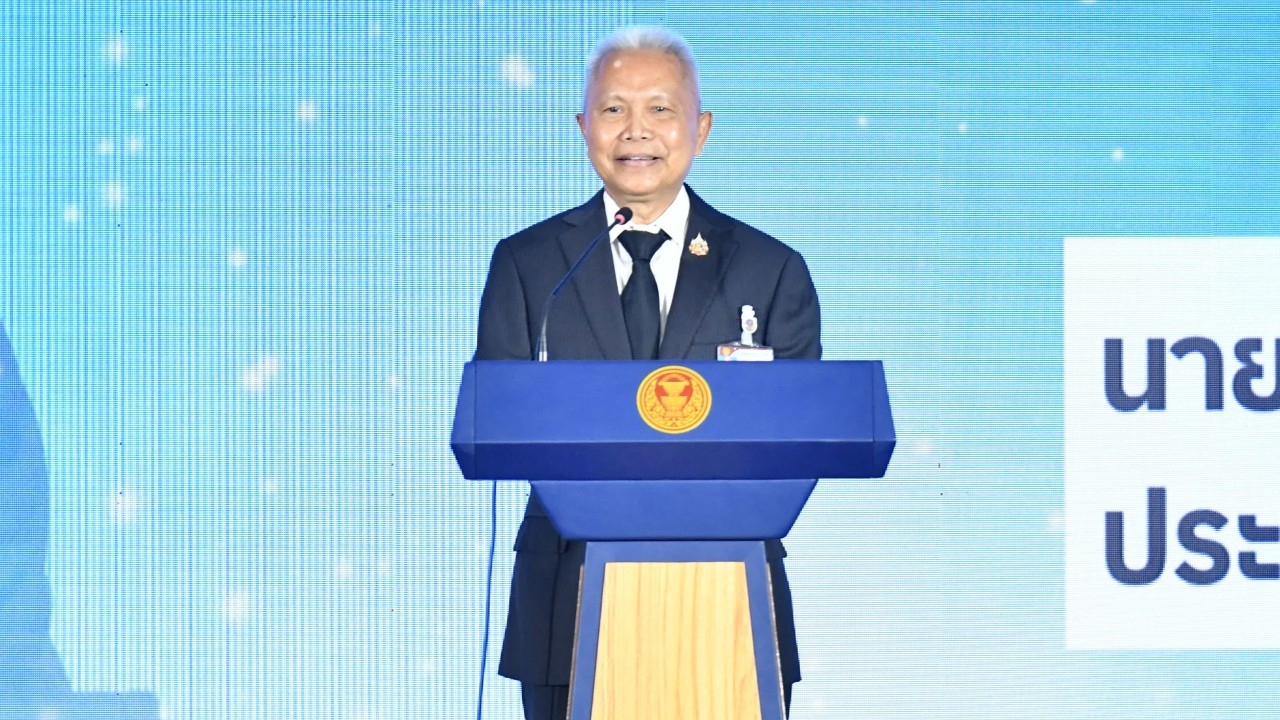
Sophon pointed out that the cases involving two People’s Party MPs, Phawut and Somchat, require parliamentary approval because MPs are protected by parliamentary privilege. He emphasized that the common practice is generally not to allow prosecution during parliamentary sessions unless the MP waives that privilege.
At 14:00 on 23 September 2026 at the Parliament, Mr. Sophon Sarum, Speaker of the House of Representatives, spoke about the case in which the Department of Special Investigation (DSI) plans to submit the Forex money laundering case to the Special Prosecutor this week. He noted that if an arrest warrant is issued for Mr. Phawut Pongwittayapanu, a party-list MP from the People’s Party, a formal request must be made to the House of Representatives since this is during a parliamentary session. He explained that if a member of parliament is accused, whether by summons or arrest warrant, and it occurs during a session, permission must be sought from the House. If the House grants permission, legal proceedings can move forward; if not, it is the constitutional privilege of the member. Thus, by principle, permission must be requested unless the member chooses to waive parliamentary privilege. In Mr. Phawut’s case, they will wait to see if a formal request arrives before proceeding, since the constitution clearly requires House approval by vote. Historically, some MPs have waived their privileges, but most of the time, the House denies such requests. Ultimately, the decision is at the discretion of the member concerned.
Asked about the case involving Mr. Somchat Techathaworncharoen, a Phuket MP from the People’s Party, who is accused of jointly holding real estate and condominium units with foreigners, and the DSI’s plan to issue a final summons by 28 September, Mr. Sophon said the same procedure applies. If the person is a member with legal parliamentary privilege, no other actions can be taken unless the member chooses to waive that protection to prove themselves. However, by custom, the House generally does not grant permission, and such matters require a vote in the parliamentary session.