

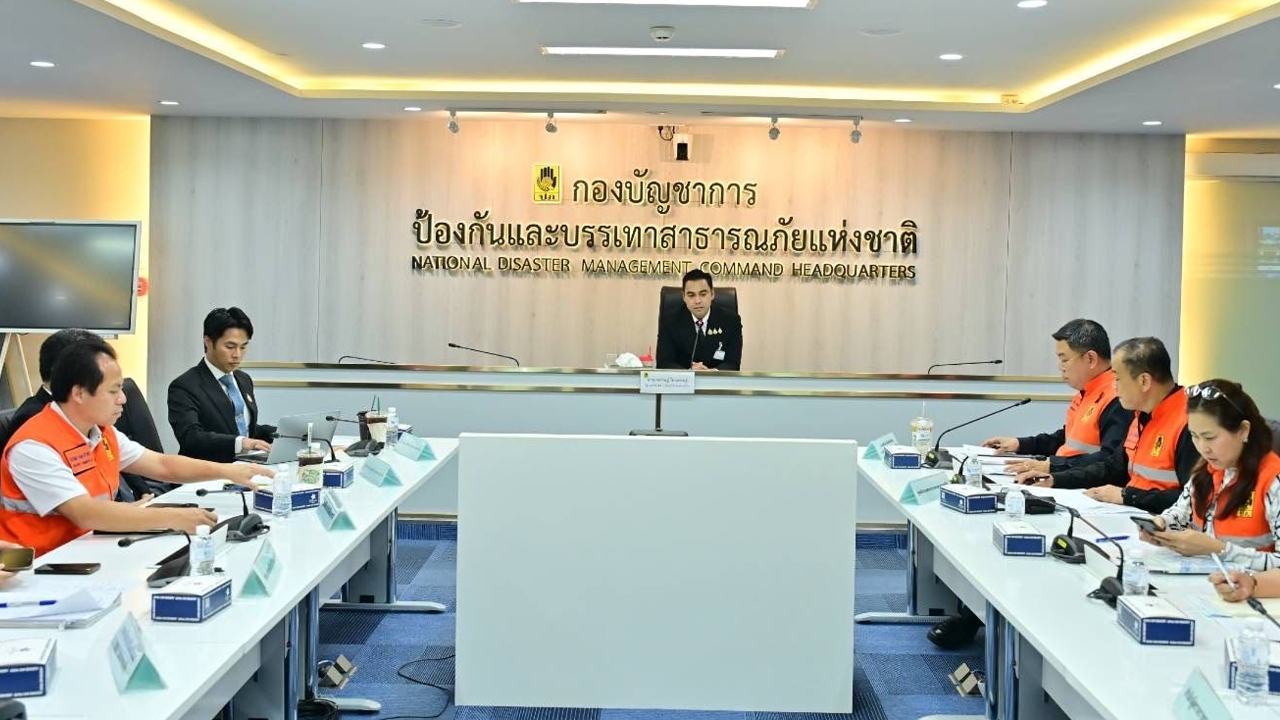
Je Set unveils flood response plan, orders governors to monitor real areas 24 hours, establish relief centers, emphasizes clear, fast, and accurate communication.
At 1:00 p.m. on 23 Sep 2026 GMT+7, Je Set Thai Set, Deputy Minister of Interior, chaired the Situation Awareness Team (SAT) meeting via video conference to monitor disaster situations and weather trends, assess risk areas, and prepare for potential flooding. The meeting included Chaiyarat Kaewpiangphen, Deputy Director-General of the Department of Disaster Prevention and Mitigation (DDPM); Natthawut Dandi, Deputy Director-General of the Meteorological Department; Thawatchai Traiwari, Director of the Water Situation Analysis Division, Royal Irrigation Department; along with heads of provincial disaster prevention offices, related agencies, and all provincial governors.
Je Set instructed provinces affected by the monsoon and those near water sources likely impacted to prepare comprehensively in advance—personnel, tools, machinery, and equipment to assist the public. He emphasized the "Single Command" principle, making provincial governors the main commanders who can assess, analyze, and act immediately based on the actual local situation without waiting for central alerts. If risk is identified, they should proactively escalate preparations.
He also ordered all high-risk areas to maintain 24-hour staffing, ready with personnel, rescue vehicles, machinery, water pumps, and assistance equipment that can be rapidly deployed, especially in low-lying areas, near water bodies, and monsoon-affected zones. Additionally, they must monitor wind and sea wave conditions along coasts alongside rain and water situations.
Furthermore, provinces must urgently check the readiness of schools, hospitals, and key locations in risk areas. If any vulnerabilities or limitations are found, they must be promptly addressed with contingency plans in place. He confirmed that the Prime Minister has given special instructions on disaster preparedness, particularly regarding shelters, food, drinking water, essential supplies, personnel, and equipment for aiding victims, urging all agencies to thoroughly verify readiness to avoid any shortcomings.
Je Set emphasized that every province must prepare sufficient food and drinking water, focusing on the quality and suitability of food for affected people—not just quantity but ensuring it properly supports those in need.
Regarding public alerts, Je Set stressed that provinces, as responsible local authorities, must use available data to immediately assess situations. If risks arise and warnings are necessary, they can coordinate alerts via the Cell Broadcast system as per established procedures without waiting for the situation to worsen.
He further highlighted that communication during disasters must be continuous, urging provinces and local agencies to use all channels and partner networks to disseminate information so the public receives ongoing updates and knows how to prepare.
About social media information, Je Set said he does not block or criticize content from any pages or channels, but during disasters, the public should primarily rely on data from responsible agencies, especially regarding weather, warnings, and water conditions, because official information undergoes verification and assessment before release to ensure accuracy, rather than prioritizing speed or attention that might cause unnecessary alarm.
“I do not restrict people’s choice of information sources, but in disaster situations, please rely mainly on data from responsible authorities because it is verified and assessed. The key is to provide accurate information so people can prepare timely, not just fast information that may cause undue worry,” he said.
He reiterated that the goal of this preparedness is: “people ready, tools ready, machines ready, food ready, shelters ready, and information reaching the public,” enabling all areas to respond immediately and provide prompt assistance when disasters occur.