

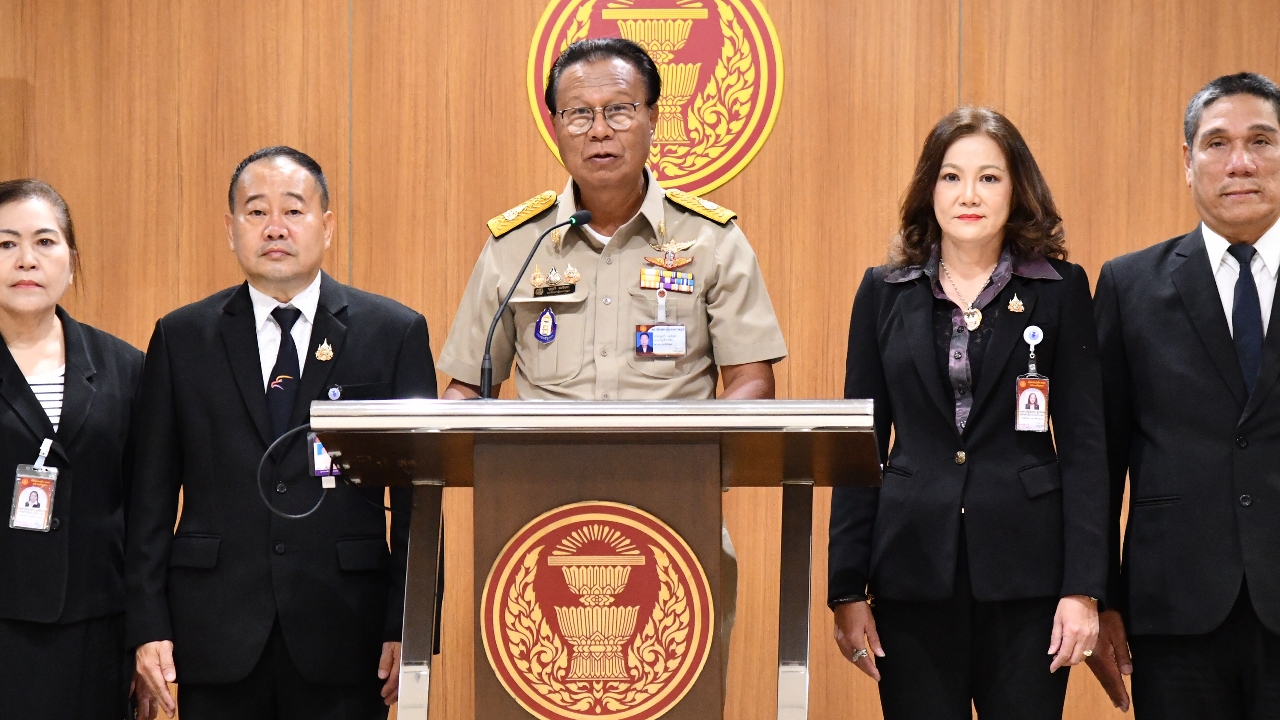
Boonrawi exposes an international lobbying scheme involving deals with Thai politicians to rush parliament's approval of the 1991 international treaty on new plant variety protection, warning Thai farmers will suffer by having to buy seeds from corporate groups at prices 2 to 6 times higher.
On 24 Sep 2026 GMT+7, Mr. Boonrawi Yomjinda, party-list MP and leader of the Ruamjai Thai Party, stated that farmers nationwide are deeply concerned about certain groups bargaining for benefits regarding the 1991 International Convention for the Protection of New Plant Varieties (UPOV 1991). Foreign investors are spending vast sums through a prominent U.S.-based lobbying firm to strike deals with Thai politicians, pushing to pass this law through parliament as quickly as possible. If the UPOV 1991 Convention is approved by the Thai parliament, it will severely burden Thai farmers. This treaty grants monopoly rights to breeders of new plant varieties—whether government, private sector, or seed companies—controlling the production, propagation, and sale of registered plant varieties. This could affect farmers' rights to save seeds for replanting, forcing them to buy seeds from multinational corporations, increasing seed costs by 2 to 6 times.
Mr. Boonrawi said that many countries that have signed the UPOV 1991 Convention have encountered problems. For example, Vietnam now depends heavily on foreign seeds to a dangerous extent, including rice, corn, and vegetables genetically modified for use there. Therefore, protecting Thai farmers is essential. He called on the Ministry of Agriculture and Cooperatives to delay endorsing the UPOV 1991 Convention and to fully explain its advantages and disadvantages to farmers. If this treaty is approved, almost all agricultural products will be affected, especially export fruits like watermelon, durian, longan, and mangosteen. If signing proceeds, clear safeguards must protect Thai plant varieties to prevent disadvantages. With the UPOV 1991 Convention soon to be introduced to parliament, farmers must be asked if they agree. While recognizing the necessity for UPOV 1991, moving forward without protecting Thai seeds would compromise agricultural sovereignty, which is unacceptable. He vowed not to support the treaty's approval in parliament unless Thai plant varieties are adequately protected.