

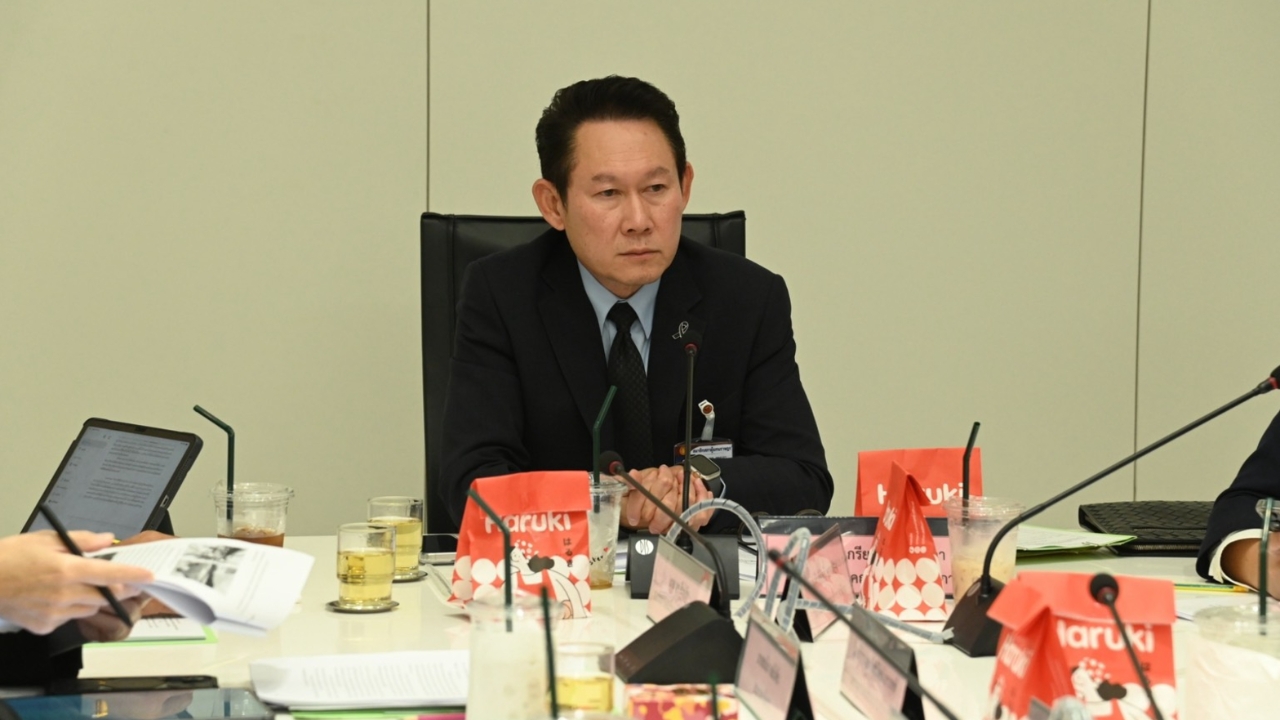
Kriangsak is actively addressing pollution caused by factories in Songkhla following complaints to the Subcommittee, recommending the provincial industry office take strong measures to temporarily close the factories until renovations are complete, emphasizing that actions are for the people and there is no need to fear anyone.
On 24 September 2026 at the Parliament, Kriangsak Sutlapha, Chairman of the Subcommittee for Reviewing Complaints and Industrial Issues under the House of Representatives’ Industry Commission, convened a meeting to monitor solutions for public grievances about strong odors and wastewater from industrial factories in Phangla and Khao Mi Kiat subdistricts, Sadao District, Songkhla. Present to provide information were Ruslan Asaedi, Head of the Industrial Factory Group; Thanewatch Suwanchatree, Senior Engineer from Songkhla Provincial Industry Office; and Mukda Jokloy, Senior Environmental Scientist from the 16th Environmental and Pollution Control Office.
Thanewatch reported that inspections found three factories in the area emitting odors exceeding legal standards. Detailed checks revealed faults in wastewater treatment ponds with large amounts of rubber sediment and acid chemicals causing odors. Two factories were summoned, admitted that the odors stemmed from rubber production processes, and were ordered to rectify the issues immediately, with a deadline of 30 September 2026. The third factory’s odor was due to combustion processes far exceeding standards; data is being collected to file charges before summoning the operator to acknowledge the accusations and begin corrective actions.
Mukda confirmed that the provincial environmental office has not neglected its duties, having collaborated with relevant agencies to continuously monitor environmental irregularities. However, the authority to order factory closures due to odor sources lies with the provincial industry office. The environmental office has inspected areas around the factories, especially water sources, and acknowledged water quality problems, including significant ammonia contamination. This may result from wastewater from factories using ammonia to preserve rubber, but ammonia could also originate from other activities like agriculture involving chemical fertilizers. Additionally, fish kills may be caused by wastewater from communities mixing with industrial discharge. She emphasized that the odor pollution affecting public health is a severe issue and that they are awaiting whether operators will comply with the ordered corrections.

Most subcommittee members agreed that the public is currently suffering greatly and urged the provincial industry office to take strong action against factories emitting odors above standards. They stressed that factories should be temporarily closed until they complete improvements and no longer emit offensive smells. They believe that closing even one factory for correction will motivate others to reduce odors. They also recommended sending environmental quality test results around the factories to the Department of Health, Ministry of Public Health, to assess whether current conditions threaten public health, providing evidence to justify temporary factory closures until pollution is eliminated. Crucially, operators must sincerely address these problems.
Saksit stated confidence that if one factory is closed, all others will stop producing odors. He guaranteed that closing one factory for about a month to renovate will prompt the rest to improve, resulting in genuine progress from the authorities.
At the end, Kriangsak said this problem has accumulated for over 20 years and urged relevant agencies to act for the people without fear of lawsuits from operators. He added that on 30 September, when the two factories’ correction deadlines arrive, officials will inspect the sites and invite related agencies and local MPs to witness that corrections have been completed and that the factories no longer affect the public.
Kriangsak expressed gratitude, saying, “Thank you very much for working together for the people. If your home were there, you wouldn’t tolerate it for half a day. I feel sorry for them. When agencies inspect, please notify Saksit so he can be a witness. Honestly, he will back you up. Don’t be afraid of these companies; Saksit will not abandon you.”