

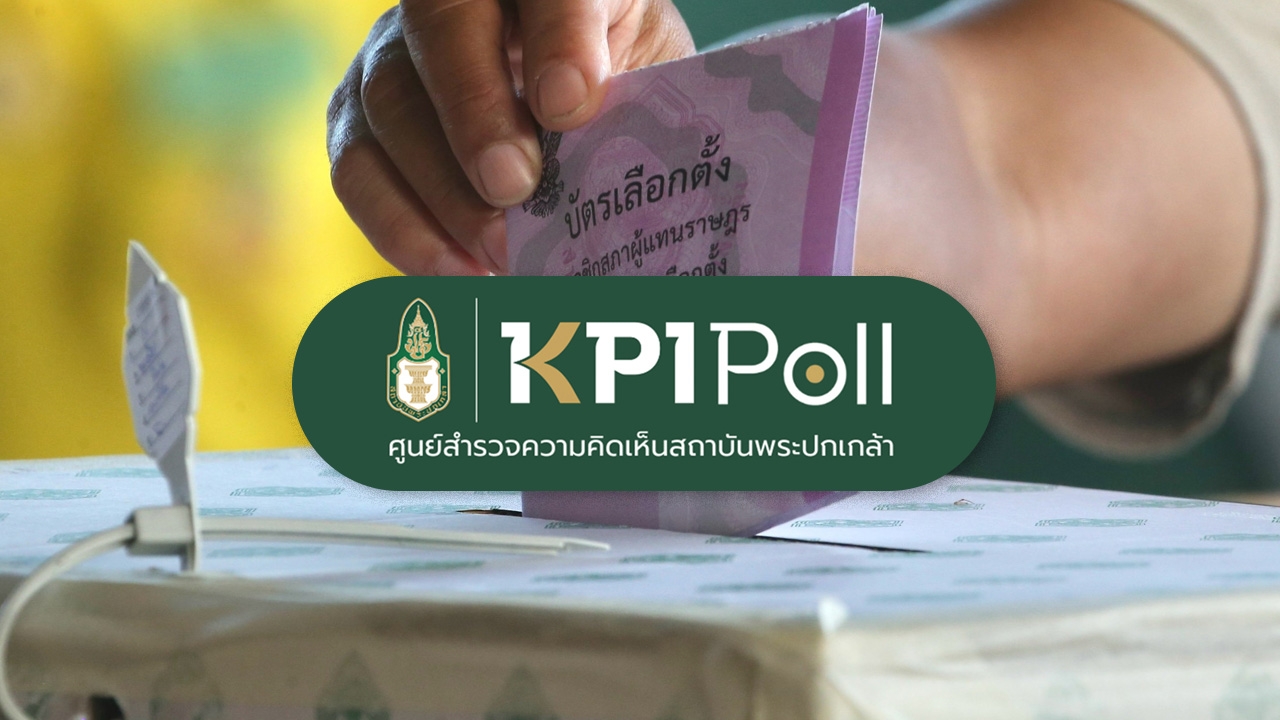
The Phra Pok Klao Institute's poll reveals that over half of the public view barcodes and QR codes on election ballots as unnecessary. The southern region shows the strongest support for a single-party single-number system, while most respondents agree with listing candidate names on constituency MP ballots.
On 25 Sep 2026 GMT+7, the Phra Pok Klao Institute released the KPI Poll survey titled “Public Opinion on Ballot Design and Use of Voting Technology,” focusing on neutrality, truthfulness, and usefulness, maintaining academic standards without political bias, aiming to "listen" to public political voices.
The 39th KPI Poll results were announced at the center after surveying 2,000 people aged 18 and over nationwide from 18–21 Sep 2026 GMT+7. Key findings include the following.
1. How prepared is Thailand to use electronic voting machines at polling stations instead of paper ballots? (Survey conducted by x LineToday)
26.1% consider Thailand highly prepared, followed by 23.9% who feel it is not ready at all; 23.0% say somewhat prepared; 19.5% say not very prepared; and 7.5% are unsure or have no opinion.
Readiness opinions split into two groups: those perceiving readiness slightly outnumber those seeing unpreparedness, with 49.1% saying ready versus 43.4% not ready. This suggests lingering concerns and considerations are needed to build public confidence in changing voting methods.
2. More than half support a single-party single-number system, with the South showing highest support; Bangkok residents prefer “any option.”
55.9% believe constituency and party-list candidates from the same party should share the same number; 21.9% think numbers should be separate; 17.1% say any option is acceptable; and 5.1% are unsure or have no opinion.
Among respondents, 78.0% in the South support using the same number, the highest rate. This is followed by Central region 67.6%, North 54.3%, East 53.0%, Northeast 52.1%, and Bangkok 22.4%.
In Bangkok, the most popular choice was “any option” at 40.0%, followed by separate numbers at 35.8%, same number at 22.4%, and 1.8% unsure or no opinion.
Overall and in every region except Bangkok, the single-number system is most accepted. Bangkok’s preference for “any option” reflects regional differences in desired numbering systems.
3. More than two-thirds agree with listing candidate names on constituency ballots.
67.3% support including candidates’ full names on constituency MP ballots, while 25.5% oppose and 7.2% are unsure or have no opinion. This shows acceptance of identifying candidates on ballots, which may help voters better link choices to individuals, though it cannot yet be confirmed if this reduces voting errors.
4. Over half see barcodes or QR codes on ballots as unnecessary due to secrecy concerns.
53.5% consider barcodes or QR codes unnecessary because of concerns over ballot secrecy; 23.2% accept them if proper measures are in place; 14.9% think they are necessary; and 8.4% are unsure or have no opinion. Concerns about ballot secrecy are crucial in evaluating barcode/QR code use. Those accepting them often require safeguards, highlighting the importance of trust in technology usage.
In conclusion, the 39th KPI Poll shows that ballot design and voting methods involve clarifying choices and building confidence in election processes. Using the same number and listing candidate names are broadly accepted, while technology use raises concerns about secrecy and readiness. Preferences for candidate numbers vary by region. Therefore, ballot and voting method development should include user understanding tests with diverse voters and clear explanations of objectives and confidentiality safeguards. Adoption of electronic voting machines should be based on usability, accuracy, and user confidence test results.
