

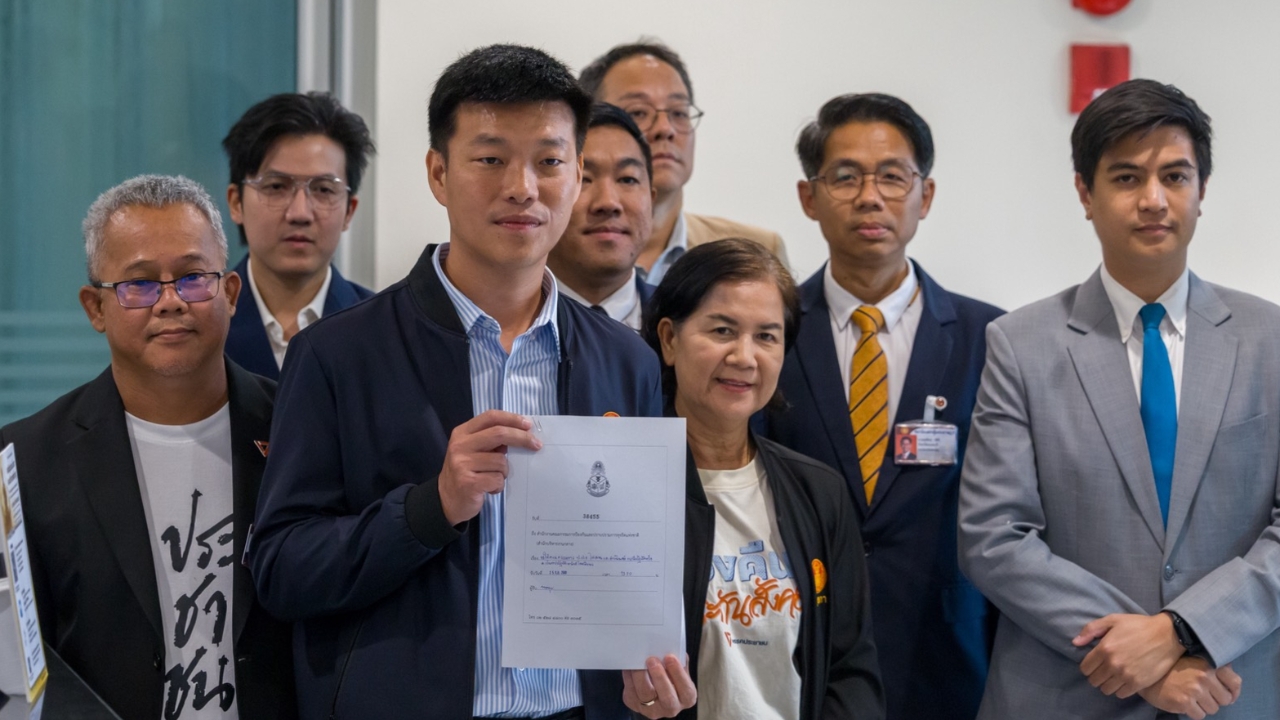
Natthapong led the People’s Party team to submit a complaint to the National Anti-Corruption Commission (NACC) requesting investigation of the seven Election Commission (EC) members over the Senate election collusion case, covering conduct from before the vote to their roles in the Senate selection process. He emphasized that the People’s Party is exercising legal rights but does not pre-judge any EC member’s guilt.
On 25 Sep 2026 GMT+7, Mr. Natthapong Ruangpanyawut, leader of the People’s Party, along with party Members of Parliament, submitted a petition to the National Anti-Corruption Commission (NACC) requesting an investigation into the conduct of all seven Election Commission members regarding the Senate election corruption case. The People’s Party believes there are behaviors warranting examination as to whether the EC members acted or neglected duties improperly.
Natthapong stated that the petition submitted today does not only seek to review the EC’s vote on the Senate election collusion case but requests the NACC to investigate conduct from before the vote. The People’s Party views the Senate election corruption as a process and has doubts about the EC’s issuance of regulations, criteria, and procedures, which they believe may have facilitated corruption in the Senate election.
The People’s Party said it included information from investigations by party MPs, civil society groups, public forums, and witnesses who have spoken publicly to support the petition, aiming for the NACC to examine the overall pattern of conduct.
Regarding whether they aim to hold any EC member specifically accountable, Natthapong said it is not possible to isolate a single issue since all conduct is interconnected as a process. It is the NACC’s responsibility to establish an inquiry committee to gather facts and determine whether any wrongdoing occurred.
Asked about submitting complaints against all seven EC members despite some decisions having majority and minority votes, Natthapong said that currently the public cannot know how individual EC members voted on every issue because only voting results are publicly available. Therefore, the NACC must investigate the facts and evidence before deciding if any EC member is involved or at fault. He reiterated that the People’s Party is not judging anyone’s guilt but aims to ensure a proper investigation process.
Regarding whether the evidence submitted to the NACC contains new information beyond what was previously disclosed, Natthapong said most evidence was already in the party’s possession and had been publicly presented. However, submitting a petition to the NACC does not require the petitioner to have conclusive proof of guilt, as the next step after acceptance is setting up an inquiry committee to gather additional facts and evidence.
He added that based on behaviors and evidence previously revealed by the party, there are sufficient grounds for the NACC to examine whether the EC’s conduct was honest.
Asked if he is confident the NACC will set up an inquiry committee on this matter, Natthapong replied that the party’s demand is for the NACC to accept the case and proceed with the investigation process. The outcome of the inquiry is the NACC’s authority and responsibility to decide.
Natthapong also said that although the NACC process may take time, if an inquiry committee is established before legal proceedings, the People’s Party will continue to use all legal avenues available to scrutinize the EC’s performance.
Meanwhile, Natthapong mentioned that directly affected parties, such as Senate candidates or reserve senators, can submit complaints directly to the courts. The People’s Party is ready to provide advice or support with information and evidence if requested by those affected but will not act on their behalf, as it is the direct victims’ right to pursue.
Regarding future actions, Natthapong said parliamentary oversight will continue, and the Senate election collusion issue will be part of the content the party plans to use in no-confidence debates against the government.
When asked about previous petitions the People’s Party filed with courts on election corruption and whether this might lead to changes in the EC, Natthapong said the party will use all legal channels available, acknowledging that outcomes depend on relevant authorities’ decisions. He also stated the party will continue to pursue constitutional amendments related to these issues.
Asked if the seven EC members, currently in a transitional phase with issues involving both the Senate election collusion and general election matters, would face prosecution on both fronts if investigated, Natthapong said it is the relevant agencies’ duty to investigate. He avoided pre-judging who should be prosecuted, emphasizing that the People’s Party will monitor organizations suspected of misconduct, but determining individual guilt is the responsibility of the NACC and judicial bodies following due process.