

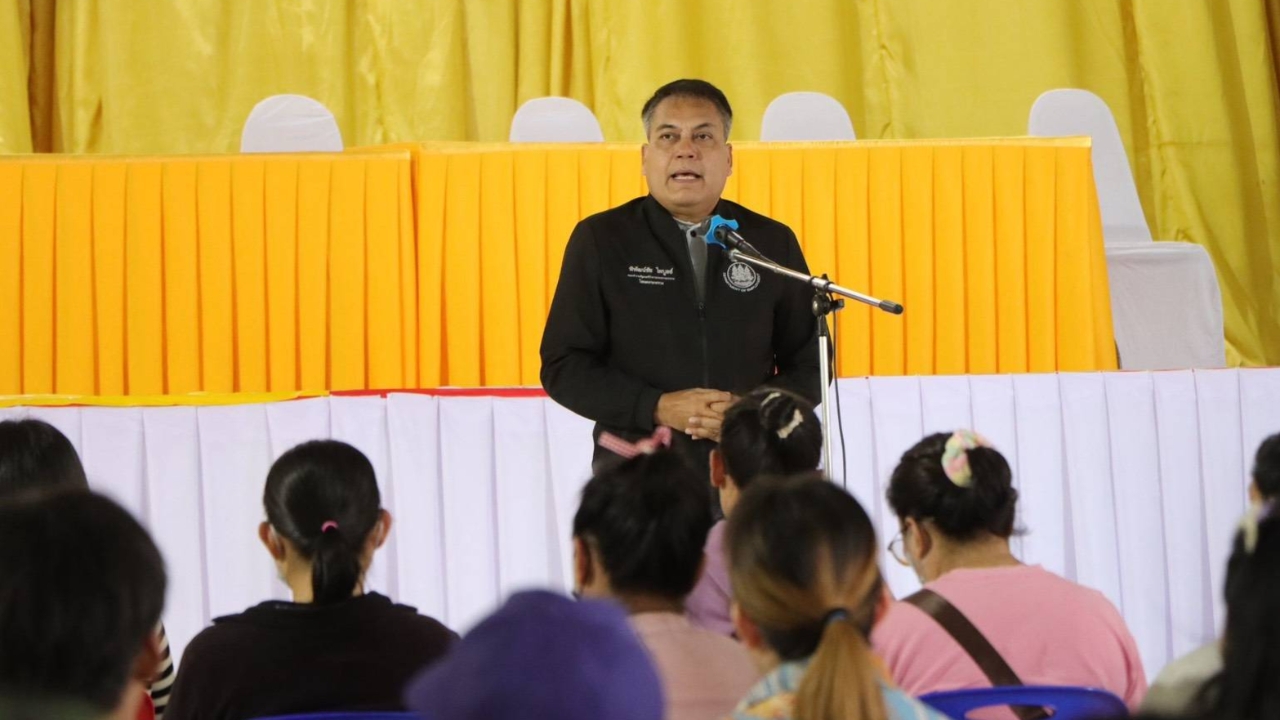
The Ministry of Labor visited Na Thom District, Nakhon Phanom Province, to assist 252 workers abandoned due to a factory closure. They expedited compensation according to insured workers' rights and invited the employer to clarify the facts, warning that failure to appear would result in legal action.
On 25 September 2026, Mr. Pipatchai Paiboon, Ministry of Labor spokesperson (political division), along with Mr. Charat Khumkhainam and Mr. Suthep U-an, members of the Minister’s working group, visited the Na Thom District Office in Nakhon Phanom under Minister Chulanphon Amornwiwat’s orders. The visit aimed to monitor the situation and expedite assistance for 252 workers affected by the closure of Thai Yi Hong Ceramic Co., Ltd.


Present were Ms. Nattakritta Daharn, Nakhon Phanom Labor Officer; Mr. Wirasak Kaewbudda, Director of the Skill Development Institute 41 Nakhon Phanom; Mr. Khanchai Phummakerd, Nakhon Phanom Social Security official; representatives from the Nakhon Phanom Employment Office, the Department of Labor Protection and Welfare, and related agencies who reported on the situation and plans to assist the workers.
Additionally, local administrative and area officials participated in the discussion, including Ms. Pimaporn Seenamngern, Na Thom District Chief; Mr. Bhumipat Phachornsap, Deputy Chief of Nakhon Phanom Provincial Administrative Organization; Police Lieutenant Colonel Nopadol Phonphatana, Chief of Na Thom Police Station; as well as village headmen and community leaders from all subdistricts in the area.


Mr. Pipatchai revealed that the company produces ceramic products with its headquarters in Bang Phli District, Samut Prakan Province. The Na Thom facility is its second branch. Reports indicated that from early 2026 until the closure announcement on 18 August 2026, the company received no new orders. Some previously ordered goods were returned, causing financial liquidity problems and leading to the eventual closure.
Regarding assistance measures, the Ministry of Labor urged affected workers to submit form Kor.Ror.7 to claim legal rights and unemployment benefits. The employer was invited to clarify the situation and the employment insurance termination process was initiated. If the employer fails to meet labor inspectors, the Ministry will issue orders to compel payment of severance, wages, and other legal entitlements. Noncompliance will lead to further legal proceedings.


In discussions about employee entitlements, it was reported that the company owes approximately 2.5 million baht in unpaid wages for August 2026. The company promised to pay these arrears by 30 September 2026. The Ministry and related agencies will closely monitor this to ensure workers promptly receive their due wages and legal rights.
Mr. Pipatchai stated that 186 workers have already filed claims. Initial estimates suggest unemployment compensation averaging about 5,780 baht per month for six months, though actual amounts depend on each insured worker’s wage base and rights. The Ministry will also expedite assistance from the Employee Welfare Fund according to legal criteria, alongside coordinating job vacancies and skill development to help affected workers return to work and income quickly.
“Following instructions from the Minister of Labor, I consulted with Mr. Surachart Thianthong, the Minister’s Secretary, and we agreed to expedite assistance for the workers as quickly as possible. All procedures must comply with legal frameworks. If documentation and processes meet requirements, benefit payments are expected to start around late October or early November 2026,” Mr. Pipatchai said.
Mr. Pipatchai emphasized that the Minister of Labor has instructed all affiliated agencies to fully coordinate efforts to assist the 252 workers. This includes tracking unpaid wages and legal benefits, aid from relevant funds, and arranging job placements and skill training. The key goal is to ensure workers receive their full rights promptly and can return to employment and income as soon as possible.
