

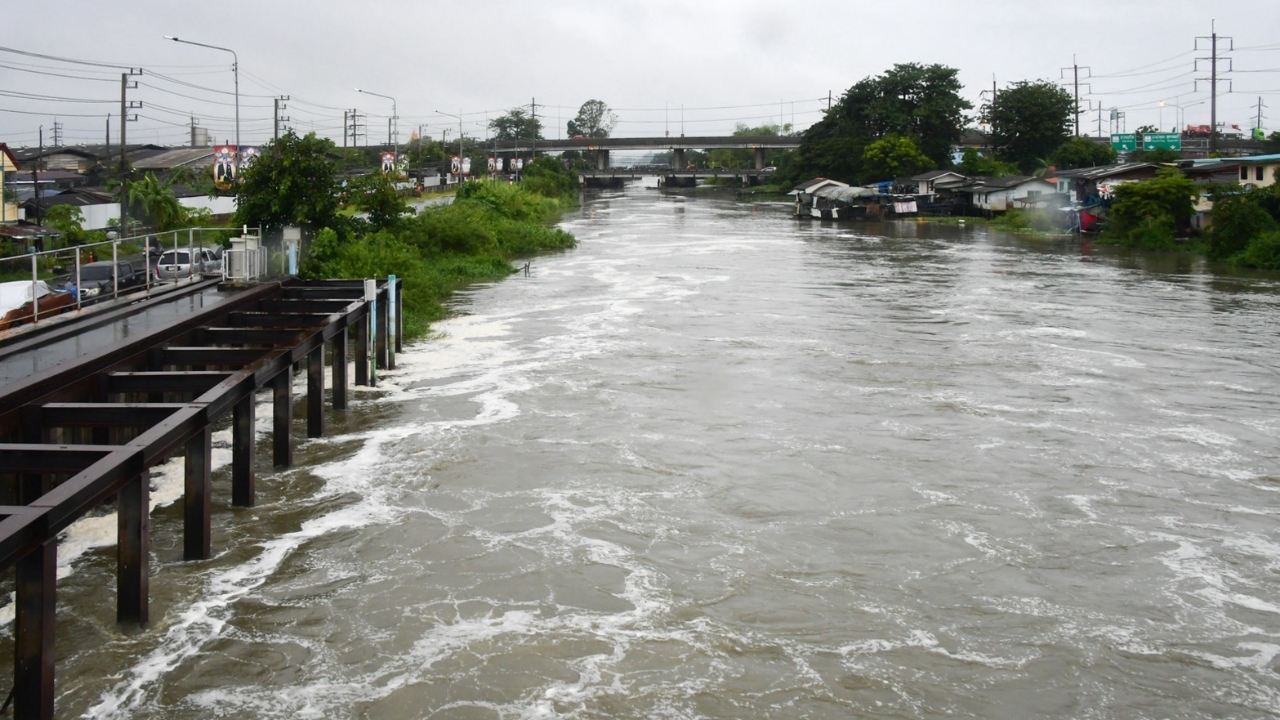
Suriyas ordered the Director-General of the Royal Irrigation Department to expedite water drainage in the Rangsit Canal. Director-General Witthaya visited the semi-permanent Rangsit pumping station, coordinating with local authorities to improve the efficiency of water discharge into the Chao Phraya River.
On 25 Sep 2026 GMT+7, Witthaya Kaewmee, Director-General of the Royal Irrigation Department, visited the area to monitor water conditions and management within the jurisdiction of Irrigation Office 11. Following ongoing concerns over water levels in the Rangsit Prayurasak Canal in Pathum Thani Province, close management and monitoring remain necessary. The department is continuously accelerating water drainage from the area to control water levels and reduce potential impacts on residents. Meanwhile, Agriculture Minister Suriyas J. Rungreungkij has instructed the department to enhance water management and maximize drainage efficiency while closely tracking the situation.
Following this, the Director-General and his team inspected water drainage operations at the floodgate and semi-permanent pumping station at the mouth of Rangsit Canal in Mueang Pathum Thani District, Pathum Thani Province. This site is a critical point for accelerating water discharge from the Rangsit Prayurasak Canal into the Chao Phraya River.
For water management under Irrigation Office 11, the Royal Irrigation Department has established a systematic management and acceleration of water drainage from upstream and rainfall in the area through an irrigation network. Utilizing floodgates and pumping stations in the region, the department speeds water outflow from upper and central areas down to downstream zones and ultimately into the Gulf of Thailand continuously. Management includes key drainage points such as the Lat Pho Floodgate, a vital mechanism to expedite water discharge from the Chao Phraya River to the sea. Coastal pumping stations like Suvarnabhumi, Chonharaphijit, and Charoenrat stations also contribute to increasing drainage efficiency to the sea, alongside close monitoring of water levels and local conditions. This enables adjustments to floodgate and pumping station operations to match the situation, enhancing overall drainage capacity and reducing impacts on communities and economic areas.

Regarding accelerated drainage in the Rangsit Prayurasak Canal area, the department manages rainfall using an interconnected canal and pumping station system to efficiently drain water from the area. Water from Rangsit Prayurasak Canal can be discharged both into the Chao Phraya River and the Nakhon Nayok River. For drainage into the Chao Phraya, the floodgate and semi-permanent pumping station at the mouth of Rangsit Canal serve as critical points. Another route discharges water through the Saowapha Pongsri Floodgate and pumping station, Khlong Hok Wa Lower Line, and the Somboon Floodgate and pumping station into the Nakhon Nayok River. This enhances drainage efficiency and helps maintain appropriate water levels in the Rangsit canal system according to current conditions.
Simultaneously, the Royal Irrigation Department collaborates with local agencies and relevant authorities to ensure unified water management. This includes monitoring water conditions, drainage operations, and preparing machinery, equipment, and personnel. The goal is to resolve issues quickly and effectively, tailored to the local environment.
Witthaya stated he has instructed Irrigation Office 11 to closely monitor the water situation in the Rangsit Prayurasak Canal and manage water discharge appropriately based on conditions. He emphasized maximizing the use of the irrigation system and existing pumping stations, while coordinating with local administrative organizations and related agencies to efficiently manage water and address local problems.

