

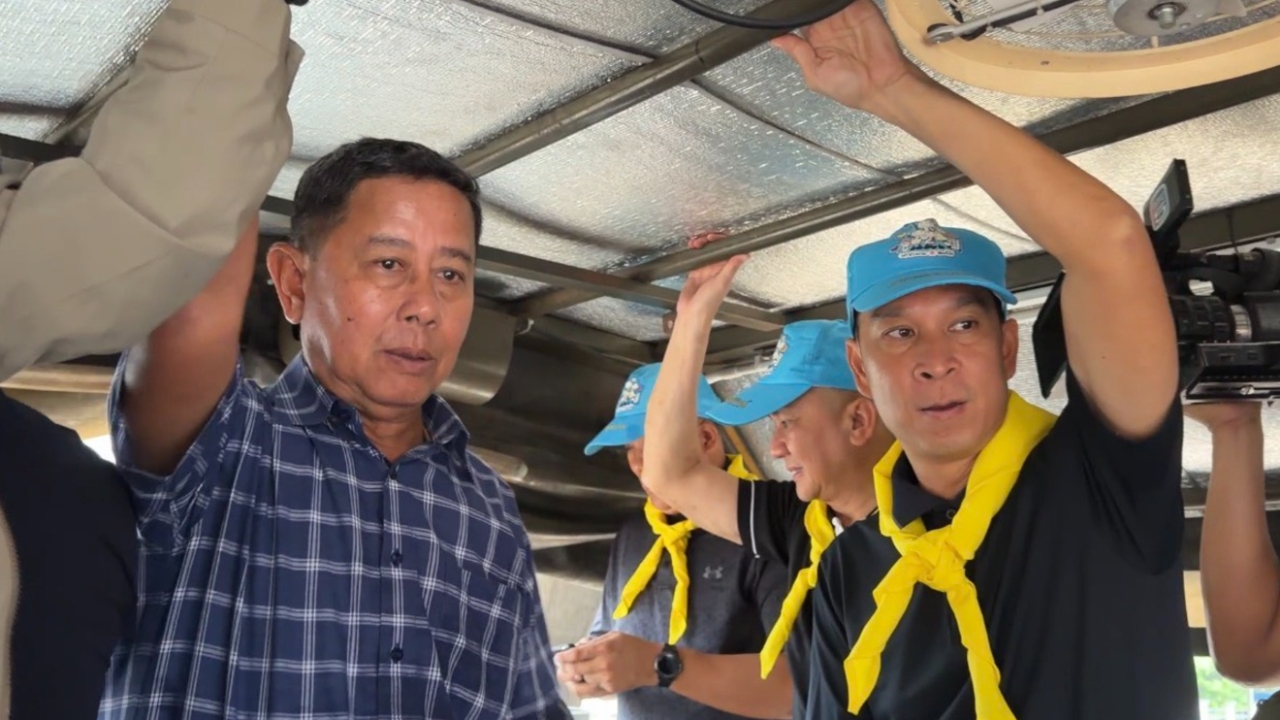
The Defense Minister has ordered the military to assist with flood relief 24 hours a day, mobilizing 10,000 troops and 1,000 vehicles ready to enter affected areas and help citizens at critical points. Meanwhile, the Ministry of Public Health supports 3,000 sets of black bags and lime and recommends "paper toilets" to reduce disease spread.Tags: [Defense Ministry, Flood Relief, Military Assistance, Public Health, Disease Prevention]
On 26 September 2026, Lieutenant General Adul Boonthamcharoen, Minister of Defense, instructed military units nationwide to fully mobilize their forces to assist citizens affected by heavy rain and flooding. Currently, over 10,000 personnel are on duty around the clock, deployed across multiple critical areas nationwide, supported by more than 1,000 trucks and equipment vehicles to continuously aid the public and local agencies.Tags: [Military Deployment, Flood Response, Heavy Rain, Nationwide Assistance]


Lieutenant General Adul stated that he has ordered all commanders to closely monitor the situation and swiftly reach affected areas to provide the fastest possible aid to citizens. The Ministry of Defense and the armed forces are ready to support the government in all requested aspects to alleviate hardships and minimize impacts from heavy rain and flooding.Tags: [Military Command, Disaster Monitoring, Rapid Response, Government Support]
Simultaneously, he has directed all units to prepare for post-disaster recovery operations to support the government and relevant agencies in restoring affected areas, easing hardships, and helping citizens return to normal life as quickly as possible. He emphasized the operational approach: "During the crisis, assist promptly; after the flood recedes, help citizens stand on their own as soon as possible."Tags: [Disaster Recovery, Post-Flood Support, Community Rehabilitation]
Reporters noted that Lieutenant General Adul, accompanied by Major General Sitthichak Romphochi, Commander of the 11th Military Circle, and Lieutenant Colonel Piyawat Chayawattanasrikul, Commander of the 5th Anti-Aircraft Artillery Battalion, personally visited flood-affected areas. They rode military trucks to survey flooding on Chaeng Watthana Road from the bypass in Pak Kret District, Nonthaburi Province, to assess the situation and hear citizens' concerns. During the visit, they found people stranded by the roadside and assisted them by providing rides to their destinations. Many others sought help and gradually boarded official vehicles for easier travel amid the flood.Tags: [Field Inspection, Military Commanders, Flood Assessment, Citizen Assistance, Nonthaburi]
The field visit aimed to develop the Ministry of Defense’s approach, focusing on directly reaching flood-affected citizens while mobilizing personnel, vehicles, and equipment from military units nationwide to ensure rapid and continuous assistance. Preparations are also underway to support recovery missions after the flood recedes, to provide care from the crisis phase until citizens can quickly resume normal life.Tags: [Flood Relief Strategy, Military Mobilization, Continuous Assistance, Disaster Recovery Planning]
Minister of Public Health Provides Department of Health with 3,000 Sets of Black Bags and LimeTags: [Public Health Ministry, Sanitation Supplies]
Meanwhile, Mr. Patthana Phonphat, Minister of Public Health, expressed concern for citizens affected by flooding. He said that care during floods goes beyond treating illness; it must emphasize disease prevention and sanitation management from the start, especially handling waste, sewage, garbage, and household water—all crucial factors in community disease prevention. He urged local health agencies to coordinate with local governments and related organizations to provide continuous and comprehensive aid. The Department of Health was assigned to provide knowledge, equipment, and proper sanitation management guidelines suitable for flood-affected areas.Tags: [Public Health Concerns, Disease Prevention, Sanitation Management, Interagency Coordination]

The Department of Health supports knowledge, equipment, and proper sanitation management methods to help flood-affected communities manage waste hygienically, reduce environmental contamination, and prevent health risks during flooding.Tags: [Sanitation Support, Waste Management, Health Risk Prevention]
Dr. Amphon Benjapolpitak, Director-General of the Department of Health, added that the department has expedited distribution of over 3,000 sets of black bags and lime nationwide. These are for managing waste and excreta, especially in areas where sewage systems are damaged or unusable due to flooding. For citizens unable to use toilets because of floods, the department recommends using "paper toilets" or temporary toilets as an emergency option. This involves using suitable containers combined with strong plastic or black bags to contain waste and prevent contact with the ground or surrounding areas. After use, lime should be sprinkled and the bag sealed tightly to prevent leakage and reduce contact with waste before collecting and disposing according to local agency guidelines. Besides waste management, the public should maintain personal hygiene by washing hands with soap and clean water after using toilets, handling waste, or before eating. If the body contacts floodwater, it should be washed promptly, and wounds should avoid direct floodwater contact to prevent infection.Tags: [Waste Disposal, Temporary Toilets, Hygiene Recommendations, Disease Prevention]

"The Department of Health urges flood-affected residents not to defecate in water or public areas and not to release waste directly into water sources. If toilets are unusable, they should use temporary or paper toilets as recommended and collect waste for hygienic disposal. Additional advice is available from local health officials or agencies," the Director-General stated.Tags: [Public Health Advice, Waste Disposal, Temporary Sanitation, Flood Safety]