

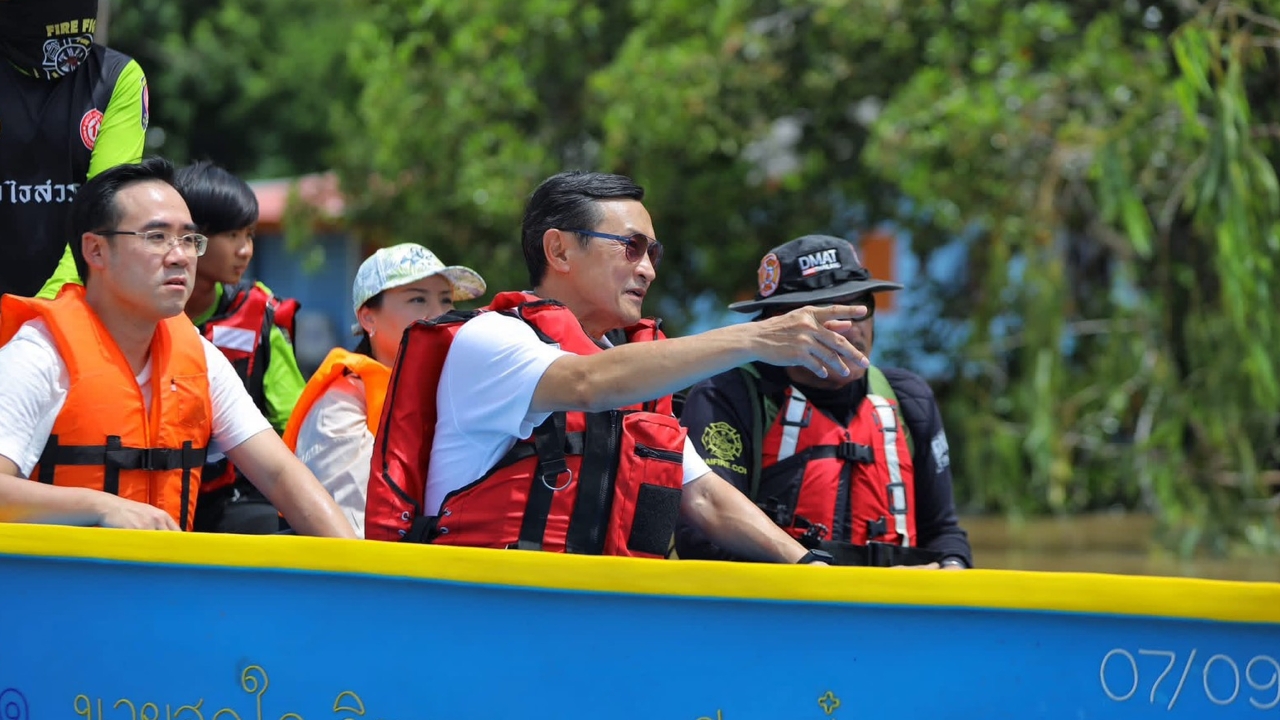
Jaturon urged the government to fully support rescue volunteers and remove restrictions so Provincial Administrative Organizations (PAOs) can assist to their full capacity, since PAOs have budgets, personnel, and equipment. He noted this year's flooding differs from 2011 because heavy rains struck multiple provinces simultaneously.
On 27 Sep 2026 GMT+7, Jaturon Chaisang, party-list MP from the Pheu Thai Party, posted on Facebook his views on the ongoing flooding in several provinces. He said this flood differs from the massive 2011 flood. In 2011, heavy rain fell first in the north, then water flowed down to the central region and Bangkok. The severely flooded areas were lowlands and riverbanks, while Bangkok was the water's endpoint but was still protected. At that time, there was concern that if water flooded deeper into Bangkok, the damage would be enormous. This time, however, widespread flooding has occurred in many parts of Bangkok, so damage is expected to be severe.
Jaturon explained that this flood results from continuous heavy rains across many provinces. Water floods low-lying areas, basins, and canal banks where water overflows. In forested and mountainous areas, water rushes down over wide areas, flowing to lower ground until it reaches the rivers, which in some places may take several days.
He compared the current situation to an event more than 30 years ago during his first term as MP. At that time, in Chachoengsao Province, heavy flooding started near Sanam Chai Khet, then water rushed over farmland and houses passing through Phanom Sarakham, Plaeng Yao, and Ban Pho districts. Water pooled in the fields, and many roads blocked the water flow without drainage pipes. It took several days for the water to reach the river, causing extensive damage.
Jaturon said many people in several provinces have not experienced such conditions for a long time, so preparations are inadequate. Government officials are also unfamiliar with the local terrain and community conditions, such as which houses have elderly or bedridden patients. Therefore, the most effective helpers are rescue volunteers and local administrative organizations.
Jaturon recommended that the government mobilize equipment from nearby provinces, sending personnel, water pumps, generators, and boats to flood-affected provinces to quickly open drainage routes, dredge canals, bore culverts under roads, and pump out water—tasks the government and regional officials can directly manage. He urged urgent measures to fully support private rescue volunteers and local governments with equipment, relief bags, and budgets, since local organizations know the people and area well but often lack funds. He also called for removing restrictions so PAOs can assist fully, as PAOs have budgets, personnel, and equipment but are limited by rules forbidding providing food and supplies unless requested by subdistrict or municipal authorities. The government should use its disaster response powers to amend these rules or instruct subdistricts in flooded areas to receive government budgets and seek help from PAOs simultaneously. He stressed that many urgent government orders, coordination, and integration remain necessary for several more days.