

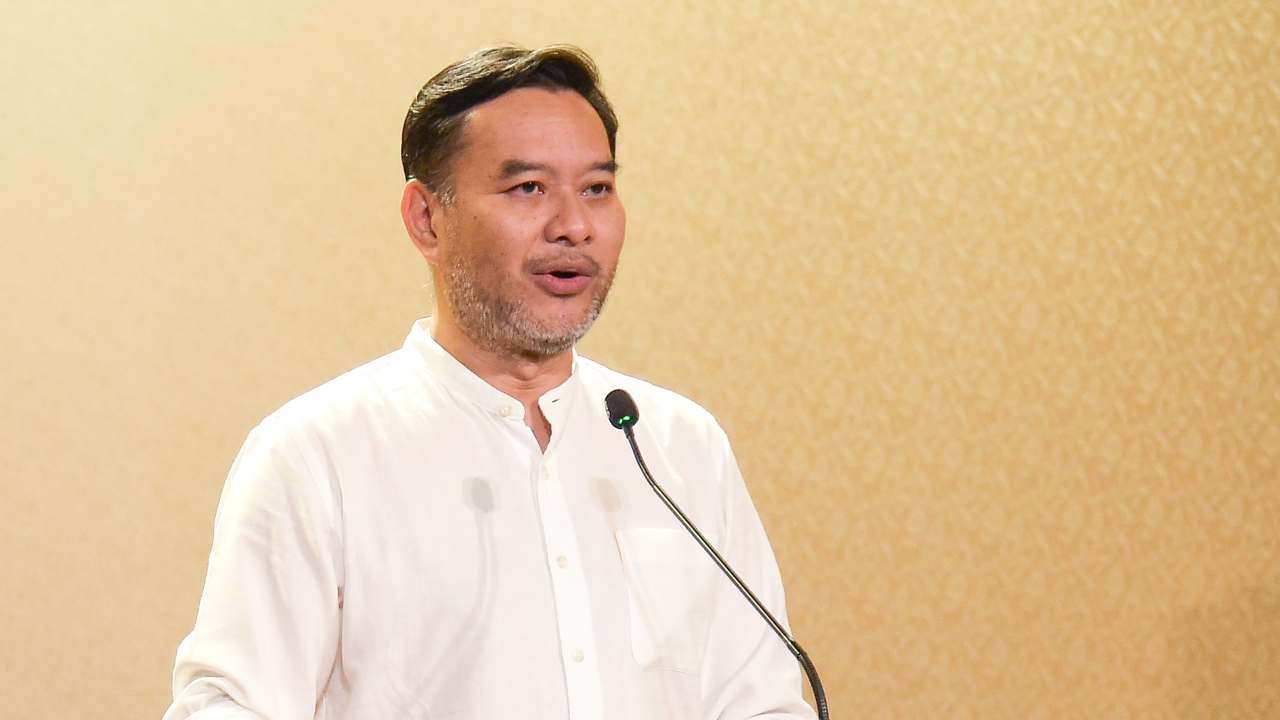
The government announced the establishment of the Joint Information and Communication Center (JICC) to provide centralized flood information and reduce confusion, emphasizing that the current flooding in Bangkok and surrounding provinces differs from that of 2011, with this event featuring the highest rainfall in 43 years.
27 Sep 2026 GMT+7 Mr. Ekaphop Pienpiset, spokesperson for the Office of the Prime Minister, said that in an era of rapid and abundant information flow, which may cause public confusion, the government recognizes that accurate, precise, and timely information is crucial for the daily lives of the people.
Therefore, the government has established the “Joint Information and Communication Center” or JICC to ensure unified communication, acting as a central hub to consolidate all information and deliver it directly to the public, reducing confusion from diverse sources. Official briefings are scheduled daily at 10:00 a.m. via the National Broadcasting Services of Thailand (NBT) and theThai Koo Fah Facebook page.
The Prime Minister's Office spokesperson added that the biggest public concern is whether the current flooding is a repeat of the 2011 crisis. To clarify the differences between the 2011 situation and today’s,
the 2011 floods involved Thailand facing five consecutive storms, causing extensive upstream water flow that filled major dams—Bhumibol, Sirikit, Pasak Chonlasit, and Kwae Noi Bamrungdan—to 100% capacity, necessitating urgent water releases to the central region. In contrast, despite still being rainy season, the four major dams today can still hold an additional 7,260 million cubic meters of water.
. The current problem in Bangkok and its metropolitan area stems from extreme weather conditions with swirling rain covering the eastern and central regions, including Bangkok and surrounding provinces. From 24 September to now, the highest accumulated rainfall measured 340 millimeters, equivalent to 248 million cubic meters of water. This rainfall amount is the highest recorded since 1983, or in the past 43 years.
Regarding water drainage, the government has coordinated with Bangkok authorities to operate the pumping system at full capacity 24 hours a day through pumping stations and drainage tunnels to discharge water into the Chao Phraya River. “If no additional rain falls, it is expected that the remaining floodwaters in most areas will start to recede within 2-3 days, with an average drainage capacity of 50 million cubic meters per day.”
Recent data from the Meteorological Department indicates that a low-pressure area has moved westward of Thailand, causing heavy rain in some areas, especially in the western, eastern, and central regions, including Bangkok and its metropolitan area. Since many areas still have accumulated floodwater, the public is advised to avoid traveling through high-flood zones.
If people remain concerned about the situation, the government has coordinated all agencies to assist and facilitate the public by preparing vehicle parking areas and temporary shelters, with information available from the JICC viathe Thai Koo Fah Facebook page.
“The government fully understands the difficulties and concerns of the people and will not leave anyone to face this situation alone. All agencies are working against the clock to restore safety and normal living conditions as soon as possible,”
he added. The Prime Minister has also ordered restoration and relief efforts to proceed without waiting for all floodwaters to subside, pledging accurate information, rapid assistance, and that no citizen will be left to suffer alone.