

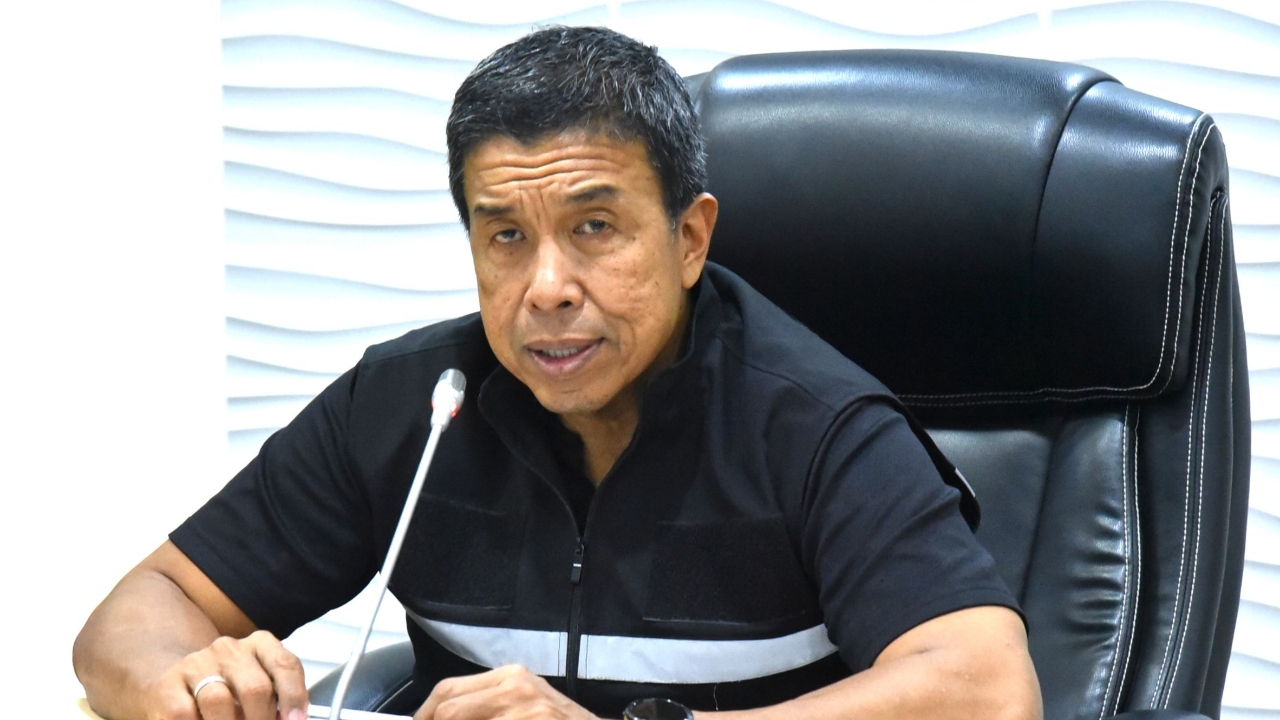
Chadchart inspected Khlong Saen Saeb and Phetchaburi Road, accelerating water pumping and planning citywide rain response. He revealed the situation is improving but canals remain full; meanwhile, Khlong Chan requires more time.
On 27 Sep 2026 GMT+7, Mr. Chadchart Sittipunt, Governor of Bangkok, visited Phetchaburi Road to monitor floodwater management in one of the affected areas. He disclosed that a boat survey along Khlong Saen Saeb to Makkasan Station found water levels dropped by 10 centimeters, a positive sign that will ease drainage. Officials are currently pumping water continuously to gradually reduce levels.
The flooding at Khlong Chan flats was caused by rising water in Khlong Saen Saeb overflowing into the community. Although the main canal’s water level has decreased, water in the community cannot drain naturally due to a protective embankment, so special water pumps are being used to remove it.
Chadchart added that the priority now is caring for residents, especially bedridden patients, providing food and transport. Bangkok has coordinated with several agencies under the Prime Minister’s directive, including the Ministries of Defense, Interior, and Social Development. He ordered detailed action plans for heavily affected areas such as Khlong Chan flats, Lat Krabang, Rom Klao, and Tesaban Songkhro Road, where these communities are not directly adjacent to main canals and require both community pumping and main canal drainage efforts.
Flooding in inner-city areas like Vibhavadi Rangsit and Phetchaburi Roads is localized, impacting travel and traffic. However, weak spots such as Prachasongkroh and Din Daeng intersections are drying up and improving.
Areas still requiring close monitoring include the eastern zone and communities along main canals such as Bang Kapi, Khlong Chan, Ramkhamhaeng, and Lat Krabang.
Regarding weather and rainfall assessments, Chadchart explained that the monsoon has shifted from a low-pressure cell that lingered 24–48 hours to the seasonal southwest monsoon, causing intermittent rain with daily amounts around 15–20 millimeters, which Bangkok can handle.
Chadchart noted this heavy rain event differs from earlier ones during his tenure; previous episodes were localized heavy rains like 300 millimeters in Lat Krabang, whereas this time rain is widespread across Bangkok with total accumulated water nearing 200 million cubic meters, a rare situation since 2009–2013.
Addressing public concern and panic buying, Chadchart advised residents to prepare but not panic. He urged households to keep 1–2 days’ worth of supplies for emergencies, as main canal water levels remain high and near banks, so additional rainfall could trigger flooding.
Residents can report incidents and request help through Bangkok’s hotline 1555 or the Traffy Fondue app. Regarding work-from-home policies, the Prime Minister has encouraged flexible arrangements in government agencies, allowing supervisors to approve as appropriate to ease commuting difficulties, especially in the flooded city center, while private companies are requested to allow employees to work from home.
Chadchart affirmed that Bangkok will not be discouraged by the situation and views this as a critical lesson for improvements. He described it as a natural phenomenon requiring adaptation, with plans to enhance and expand the city’s drainage capacity based on these experiences.
Reporters surveyed flooding on Phetchaburi Road and found several flood-damaged vehicles abandoned. Today, officials from Bangkok’s Engineering Office provided free flatbed towing services to assist residents. Vehicle owners can come to their cars and notify officials to request removal. However, vehicles without owners present cannot be assisted.