

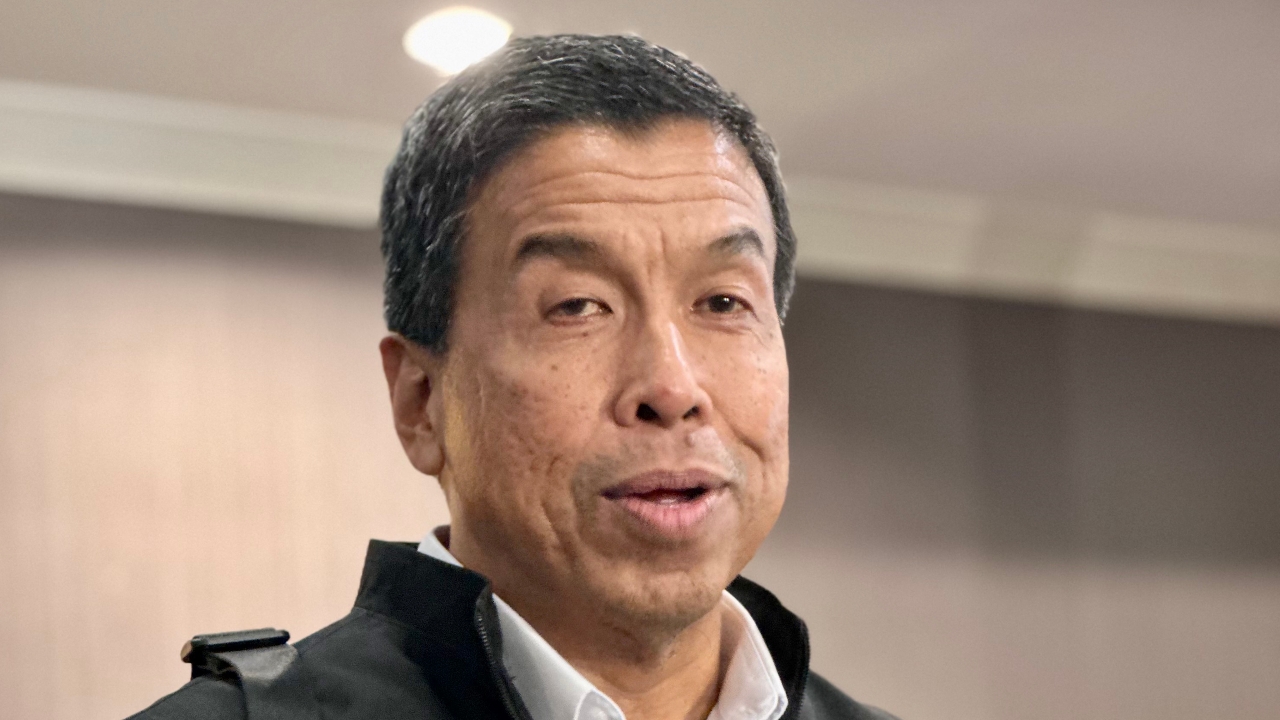
Chadchart revealed that the Meteorological Department expects rainfall to decrease over the next three days, providing a timely opportunity to drain floodwaters in the capital. He stated roads should improve within 2-3 days, while communities will need about 7 days. He confirmed Bangkok uses the same damage-based relief criteria as the Department of Disaster Prevention and Mitigation (DDPM). Special relief measures must await government decisions.
At 12:30 p.m. on 28 Sep 2026 GMT+7 at the Government House, Chadchart Sitthipunt, Governor of Bangkok, spoke after a meeting of the Central Region Flood and Drought Prevention and Mitigation Committee (meeting 3/2026) regarding ongoing flooding in Lat Krabang district. He said that on the night of 27 Sep, 60 millimeters of rain fell in the eastern areas from Min Buri to Lat Krabang, which was much less compared to previous rainfall of up to 200 millimeters. The Meteorological Department explained at the meeting that rainfall is expected to decrease significantly over the next three days, which will help with water drainage.
Chadchart said overall flood conditions in Bangkok are improving, with Saen Saep canal helping to draw water from Khlong Chan in Bang Kapi. Efforts will focus on accelerating drainage in these areas. Prem Prachakorn canal is also improving. Roads along Vibhavadi are starting to clear. The most challenging area is Pravet Burirom canal, which involves moving water from Lat Krabang to Phra Khanong, a winding route. Ekniti (surname) has instructed agencies capable of supporting water pumps, such as the Royal Irrigation Department and the Navy, to provide pumps to hasten water flow from Pravet Burirom canal to the Phra Khanong floodgate. The goal is to push 1,200 cubic meters per second. All efforts are underway as there is a large volume of water, so gradual drainage is necessary. The main canals should see improvement in about two days, and roads are expected to improve in 2-3 days.
“However, for communities, water removal must be done gradually, likely taking about seven days. We are striving to achieve this. In these areas, water must be pumped out because it did not enter through normal drainage systems or pipes but overflowed flood barriers. After water recedes, pumping is required. We are currently assessing each area individually,” Chadchart said.
Asked about the water holding capacity of Bueng Nong Bon, Chadchart said it normally holds up to 5 million cubic meters but currently holds 3 million cubic meters. Bringing water into Bueng Nong Bon is difficult. The government has approved a project to build a tunnel connecting Pravet Burirom canal to Bueng Nong Bon, which is in preparation for construction. Currently, water must flow through Nong Bon canal to reach Bueng Nong Bon, which is slow. Bueng Nong Bon mainly helps the Chalerm Phrakiat road area. In the future, it will provide greater assistance. At present, Bueng Nong Bon is being pumped at full capacity.
Chadchart also addressed relief efforts for affected residents, noting a large number spread across many areas. Each district must identify people needing help, including bedridden patients and food assistance, and expedite food delivery. He estimated about 60,000 to 70,000 people are currently receiving food aid, with each district responsible for its area. Although the situation is somewhat chaotic due to increasing numbers, it is gradually stabilizing. Command centers have been set up in each district, field kitchens deployed, and cooperation from private and public sectors is helping prepare meals.
When asked about relief approval, Chadchart said no final decisions have been made yet. However, Bangkok already follows relief principles based on the Department of Disaster Prevention and Mitigation (DDPM) guidelines, which assess actual damage. Residents have been advised to prepare documentation of damages, and declaring disaster areas allows people to collect evidence of harm. This is the usual procedure. Special relief measures will depend on government decisions.
Asked whether further flooding might occur this year, Chadchart said it is unpredictable. He explained that the current flooding was caused by exceptionally heavy, stagnant rainfall of about 300 millimeters, comparable to conditions in Hat Yai district, Songkhla province. While such events may recur, he cannot say if it will happen this year or in the next decade. He emphasized the need for long-term planning. To handle 300 millimeters of rainfall in the future, infrastructure must be enhanced, such as constructing tunnels connecting multiple points to act as water expressways. When canals reach capacity, water flow slows before reaching the Chao Phraya River. The government has several joint projects with Bangkok, including the Khlong Chan tunnel under construction. Once completed, areas like Bang Kapi will be less affected. Efforts to improve drainage capacity are ongoing but require time for construction and long-term planning.
Asked if continued rain over the next 2-3 days might prevent complete drainage, Chadchart explained the rain is caused by a low-pressure vortex not forecasted by meteorologists. Current forecasts only predict some southwest monsoon winds bringing occasional rain, not the continuous, swirling rainfall seen earlier. Since weather predictions can be uncertain, preparations must be thorough to respond effectively.