

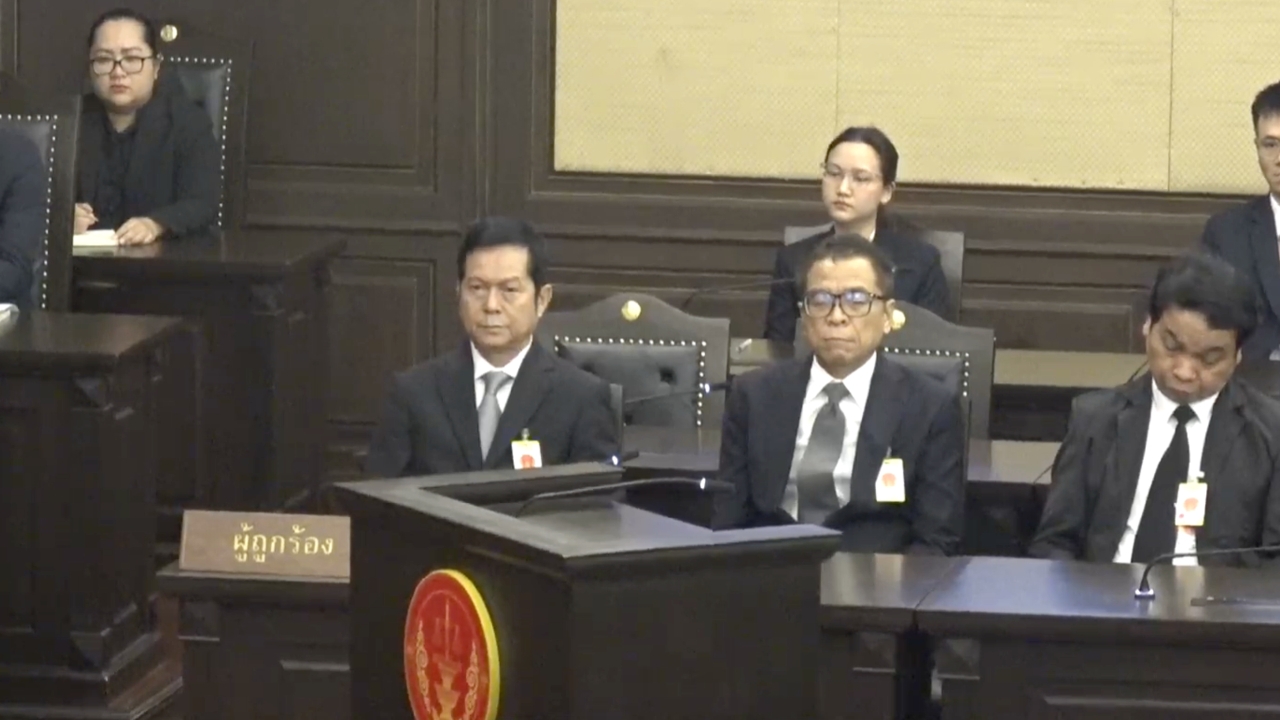
The Constitutional Court ruled that the "election ballot barcode case" does not violate the constitution nor infringe on citizens' rights and freedoms. However, it instructed the Election Commission to implement strict, specific measures to prevent unauthorized access to voter information and voting choices, ensuring confidentiality.
At 14:00 on 28 Sep 2026 GMT+7, the Constitutional Court convened to deliver its ruling on a case brought by the Ombudsman, who had received 22 complaints requesting a ruling under Article 213 of the Constitution. The case concerned the Election Commission's (EC) organization of the general election for members of the House of Representatives on 8 Feb 2026, which mandated ballots to include barcodes and QR codes. The complainants argued this might compromise ballot secrecy and constitutional validity. After oral arguments, deliberations, and voting since 09:30, EC Chairman Narong Klanwarin, Secretary-General Saweang Bunmee, and Commissioner Chanin Noilek personally attended to hear the verdict.
Summary of the ruling: The use of "QR code on election ballots" cannot be linked to identify or verify the identity of voters or their voting results. Issues arise only regarding the "barcode on party-list ballots." The facts show that barcodes are primarily used to identify or classify each ballot, indicating which batch it belongs to, which printing process produced it, or which electoral district or polling station it was allocated to.
This information serves to control ballots and verify the integrity of election management processes, aiming for honesty and fairness, without directly revealing which voter voted for which political party.
Evidence from the investigation found that "barcodes" can link three data components and trace back to ballot numbers, voter order, voting marks, and chosen political parties. This could impact voting principles since the information is not limited to ballot numbers but can disclose an individual's political intent.
However, weighing public benefits from barcode use against potential impacts on voting principles and voter rights and freedoms, the overall ballot management system using barcodes is for election control and verification. It does not directly reveal which voter voted for which candidate or party. Linking personal data, ballot codes, and votes requires additional documents: ballots, stubs, and voter lists.
Regarding ballot storage measures to protect voters' political intent, ballot management from printing, allocation, transport, delivery to polling stations, voting, counting, and storage of ballots, stubs, and voter lists after voting, barcodes serve as a safeguard to prevent cross-district ballot use, i.e., ballots used outside their designated electoral district.
Assigning unique codes to ballots allows officials to verify that ballots present at a polling station were allocated to that area. If each district's ballots have distinct data, cross-district use is more likely to be detected. Barcodes also systematically control the number of printed ballots, their distribution, usage, and remaining ballots, reducing risks of excess or untraceable ballots.
For party-list ballots with both QR codes and barcodes, their purposes differ: QR codes control allocation and delivery of ballot booklets to districts or polling stations, while barcodes control the printing of individual ballots.
Based on evidence and testimony, there is no sufficient proof that any person or agency linked ballots to trace voting results, making it possible to identify how any complainant or voter voted for candidates or parties.
The complainants' claims are insufficient to conclude that requiring barcodes on ballots destroyed or undermined the essential secrecy and freedom of voting, and thus do not violate the constitution. There is no constitutional issue or infringement of complainants' or voters' rights under Articles 50(7), 83(2), and 85(1).
Although including barcodes on party-list ballots does not constitutionally violate voter rights and freedoms under Articles 50(7), 83(2), and 85(1), the facts indicate it may affect public trust in the election management process conducted by the three respondents.
To restore public confidence in an honest and fair election process, the three respondents should design ballot printing formats considering measures to prevent ballot forgery or election fraud, avoiding marks or symbols that could link voter identity and voting results. They should also establish strict, specific storage methods to prevent unlawful access to voter data and choices as per this ruling.
“For the reasons stated, it is ruled that the use of barcodes and QR codes on election ballots does not violate Articles 50(7), 83(2), and 85(1) of the Constitution, and does not infringe upon the rights or freedoms of the complainants or voters.”
However, The Constitutional Court unanimously (9-0) ruled that ballots with QR codes comply with constitutional fairness and, by majority (8-1), ruled that ballots with barcodes also comply with the Constitution.