

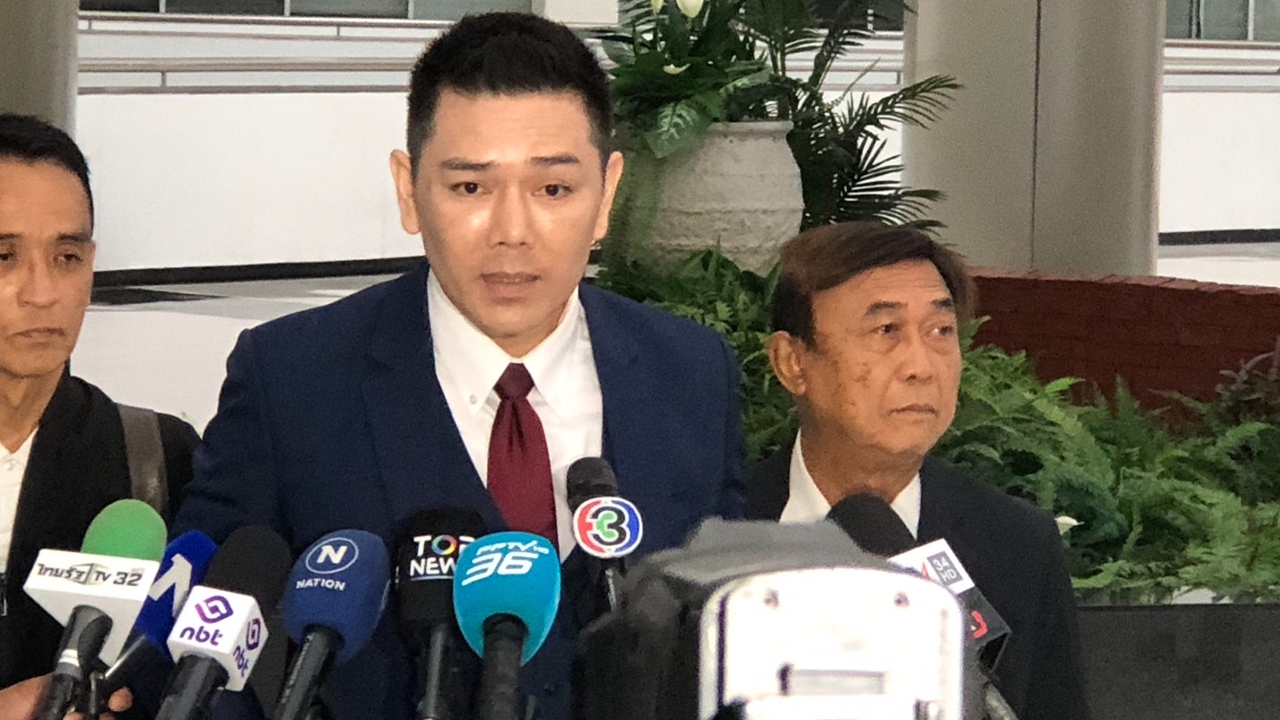
"Lawyer Aun" acknowledged his disappointment but respects the Constitutional Court's ruling that barcodes and QR codes on ballots do not violate the constitution. He expressed concern that these might be used as tools to validate the completeness of the 2026 election.
At 16:30 on 28 Sep 2026 GMT+7 at the Constitutional Court, Mr. Phattharaphong Suphakorn, known as Lawyer Aun, spoke after hearing the court’s ruling that barcodes and QR codes on ballots do not violate the constitution. He accepted the court’s decision, including the justices’ own rulings, but acknowledged that as the petitioner and a legal professional, he understands that the ruling binds all organizations and agencies. This means the Constitutional Court effectively issued a certificate endorsing the election’s validity and the Election Commission precinct officers’ (ECPO) actions as lawful. The court stated that elections must be free from vote-buying fraud and explained in detail that elections can be either completely secret or secret with conditions, and this election uses the latter model to prevent fraud.
Lawyer Aun also expressed regret that the court rejected additional evidence he submitted, such as instances of precinct officers tampering with ballots or assisting certain parties, which he hoped the court would consider in its ruling on related issues.
“I worry that certain political parties, like the 'Broken Spear' party, might benefit from the Constitutional Court’s ruling and use it to assure their affiliates that this election is valid and can proceed as is. This is my greatest concern.”
Lawyer Aun added that while the ruling was not unexpected, he was surprised by the court’s investigation, which took place at the Lak Si district office. Election procedures in urban areas showed no problems, but issues remain in remote districts. Today, he is concerned that the Constitutional Court has effectively certified the ECPO's election duties as honest and complete, which remains a matter of his doubt.