

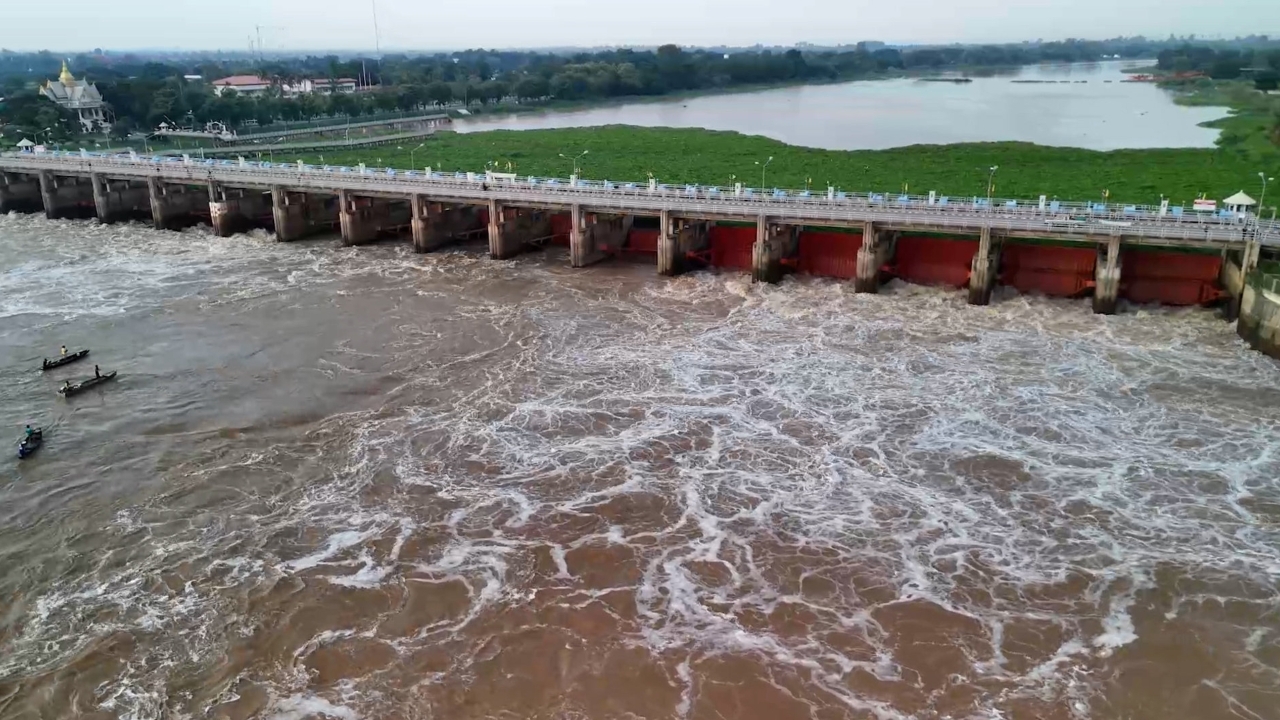
The People's Party updated the water situation across five river basins, warning of increased dam water releases as some have exceeded capacity. It advised close monitoring over the next three days and urged the National Water Resources Office to provide twice-daily briefings on risk and affected areas so local authorities and residents can respond promptly and effectively.
On 29 September 2026, Mr. Decharat Sukkamned, Director of the Policy Center for the Future and Chair of the People's Party Water Situation Monitoring Task Force, reported the latest situation. Although rain in the central and western regions has begun to decrease, many upper dams and reservoirs are at or above capacity. Additional inflows are causing dams to increase water releases, potentially impacting water levels and flood situations for riverside communities.
The People's Party compiled the latest water release reports to help residents in risk areas monitor the situation as follows.
- Water volume above Chao Phraya Dam has increased to 2,564 cubic meters per second, raising the water level above the dam to 17.66 meters above mean sea level. This may affect riverside communities along the Chao Phraya, Tha Chin, and Sakae Krang rivers in Chai Nat and Uthai Thani provinces.
- Currently, Chao Phraya Dam releases water at 2,000 cubic meters per second but is expected to increase to 2,200 cubic meters per second within the next few days, impacting riverside residents in Chai Nat, Sing Buri, Ang Thong, Ayutthaya, Pathum Thani, and Nonthaburi provinces.
- Pasak Chonlasit Dam currently exceeds reservoir capacity at 102.2% and is releasing water at 25 cubic meters per second. It has announced plans to increase releases as follows:
- At the area downstream of Phra Ram 6 Dam, the Royal Irrigation Department will increase releases to between 600 and 700 cubic meters per second from 28–29 September 2026, causing the Pasak River water level to rise by approximately 1.00 to 1.20 meters from current levels.
- Residents in Saraburi, Ayutthaya, and Pathum Thani provinces may be affected by this increased water release from Pasak Chonlasit Dam and should prepare at the highest level.

- Currently, the west bank of the Chao Phraya River receives 328 cubic meters per second from Chao Phraya water releases, plus over 300 cubic meters per second from side inflows on the east (from Chao Phraya) and west (from Mae Klong) banks, totaling about 600 to 700 cubic meters per second. This exceeds the drainage capacity of the Tha Chin River.
- Flooding has occurred today in multiple areas within the Tha Chin basin, including Bang Len and Nakhon Chai Si districts of Nakhon Pathom province, with water levels higher than in 2025 but still below 2011 levels.
- Currently, Vajiralongkorn Dam holds 94.4% of its capacity, and Srinagarindra Dam holds 81.7%. Additionally, side inflows have increased due to heavy rainfall in the past two days.
- The Mae Klong Dam is currently releasing water at 1,666 cubic meters per second and may increase to 2,000 cubic meters per second soon. This may affect riverside and low-lying communities in Kanchanaburi and Ratchaburi provinces but is not expected to cause widespread flooding.
- In Samut Songkhram province, residents will be affected by tidal water surges at different times of the day.
- Currently, Kaeng Krachan Dam holds 98.7% of capacity and releases water at 100 cubic meters per second. There are also side inflows contributing additional water.
- Phetch Dam releases 93.3 cubic meters per second downstream (through Phetchaburi city), distributing 80.6 cubic meters per second into irrigation canals. Water levels in the city remain below the riverbank but require close monitoring.
Mr. Decharat also noted that water release situations are interconnected across basins—such as Chao Phraya-Pasak, Chao Phraya-Tha Chin, Mae Klong-Tha Chin (and including Bang Pakong). Therefore, the People's Party proposes that the National Water Resources Office provide clear, simultaneous updates on risk and affected areas across all five basins at least twice daily. This will enable local authorities and residents to prepare effectively and promptly.
For the public, the People's Party urges all residents along the five river basins—especially those in risk and affected areas—to closely monitor water situations over the next three days. They can also coordinate assistance through the People's Party teams in each province.