

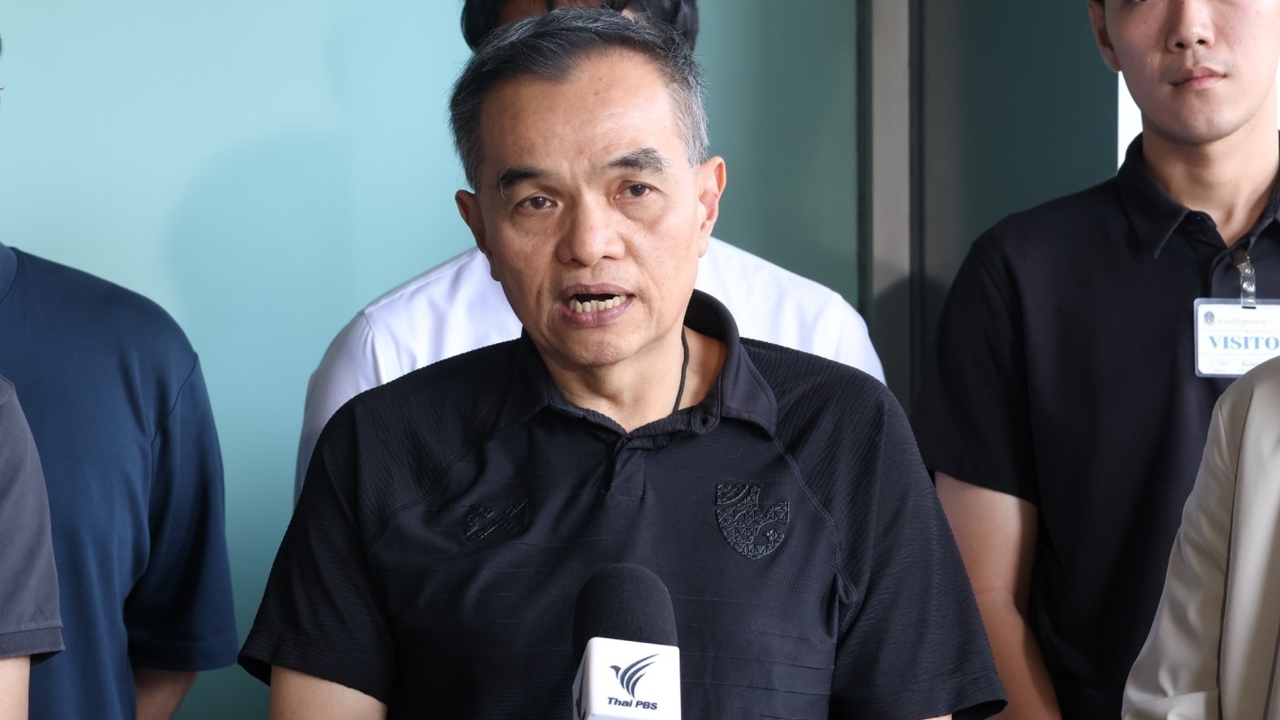
The Consumer Council warns that Bangkok faces increased flood risk following the new draft of the city's master plan, which reduces water absorption areas and expands zones for housing developments and condominiums. The Council is preparing a campaign to raise awareness among Bangkok residents.
On 29 Sep 2026, Mr. Kongsak Sahasakmontri, Subcommittee Member on Real Estate and Housing of the Consumer Council, spoke about the Chao Phraya River basin situation. The Royal Irrigation Department increased water discharge to 1,950 cubic meters per second on 27 September to accommodate rising upstream water. Meanwhile, Bangkok and its vicinity must stay alert to three risk factors: existing floodwaters awaiting drainage, incoming upstream floodwaters, and the advancing tidal surge pushing back. These combined factors put Bangkok at risk of another flooding episode after the increased discharge. More concerning than the short-term water situation is the direction of urban development per the new draft Bangkok master plan, which could reduce the city's long-term water retention capacity.
“Compared to the current 2013 Bangkok master plan, the western side features diagonal green zones classified as rural conservation and agricultural land, serving as water retention areas functioning like flood cushions. However, in the new draft plan currently facing opposition, these areas on the west side have completely disappeared, replaced by yellow and orange zones allowing increased construction of housing estates and condominiums. The question is: if one day upstream water, rainfall, and tidal surges converge simultaneously, where will Bangkok find space to absorb the water?” Mr. Kongsak stated.
Mr. Kongsak added that concerns are not limited to the west side. According to the new draft master plan, important eastern areas that support Bangkok's water retention and drainage, such as Nong Chok, Min Buri, Khan Na Yao, Sai Mai, and Lat Krabang, also see reductions in diagonal green zones or water retention areas. Open spaces and original water retention sites, including many flood cushion projects, have been canceled and repurposed for higher-density residential developments—even in low-lying, flood-prone areas. This results in a massive financial burden to invest in drainage systems, including canal excavation and expansion, large water drainage tunnels, and increasing numbers of pumps. These engineering solutions only mitigate flooding temporarily and clearly fail to handle large volumes of water, causing escalating damage, as evidenced by the recent Bangkok floods, underscoring flawed urban planning.
“We are witnessing the gradual loss of open spaces, permeable ground, and water retention areas, replaced by housing and buildings constructed for residence and profit. The hope is to compensate by digging and expanding canals, building giant water tunnels, and installing pumping systems to drain water promptly. But today's water situation tells us these drainage systems have limits. The more we lose areas that once absorbed water, the worse the damage will be in the future. This is what the public must understand before allowing this city plan, which benefits some groups but harms many, to pass,” Mr. Kongsak said.
Upstream Floodwaters Arrive — Tidal Surge Compounds Risk
Mr. Kongsak also said these concerns align with the latest water situation analysis by Dr. Sittangsu Pilailo, a water management expert, who warned that Bangkok must expedite water discharge while sea levels are favorable, as upstream waters are gradually arriving. From late September to early October, there is a risk of tidal surges returning. If existing floodwaters have not been drained in time, it will become more difficult to discharge water from Bangkok.
Data from the Royal Irrigation Department confirms the increasing upstream water. On 23 September, it was forecasted that water volume at C.2 Nakhon Sawan might reach approximately 1,800 cubic meters per second. Actual figures on 26 September rose to 1,827 cubic meters per second, with water discharge downstream of the Chao Phraya Dam being gradually increased in response.
Dr. Sittangsu also emphasized the importance of managing dams according to engineering principles, especially dams with high water volumes. Delaying discharge merely to avoid short-term impacts may increase risks to dam stability. Meanwhile, Bangkok must use periods of low sea levels to accelerate drainage of canals and water systems to prepare space for new rainfall and incoming upstream water.
Revealed: Five Water Retention Areas Canceled
Meanwhile, the 2026 fourth revision draft of Bangkok's master plan cancels five designated flood prevention water retention areas. The city lists these areas explicitly: Bueng Chuan Chuen Village in Bang Khen, Bueng Manee Ya Village, Bueng Suan Siam, Bueng Chuan Chuen Parkville Village, and Bueng KC Lakeview Village, as well as the eastern flood cushion project at Khu Bon, which has already been removed from the Bangkok master plan.
Affirms Water Retention Area Reduction Increases Risk
Regarding the key urban development issue in recent years, Mr. Kongsak noted that increasing building density while decreasing ponds, canals, open spaces, and water retention areas forces the city to rely increasingly on engineered drainage systems.
“A city filled with concrete, with ponds filled in, canals reduced, and water retention areas diminished, yet we place all hope on tunnels and pumps. The simple question is: if upstream water, rainfall, and tidal surges all come together, can these systems drain water fast enough? We already have real-life answers from the recent events we have faced over the past several days,” Mr. Kongsak said. Mr. Kongsak stated.
Mr. Kongsak believes the current water situation should serve as a “warning signal” before decisions are made about the draft master plan, as land-use designation is not only about where to build houses or buildings but about how much space Bangkok will have to absorb water in the coming decades.
Calls for Joint Action to Request Amendments
Currently, the fourth revision draft of the Bangkok master plan is in a 90-day public announcement process from 10 August to 9 November 2026. Stakeholders have the right to submit requests to amend, change, or cancel provisions under Section 30 of the 2019 Town Planning Act.
However, Mr. Kongsak said a major problem is that many citizens are unaware of how the draft plan changes will affect their lives, including impacts on flooding, traffic, building density, data centers, illegal establishments, and overall community quality of life.
“Most people do not understand how this city plan relates to their lives because the map and regulations do not clearly explain that changing a zone’s color or increasing density, or reducing water retention areas, ultimately affects who will bear the consequences,” Mr. Kongsak said. Mr. Kongsak stated.
The Consumer Council’s Subcommittee on Real Estate and Housing plans to promote communication and campaigns to increase public access and understanding of the draft city plan’s content. They aim to connect seemingly separate issues—flooding, reduced water retention areas, over 100 illegal tall buildings, unauthorized data centers and establishments, and increasing urban density with diverse building types clustered closely—showing these all relate to shaping Bangkok’s future through the city plan.
“We do not want people to realize only after buildings rise, ponds disappear, or floods enter their homes. The Bangkok city plan must concern all residents, not just investors, landowners, or big developers. Before the 9 November 2026 deadline to submit amendment requests during the 90-day public announcement, the public should know what changes this plan will bring, who will be affected, and how to voice their opinions about the future of their city,” Mr. Kongsak said.
The Consumer Council believes reviewing the draft city plan should not focus solely on economic potential or land development value but must inform about impacts and include disaster resilience related to local contexts, community effects, and long-term costs borne by residents as crucial conditions in planning. This approach ensures current urban development does not increase future risks for Bangkok residents.