

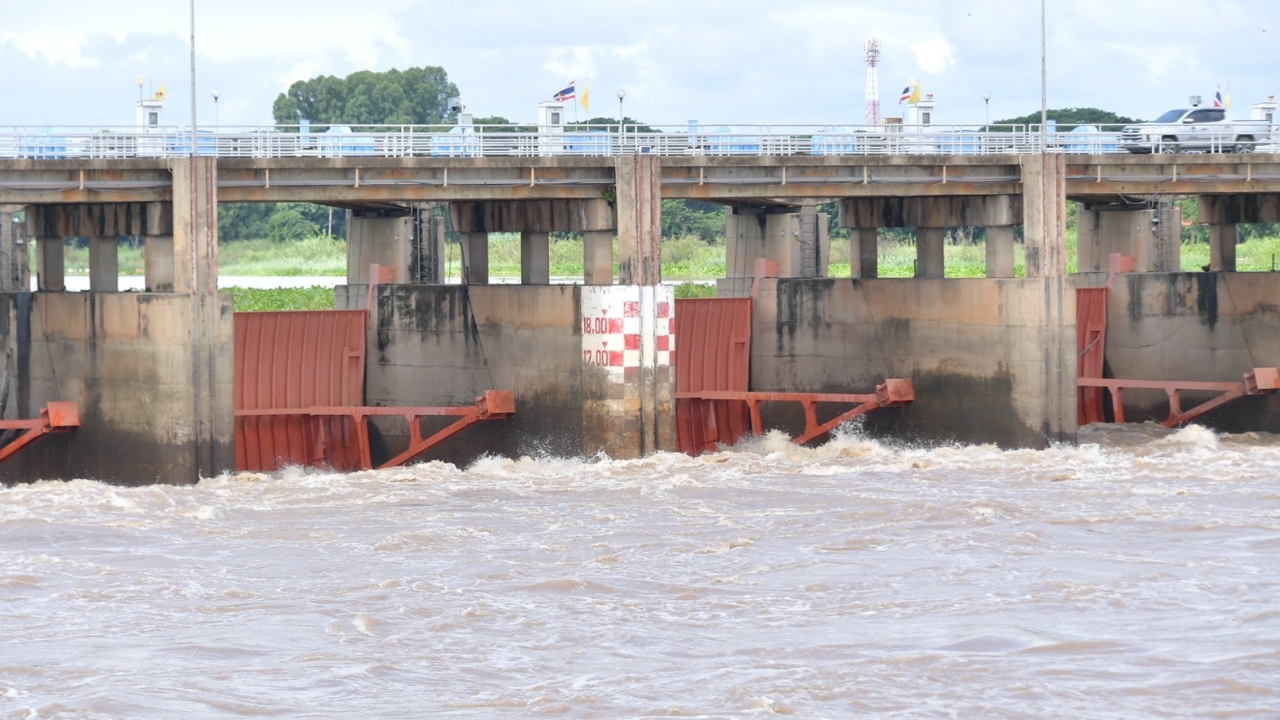
Urgent! Starting at 12:00 noon today (30 Sep 2026), the Royal Irrigation Department has increased the water discharge of the Chao Phraya Dam to 2,500 cubic meters per second, warning 11 provinces and Bangkok to urgently move belongings to higher ground.
On 30 September 2026, Second Lieutenant Phatthararusmi Thongsaluaykorn, Deputy Spokesperson of the Prime Minister's Office, revealed that the government has urged residents in the Chao Phraya River basin to exercise increased caution and prepare in advance for the water situation. The Royal Irrigation Department has been closely monitoring the water levels and has recently raised the discharge through the Chao Phraya Dam to 2,500 cubic meters per second starting from 12:00 noon on 30 September 2026 to manage the increasing water volume in line with the current situation.
Previously, the Royal Irrigation Department issued the 6th water situation warning for the Chao Phraya basin to the governors of 11 provinces: Uthai Thani, Chai Nat, Singburi, Ang Thong, Phra Nakhon Si Ayutthaya, Suphan Buri, Lopburi, Pathum Thani, Nonthaburi, Samut Prakan, and Bangkok. This was to alert relevant agencies and the public to prepare for the expected increase in water volume.
The Royal Irrigation Department forecasts the water situation over the next 1–5 days. On 2 October 2026, at station C.2 in Mueang Nakhon Sawan District, the maximum flow may reach approximately 3,000 cubic meters per second. Additionally, around 700–750 cubic meters per second of water from tributaries will contribute, resulting in water volumes above the Chao Phraya Dam reaching approximately 3,600–3,700 cubic meters per second. Meanwhile, the department expects to receive about 550–580 cubic meters per second of irrigation water intake on both sides.
Due to the rising water volume trend, the Royal Irrigation Department has adjusted its water management plan by increasing the discharge through the downstream side of the Chao Phraya Dam to 2,500 cubic meters per second. This requires close monitoring of water levels in low-lying areas outside the flood embankments, especially along the Chao Phraya and Noi Rivers.
Areas requiring special vigilance include Phra Nakhon Si Ayutthaya, Ang Thong, Singburi, and Chai Nat provinces. In Phra Nakhon Si Ayutthaya, the districts of Sena, Phak Hai, Bang Ban, Phra Nakhon Si Ayutthaya, Bang Pa-in, and Bang Sai are highlighted. Ang Thong includes Wiset Chai Chan, Pa Mok, Mueang Ang Thong, and Chaiyo districts. Singburi covers In Buri, Phrom Buri, and Mueang Singburi districts. Chai Nat includes Sanphaya District.
The Royal Irrigation Department noted that the increased water discharge will not affect communities located within the flood embankments. However, residents living in low-lying areas outside the embankments and along both banks of the Chao Phraya and Noi Rivers should closely monitor the situation and prepare in advance.
The Deputy Spokesperson of the Prime Minister's Office emphasized the importance of preparation before water levels rise. Residents in risk areas are urged to check vulnerable spots around their homes and communities and take appropriate actions, including:
1. Moving belongings to higher ground, especially electrical appliances, important documents, and valuables that could be damaged by water.
2. Relocating vehicles, motorcycles, livestock, and agricultural equipment to safe areas if they are in risky locations.
3. Preparing essential items and emergency contact channels in case evacuation becomes necessary.
4. Continuously monitoring water levels and official announcements, as the situation may change depending on rainfall and upstream water inflows.
The Deputy Spokesperson reiterated that this warning serves as an early preparation. The public is advised to "stay alert but not panic," especially those living along rivers and in low-lying areas outside flood embankments. People should use this time to manage their belongings and prepare their households rather than waiting until water levels rise before taking action. They should closely follow information from the Royal Irrigation Department, provincial authorities, and relevant agencies.
The Royal Irrigation Department will continue to monitor water levels, rainfall, and upstream inflows continuously. Should the situation change or require adjustments to water management plans, they will promptly inform the public to allow all areas sufficient time to prepare and manage risks effectively.