

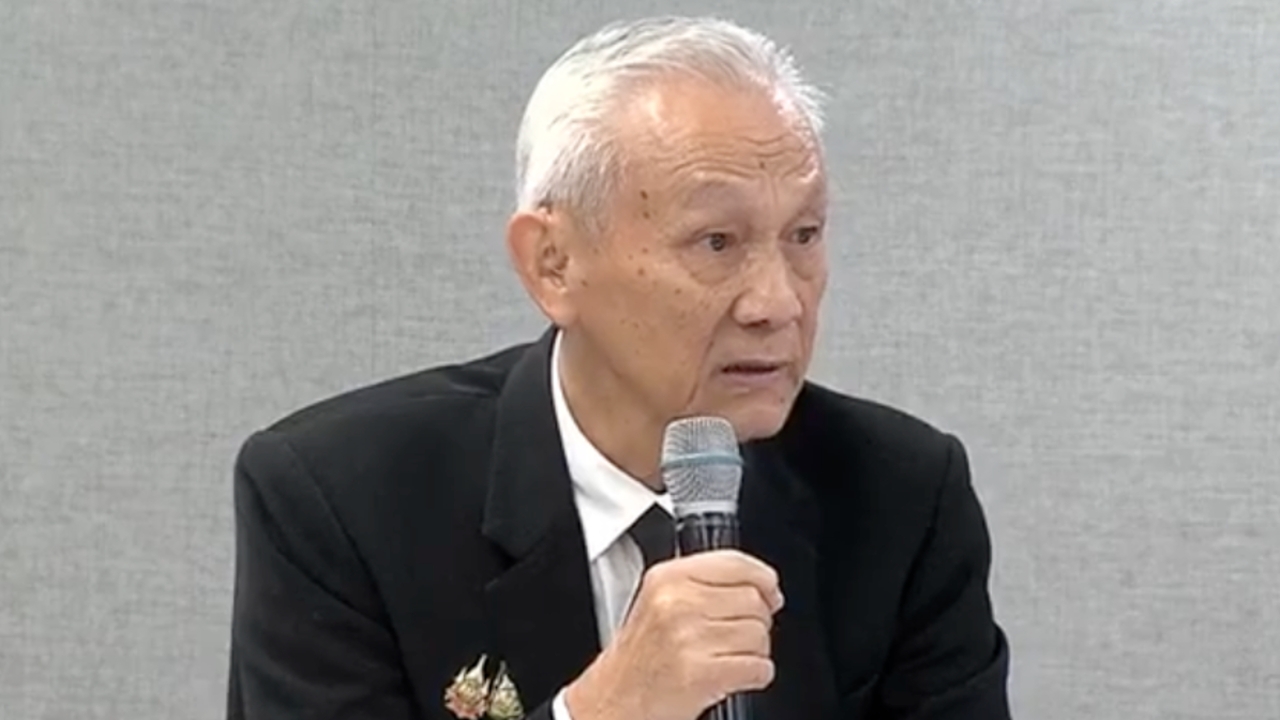
Charan declared that collusion among senators marks a decline in democracy, warning that prosecuting individuals can only replace senators but leaves the system intact due to alternates stepping in. He proposed using evidence from the Supreme Court to submit through the Ombudsman to the Constitutional Court for adjudication.
On 30 September 2026, Special Professor Charan Phakdeethanakun, former Constitutional Court judge, commented on the Senate collusion case, stating that the public and stakeholders widely agree the process was dishonest, unfair, and unconstitutional. The problem began with the current constitutional framework for selecting senators, compounded by this Election Commission's inexperience with the system, resulting in inadequate and loose controls. He stressed that allowing this to continue risks whichever faction is better at collusion prevailing.
"Those less skilled at collusion get fewer seats; those better at it gain more," Charan said. He sees the need to change the system but requires constitutional amendments. He pessimistically predicts success may take more than five years due to multiple safeguards protecting independent bodies' powers, so efforts must show results within three years before this Senate's five-year term ends.
Charan believes that continuing individual prosecutions will not dismantle the 'blue Senate' system. For example, if the Supreme Court reviews 77 cases and finds all guilty, it would revoke their candidacy rights, removing those senators, but alternates would replace them, allowing the system to persist. Individual investigations could take up to three years, or one year if expedited, while criminal cases might take five years, by which time new Senate elections would have occurred.
"Neither the Supreme Court, Administrative Court, nor Criminal Court has the authority to overturn the Senate election system," Charan said about the 2024 Senate elections, emphasizing that the issue cannot be ignored because "this is the decline of democracy," where free and fair elections are fundamental in liberal democracies.
Charan proposed using the Constitutional Court as it alone has the power to examine whether election systems violate the constitution. If found unconstitutional and unenforceable, it could lead to new elections for the entire parliament. He said the same principle applies to the Senate election system, citing the barcode and QR code case on ballots as an example of a successful constitutional court petition decided on 28 September, less than a year after the election.
Regarding the barcode and QR code case, Charan agreed that their use did not breach ballot secrecy, saying, "No country cancels a member of parliament election over using QR codes or barcodes." The key issue is why this case reached the Constitutional Court, while three prior petitions on Senate elections were rejected.
Charan explained that Senate election petitions are restricted under constitutional Article 213 and related procedural laws because other remedies exist for affected parties. In contrast, the barcode/QR code case was brought by the Ombudsman after receiving complaints and evidence from 22 victims, leading the court to accept it by a 6-3 vote. He noted many victims and nationwide evidence exist for the Senate election case, including discarded ballots and documents, but it remains uncertain whether the Ombudsman will accept it, as prior petitions were rejected.
Therefore, Charan suggested using the Supreme Court case as support, asking the court to summon additional evidence such as financial transactions and communication records via phone, Line, and other apps—especially financial trails the Election Commission refused to accept by a 4-3 vote. He questioned the reasons for rejection, emphasizing that major collusion cases require scrutiny of financial evidence. He said, "If you refuse financial evidence, it's over," highlighting this as a weakness of the current Election Commission but expressing confidence the Supreme Court will demand examination.
He also supported the Supreme Court summoning witnesses who have recanted to testify again, and using polygraph tests before testimony. He said polygraphs provide scientific evidence useful in court even if not conclusive. Without polygraphs, investigators can record witness statements in case files and prosecutors can present them. If witnesses contradict themselves, courts weigh which testimony to believe.
Charan said if evidence implicates more than 77 individuals, although the Supreme Court cannot disqualify those not petitioned by the Election Commission, the facts in its verdict can support a petition to the Ombudsman, showing systematic collusion involving multiple levels—large, medium, and small systems—some benefiting family members.
If the Ombudsman forwards this evidence to the Constitutional Court, Charan is confident the court will accept the case and proceed quickly since the evidence was vetted by the Supreme Court. He said, "The country cannot wait on this matter," estimating a ruling within a year or as quickly as six months with serious effort, as the evidence is well established.
For issues to be reviewed, Charan cited constitutional Articles 107, 215, and 224, focusing on integrity and fairness in Senate elections, and the duty of the Election Commission and independent bodies to act impartially and honestly—"not under anyone's orders, fear, or owing favors." If proven unconstitutional, the election system could be invalidated under Article 5, paragraph one, leading to the removal of all 200 senators.
On ballot secrecy, he argued it should not be a focus in reviewing Senate elections because the constitution mandates a self-selection system allowing introductions and discussions, differing from House elections. The critical point is honesty and fairness. Based on information received, he said the current Election Commission's Senate election system shows serious negligence, which under international standards and Thai Supreme Court rulings constitutes dishonesty and should be investigated as proposed.
In closing, Charan urged proceeding through legal channels without focusing on criminal charges or prosecuting the Election Commission. He said, "Do not incite mass protests because they do not help and harm democracy. Protests are not democracy. Therefore, I must apologize again—I do not support inciting mass protests."