

The Prachachon Party warns that the flood crisis is ongoing and urges the government to establish a war room for overall command and to decentralize field operation centers after finding problems with resource allocation and systematic task distribution, preparing for new rains after 5 October.
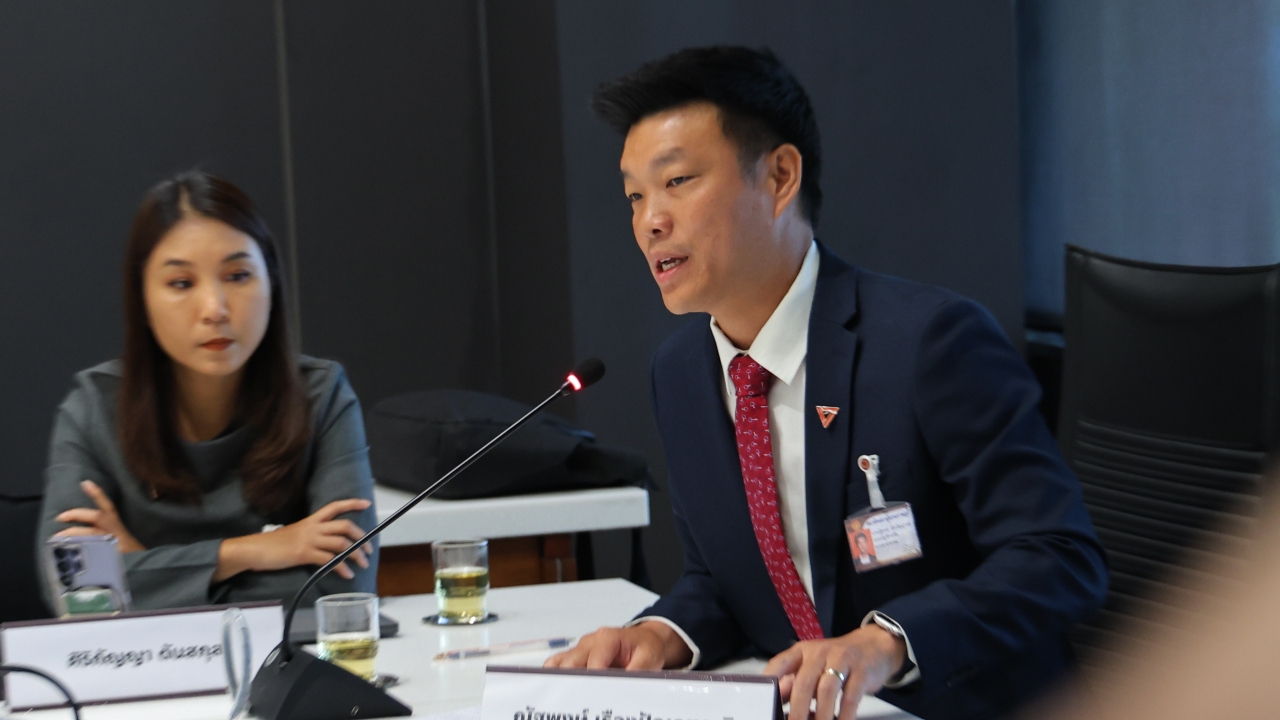
On 30 September 2026 at the Parliament building, the Prachachon Party held the 14th Shadow Cabinet meeting led by Mr. Natthapong Rueangpanyawut, party leader, along with Mr. Pichon Chaowaphattanawong, party secretary-general; Ms. Sirikanya Tansakul, deputy party leader; Mr. Veerayut Kanchuchat, deputy party leader; and Mr. Decharat Sukkamnerd, director of the Future Policy Center, addressing flood situation monitoring in several provinces and proposals to the government.

Mr. Natthapong stated that from field monitoring by the Shadow Cabinet team, a key shared problem is the lack of appropriate on-site command centers tailored to specific local issues. Although many sectors—including government agencies, military, foundations, civil society, and political groups—assist the public, there remains a lack of systematic resource allocation and task division.
Disaster management thus requires both centralization and decentralization simultaneously: centralized command, decision-making, and resource allocation at the national level, alongside decentralized field operations to address the distinct contexts of each area.

Mr. Pichon commented on the situation in Bangkok and neighboring provinces, noting that coordination between Bangkok Metropolitan Administration, the central government, and resource agencies is minimal and slow. In many cases, local politicians have had to coordinate requests for military or other agency vehicles to assist residents, while civil groups willing to help do not know whom to contact.
Additionally, issues arise with aid distribution—for example, large quantities of boxed meals are stockpiled in single locations and fail to reach residents, especially vulnerable groups unable to collect aid themselves. Many areas still require sandbags and water pumps to remove stagnant, foul water from homes.
Mr. Pichon further said the question he hears most from residents is when the water will recede, as this information is critical for deciding how to stockpile food, travel, or whether to evacuate. The government must communicate the situation transparently to enable people to plan their lives.

Ms. Sirikanya reported that from visits to Pathum Thani and Nonthaburi, many areas face standing water awaiting drainage as of 5 October. Although water levels in some places reach only about knee height, allowing residents to venture out for food, water, or medicine, a worsening issue is water turning foul, with sanitation systems and toilets unusable and waste collection disrupted.
Residents want information on how long they must endure these conditions to decide whether to stay or move to shelters. Meanwhile, surrounding provinces face combined floodwaters from upstream, tidal influences, and additional rain risks, requiring urgent drainage in areas with outlets and preparation of pumps and response systems.
Mr. Veerayut described the eastern region situation, especially Prachinburi, where a compounded crisis arises from unresolved industrial waste issues. Heavy floods have carried plastic debris, wires, and contaminants into agricultural lands.
Field visits found iridescent oil-like stains and chemical odors in flooded areas. Beyond immediate effects on crops and farmers' incomes, there is concern over long-term impacts on soil quality, crop safety, and future agricultural viability. Prachinburi requires special case management including soil and contaminant testing, industrial waste management, and ongoing monitoring of agricultural impacts.

Mr. Decharat said that overall water situation shows many reservoirs at about 90% capacity, some at 100%, necessitating urgent water discharge and increasing risks to already flooded riverside areas. Special attention is needed for the Mae Klong River, where discharge at Tha Muang has increased to 2,142 cubic meters per second, with plans to raise it to 2,500 cubic meters per second by midday on 30 September. The great flood event in 1996 saw flows around 3,000 cubic meters per second, indicating the current situation is approaching a high alert level, especially in Kanchanaburi, Ratchaburi, and Samut Songkhram.
Currently, water from Mae Klong, Tha Chin, Chao Phraya, Pasak, and Bang Pakong Rivers is impacting each other, making separate basin management impossible. The National Water Resources Office is urged to urgently provide an overall management picture and approach for the entire system.
Mr. Natthapong summarized that climate forecasts indicate a possibility of heavy rains again starting 5 October, potentially affecting western regions, Bangkok, and central areas. He emphasized this is a worst-case scenario assessment for preparedness, not a guaranteed prediction.
Therefore, although skies are clearing and water levels are dropping in many areas, the government should not consider the crisis over. Management should be divided by area situation: (1) areas where water has receded needing urgent hygiene, recovery, and relief efforts; (2) Bangkok and its vicinity requiring accelerated drainage of communities and alleys; (3) already flooded riverside areas at risk of rising water levels; and (4) areas not yet flooded but at risk, such as the Mae Klong basin.
Mr. Natthapong cited Pak Kret Municipality's relief example, which set up community-near reception points and allowed online submission of forms for aid, demonstrating that the government can adopt effective local approaches elsewhere.
Regarding command structure, he proposed a national-level war room to assess and communicate the overall situation and risk scenarios to the public regularly, alongside necessary local command centers to enable rapid response to residents, especially in densely populated and vulnerable communities.
Mr. Natthapong also said the Prime Minister and Cabinet should attend Parliament sessions to directly explain and answer members' questions, following agreement by both sides' whips to allow urgent verbal motions on flood management. Hearing problems brought from each area would benefit problem-solving for the public.
