

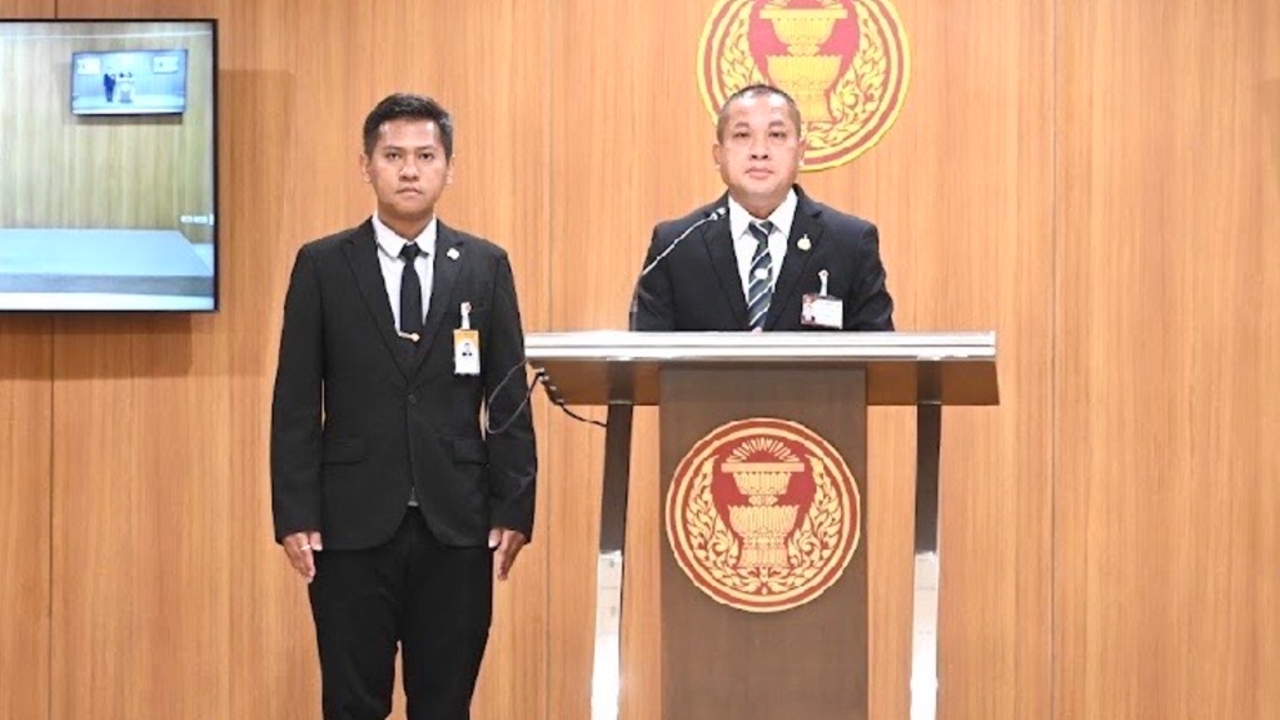
Daschai, an MP from the Kla Tham party, revealed the issue of over one million substandard products valued at more than 1 billion baht. He urged the parliamentary committee to examine the money trails and the true powers behind this, fearing that import trade might be exploited as a money laundering channel.
On 30 Sep 2026 GMT+7, Daschai Ekpatphee, an MP from Lampang representing the Kla Tham party and a member of the Anti-Money Laundering and Narcotics Control Committee, reported progress on the investigation into the seizure of substandard products. He stated the committee is examining possible links between the importation of substandard goods and financial trails, as these issues could impact public safety and the transparency of the economic system.
Daschai disclosed that, according to the committee's findings, more than 700 legal entities have had goods seized by the Thai Industrial Standards Institute (TISI) for inspection. The total number of items exceeds one million pieces, with estimated damages of no less than 1 billion baht.
The inspected goods include reinforced concrete steel bars and structural steel, essential materials for building houses and structures. Next are electrical wires, followed by electrical appliances, batteries, skincare devices, grills, and other products directly related to people's lives and property safety.
Daschai questioned how these imported products could pass customs procedures and enter the country before TISI intervened to inspect and seize them. He emphasized the need to investigate the entire process from importation to domestic distribution.
Regarding legal issues, Daschai stated that importing such goods may violate relevant provisions of the Customs Act B.E. 2560 (2017), which carries penalties including imprisonment, fines, and possible confiscation of seized goods following legal procedures.
Meanwhile, the committee is also focusing on whether the importation of these large-volume, high-value goods is connected to predicate offenses under anti-money laundering laws. Daschai explained that, internationally, trade can be used to transfer or conceal sources of funds through commercial transactions, such as misrepresenting product prices or cycling unexplained funds through import businesses.
“Finding substandard imports at quantities and values reaching billions of baht raises reasonable suspicion that international trade processes might be used to disguise illegal financial transactions,” said Daschai.
The committee's investigation framework centers on three key points: tracing the sources of funds used for imports; examining shareholder structures and the Ultimate Beneficial Owners; and reviewing related financial transaction pathways, including ongoing and closed cases.
Daschai emphasized that the committee's work aims solely to uncover facts and track money trails, not to accuse or conclude that any company or legal entity is guilty. It will also respect the justice process of agencies handling primary cases.
The committee plans to invite relevant agencies such as TISI and the Customs Department, along with executives or authorized representatives of involved legal entities, to provide explanations and submit documents for consideration at the next meeting held at the Parliament building.
After receiving explanations and reviewing documents, the committee will compile all information. If any suspicious financial trails or transactions are found, the committee will forward these to law enforcement agencies including the Anti-Money Laundering Office, TISI, and Customs for appropriate action within their authority.
Daschai said the committee also intends to propose policy recommendations to prevent the importation of substandard goods from being used as a means for financial crimes. He urged honest businesses to present documents and information to clarify the facts.
“The safety of people's lives and property must not be sacrificed for the illegal gains of any group,” said Daschai.