

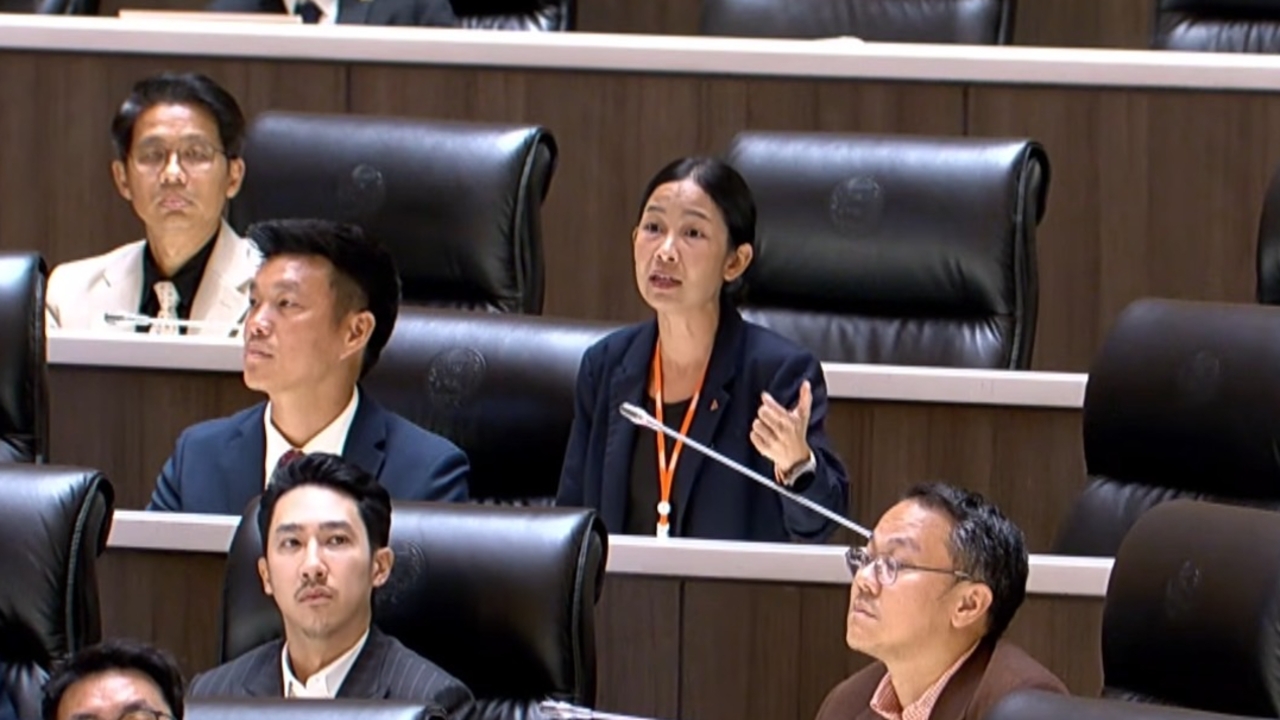
PPP MPs from Bangkok debated an urgent motion on the flood situation, highlighting the 'disaster plus' scenario and condemning the government's failed flood response. They warned of delays, uncoordinated aid, and lack of information for citizens, asking how many more years it will take before the government stops merely reacting to crises and starts solving problems systematically.
On 30 Sep 2026 GMT+7, during a House of Representatives meeting, an urgent motion jointly submitted by multiple political parties regarding flooding in Bangkok and several central provinces was considered. PPP MPs from various Bangkok constituencies shared reflections on their areas, voiced citizens' concerns, and offered suggestions to the government on managing the flood situation.
Mr. Chumphon Lakkham, PPP MP for Bangkok's 20th district (Lat Krabang). He stated that Lat Krabang district has faced continuous flooding for six days. Although floods have recurred over many generations, there remains no systematic solution despite substantial annual government spending on sandbags and relief measures.
The severity this time comes from inadequate early warning systems, leaving people unprepared. There have been incidents of electrocution deaths, and most recently, a drowning death in Romklao Housing Zone 11. Elderly and bedridden patients have had to be evacuated amid severe traffic congestion limiting access. Currently, residents face polluted water, submerged vehicles, and property damage. He called for swift, fair, and simplified compensation measures.
Another major problem is the lack of a designated command center to allocate aid systematically. As a result, agencies, foundations, and political parties provide help independently; some locations have food surpluses while others, especially deep alleys, remain neglected. Flooding affects not only Romklao Housing but all six subdistricts of Lat Krabang. The government and Bangkok Metropolitan Administration (BMA) should establish a command center, zone areas, and distribute resources to cover every community, alley, and village. Moreover, government and BMA coordination and communication about water drainage remain insufficient; even local MPs lack information, and the district office has never coordinated with his team, causing fragmented efforts rather than unified action to reduce residents’ hardships.
Mr. Chumphon also criticized the prime minister’s site visit, originally scheduled for 16:00 but arriving after 22:00, inspecting only main roads. Security preparations and route closures from the evening to accommodate the prime minister’s convoy greatly disrupted road and boat access for aid to residents.
, Mr. Korkiat Kosungsak, PPP MP for Bangkok's 14th district (Bang Kapi-Wang Thonglang). He reported that over the past five days, some communities experienced water levels up to 1.5 meters, alongside power outages and water supply stoppages. Many households were trapped without food or drinking water, with elderly and sick residents stranded inside. Assistance arrived very late.
He observed that government warnings and preparedness lagged behind actual conditions. By the time authorities urged residents to prepare for flooding and raise belongings, some homes were already flooded. After the water recedes, flood relief for Bangkok residents should be fast without repeating previous delays.
Regarding drainage, since the BMA governor admitted canals were full, he questioned how much pre-rain drainage was done in Khlong Saen Saep, who ordered it, and whether operational records exist. Khlong Saen Saep acts as a bottleneck in Bang Kapi’s drainage system; when full, water from Khlong Chan cannot drain further. Even increasing pumping capacity cannot fully solve the problem.
Although Bangkok has nearly 2,000 canals, over 200 pumping stations, and large drainage tunnels, the city’s eastern expansion has encroached on water retention areas for decades, without corresponding drainage system upgrades. Citing unpredictable events can no longer excuse failures. He also criticized Bang Kapi district office’s initial response during the crisis: when water levels rose rapidly on the first night, his team requested the district director to open a shelter but was told to wait until the next day, despite disaster situations not following office hours. Additionally, residents reported being unable to contact the district office for help.
"I urge related agencies to urgently assist affected residents. This is a 'disaster plus' scenario where people face poverty, hardship, and increased suffering due to the state's inadequate disaster management," he said.
, Ms. Sasinan Thammanithinan, PPP MP for Bangkok's 11th district (Sai Mai). She noted that during the 2011 great flood, Sai Mai was among the slowest areas in Bangkok to dry out. More than 15 years later, Sai Mai still serves as a catchment for water from other parts of Bangkok. She questioned why Thailand has not learned from previous floods to improve preparedness.
Throughout the flooding, residents’ needs evolved with the situation: initially panicked and needing sandbags; by the second day, requiring food; by the third day, food demand rose to 2,000–3,000 boxes daily yet remained insufficient. A key reason was lack of clear information on how long the flooding would last. Early reports suggesting water might recede in 1–2 days left people unprepared for a 5–7 day ordeal.
The latest government communication was a Cell Broadcast message urging residents to move belongings to higher ground while floodwaters had not yet receded, but no continuous updates on how high water might rise, where to park vehicles, or how long the situation would last. Even local MPs could not get clear answers from district authorities.
During four days of her field visits, she rarely saw aid vehicles or agencies arriving. However, when Prime Minister Anutin Charnvirakul visited Sai Mai, many officials and water pumps appeared. She questioned how much longer residents in Sai Mai, Pathum Thani, and Nonthaburi must endure temporary, reactive flood management, despite available technology and data for proactive disaster planning.
In closing, Ms. Sasinan said residents accept the necessity of water diversion through their areas, but demand clarity from the state on how long they must continue receiving floodwaters. They also seek assurance that compensation criteria for those enduring prolonged flooding will be equitable compared to those affected briefly. The government must communicate these answers clearly and promptly to the public.