

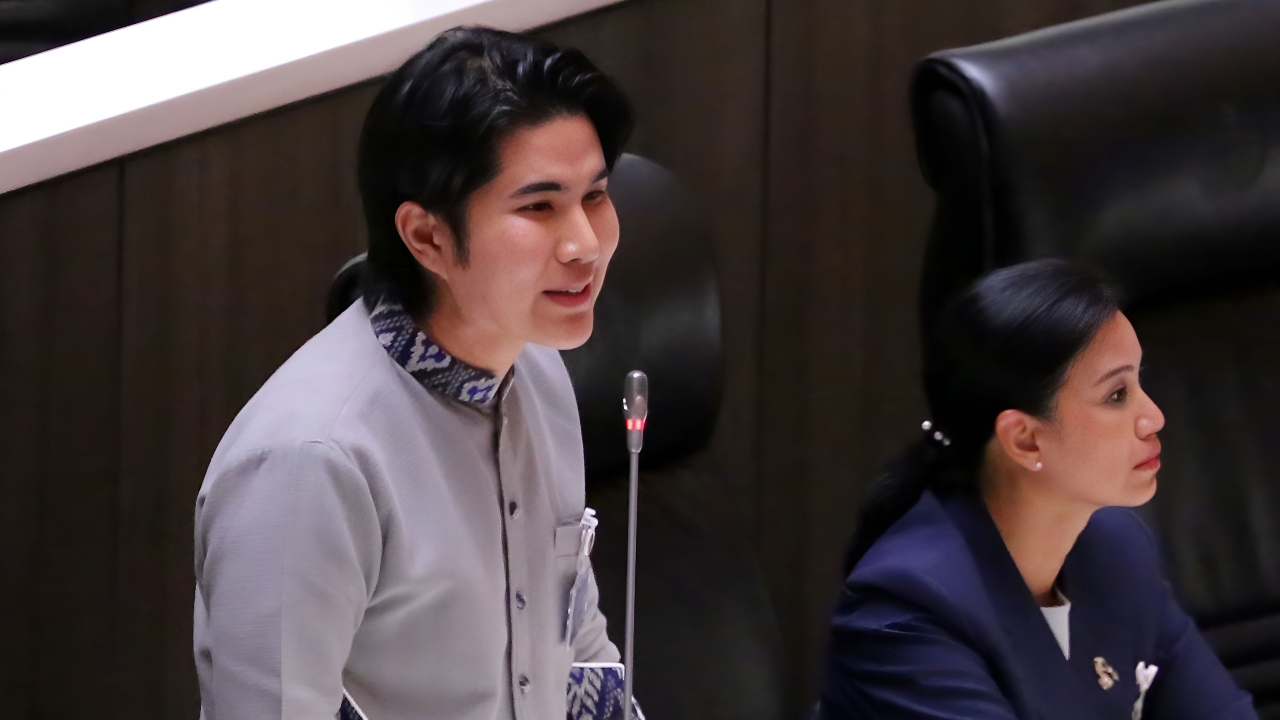
"MP Kungfu" debated, urging the government to reform the crisis management system over "Thai Airways Abandoning You," while questioning the culture of allocating space to receive the Prime Minister's team and Cabinet ministers, which impacted frontline volunteers at the scene.,
At 20:40 on 30 Sep 2026 at the Parliament, "MP Kungfu," Mr. Wasawat Puangpornsri, leader of the Thai Ruam Palang Party, spoke about assisting people affected by flooding. He said that around 21:30 on Monday, 28 Sep, his team, along with MPs, Sai Mai district rescue staff, foundations, and volunteer citizens, traveled to the Khlong Chan housing area to prepare food, drinking water, and essential supplies to distribute to residents who had requested help since the morning.
Upon arrival, his team was informed that space was being prepared to accommodate the Prime Minister's team, which numbered over 50 people, and that volunteers and residents waiting to board boats were asked to clear the area first. This caused some rescue teams to be unable to carry out their planned duties.
MP Kungfu stated his disagreement with this approach and said that the culture of allocating space to await political teams should be ended if such arrangements disrupt rescue workers, foundations, and volunteer citizens already working in the area.
"These people have been working since morning, some all day and night. Helping the people should not depend on who arrives first or who has a larger team. Everyone should work together with the same goal: to assist the people."
He said that assisting citizens should prioritize the efficiency of aid over allocating space to accommodate any particular individual or team, especially in disaster situations where every minute counts for those awaiting help.
Additionally, during parliamentary debate, MP Kungfu raised the crisis of Thai Airways' service failures from 26–28 September, questioning the organization's emergency management system after flight delays and significant luggage backlogs occurred amid flooding affecting some staff's ability to reach work.
MP Kungfu expressed understanding and sympathy for ground staff, emphasizing that "flooding is not the fault of the employees," but that what must be scrutinized is the organization's management and contingency plans.
He questioned why, if the organization anticipated some staff might be unable to work, it failed to prepare sufficient contingency plans regarding personnel, equipment, baggage handling, and passenger communications. "Force majeure may cause a crisis, but crisis management is the organization's responsibility," MP Kungfu said, adding,
"The solution should not end with an apology statement. Thai Airways should explain what happened, why contingency plans were insufficient, who is responsible for management, and how they will improve the system to prevent such incidents in the future."
He called on the government and Thai Airways to seriously review risk management systems, personnel contingency plans, passenger communication systems, and emergency decision-making structures.
"I do not want problem-solving to focus solely on blaming individuals, but to see responsibility that leads to change, because apologies alone cannot return lost time to passengers, cannot return luggage to owners, and cannot restore confidence."
MP Kungfu concluded that in both cases—flood relief and the Thai Airways crisis—the most important thing is to ensure management systems truly work for the people, so frontline staff and volunteers are not burdened by systemic flaws, and he urged the government to review and concretely improve management based on these events.