

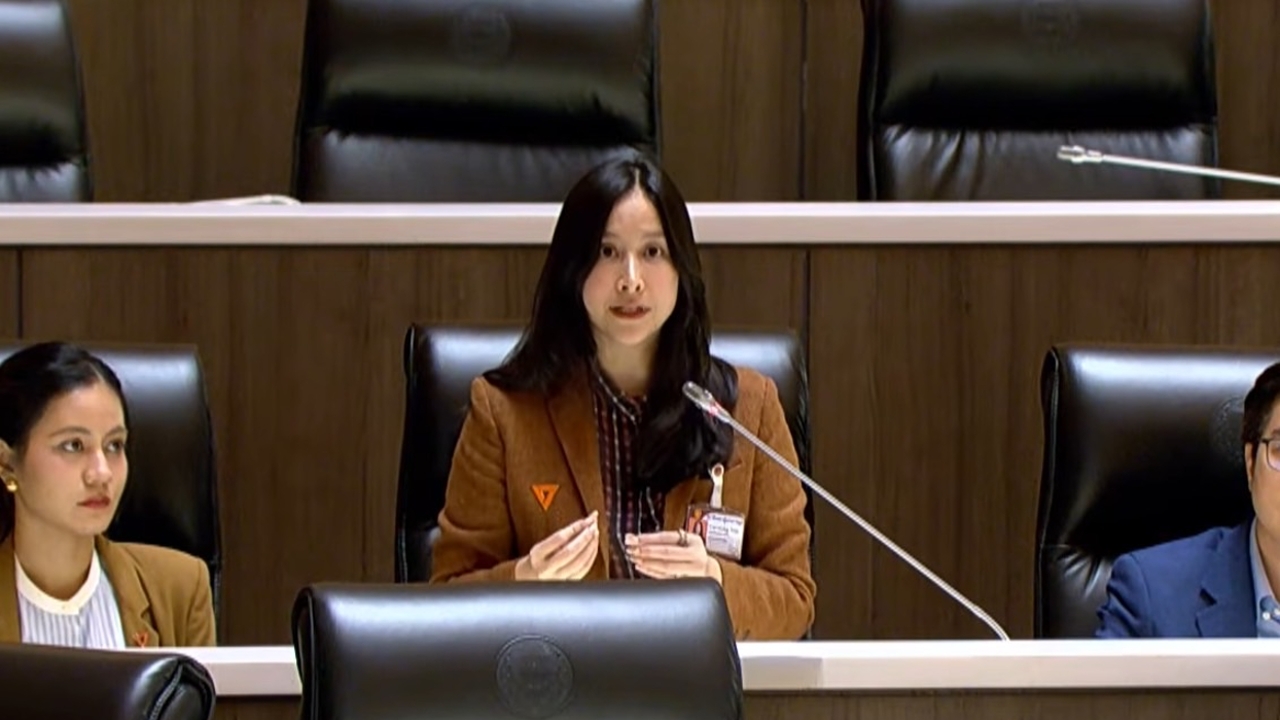
Chonlatat questions the clarity of flood relief criteria: when and how citizens will receive aid. She urges the government to clarify required documents and end the enforcement of police daily reports, which add to citizens' burdens and worsen their situation instead of helping.
On 30 Sep 2026 during a House of Representatives meeting addressing urgent flood problem solutions, Chonlatat Goykul, a Bangkok MP from the People's Party, raised concerns about the complexity of flood relief criteria. She called for the government and Bangkok Metropolitan Administration to integrate efforts to reduce citizens' paperwork burdens.
Chonlatat stated that although floodwaters have begun to recede in many areas, citizens' hardships remain. Many families face the burden of repairing homes, buying new electrical appliances, and income loss during the floods. Moreover, most citizens still do not know if or when they will receive government relief funds.
Despite the Prime Minister's statement that all agencies must coordinate assistance, with a 4 billion baht central budget prepared and measures granting 9,000 baht per household plus repair and livelihood tool compensation, the key problem is citizens' lack of clarity. They do not know if qualifying for both criteria means combined aid, how many registrations are needed, if the same documents apply, or when payments will be made.
"To request assistance from Bangkok, citizens must photograph or video the damage, report to their district office, wait for officials to inspect, and await a disaster certification letter. Additionally, Bangkok's publicity materials state that in some cases a 'daily report' from the police station is required, such as for claims on livelihood tool costs, consolation money for injuries, or medical expenses. I understand the daily report is used to prevent false claims and fraud, but it is unnecessary for citizens to travel to police stations because district officials, as government agents, are already responsible for inspecting damage and issuing certification to victims," she said.
Chonlatat emphasized that Bangkok could revise procedures allowing citizens to sign declarations certifying facts and acknowledging penalties for false information to district officials. These declarations could be combined with onsite photos, disaster certification letters, and medical evidence.
"I am not proposing to eliminate verification but to consolidate the verification process in one place to reduce citizens' burdens. It is unreasonable for people recently affected by floods to have to travel to police stations and multiple agencies repeatedly to complain about the same issue," she added.
Therefore, she proposed three recommendations to the government and Bangkok Metropolitan Administration to address these issues:
1. Quickly announce clear flood relief information so citizens know through which channels and when they will receive aid.
2. Request that the government, Bangkok, and district offices establish a joint system for receiving complaints using only one set of documents, and have government agencies share information internally to ease citizens' burdens.
3. Urge Bangkok to prepare proactive field teams to receive complaints from vulnerable groups such as the elderly, bedridden patients, disabled people, and those in hard-to-reach communities to ensure flood-affected citizens do not face repeated bureaucratic difficulties and paperwork burdens.