

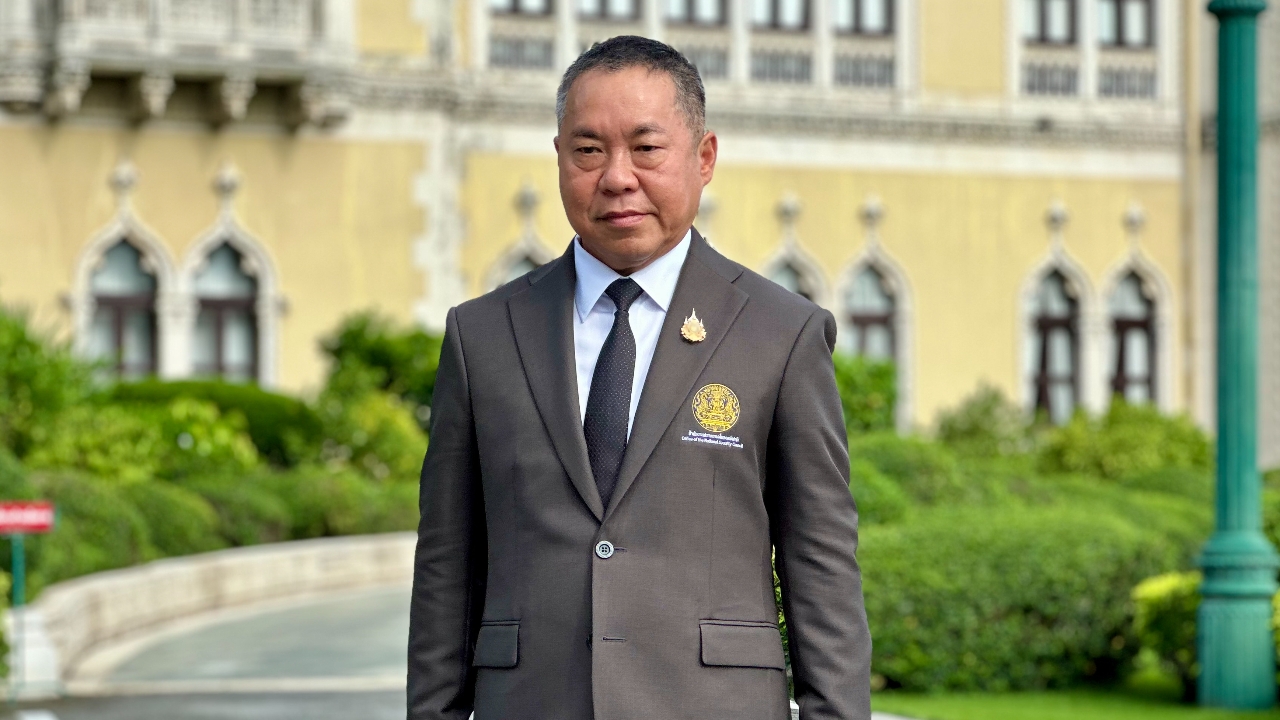
General Chaipruk, the new NSC Secretary, paid respects to the sacred sites at the Government House and immediately set to work advancing the southern border strategic plan, emphasizing a balanced 'right arm-left arm' approach between security and economic development.
At 08:35 on 1 October 2026 GMT+7, General Chaipruk Duangpraphet, Secretary of the National Security Council (NSC), paid homage to the sacred sites at the Government House upon assuming office for good fortune. In an interview about taking over the NSC Secretary role, he said the former Secretary, Chatri Bangchuad, left matters related to both domestic and international security. He pledged to expedite any urgent tasks immediately and confirmed there would be no training period, given the urgent security issues—including in the three southern border provinces, the Thai-Cambodian border, and the Myanmar border. Over the past month, knowing he would assume the role, he studied the work as thoroughly as possible to be ready to act promptly for continuity and speed.


When asked about his first priority, General Chaipruk said he would prepare a review of the southern border strategic plan, which ends in 2027, to evaluate its suitability for current conditions. He noted that everyone understands the National Economic and Social Development Council (NESDC) acts as the 'right arm' managing economic matters, while the National Security Council is the 'left arm' responsible for national security. They aim to make the plan trustworthy and credible to the public.

On whether the strategic plan would shift to military-led economic efforts, General Chaipruk explained that if the people are central to problem-solving at the village level, two approaches must proceed simultaneously: ensuring safety of life and property alongside development to build public confidence. Regarding potential military leadership over economic matters, he stated the military has already adjusted its methods in recent times by adapting tactics. He believes this will enable progress and that evolving situations will prompt the military to adopt new approaches to meet emerging challenges.
