

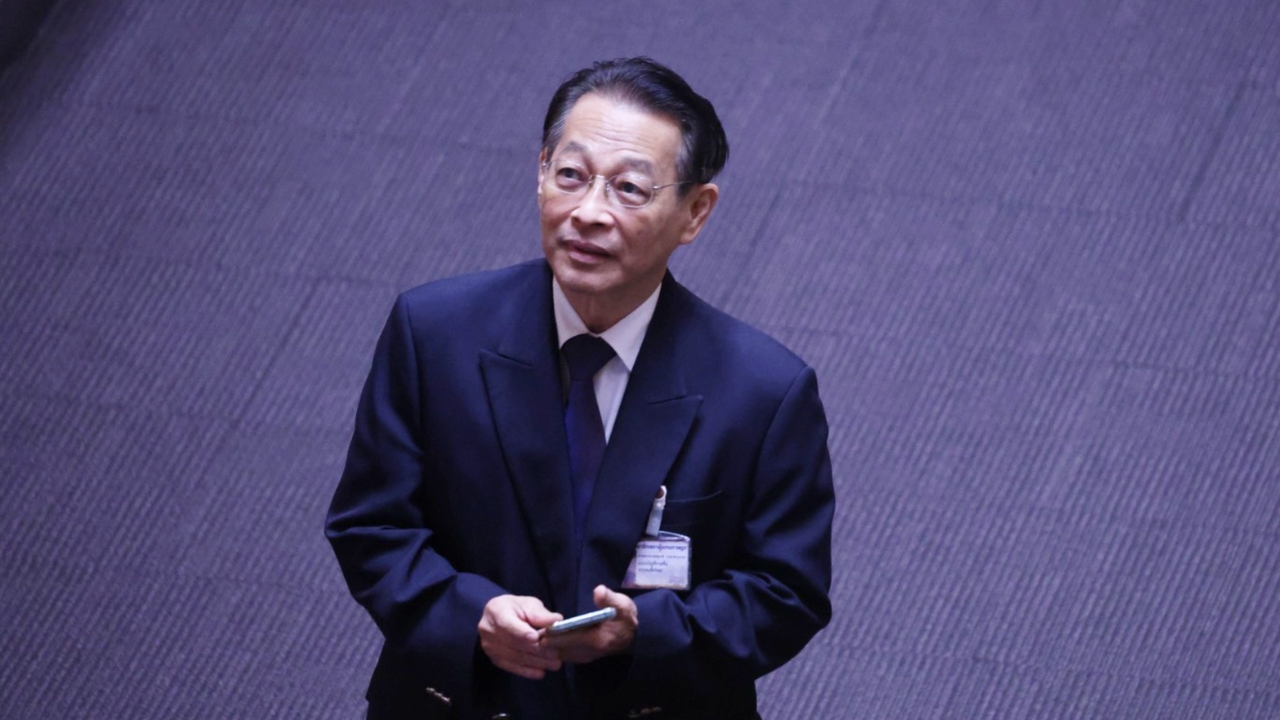
Suchart Thadathamrongvej, a Pheu Thai MP, suggests the government allocate budget to establish a disaster fund instead of purchasing private insurance, pointing out the ease of corruption and fearing a repeat of the COVID insurance issues of pay-on-claim-and-end. He stresses the government's duty is to prevent floodwaters from entering people's homes from the start.
1 Oct 2026 GMT+7 Mr. Suchart Thadathamrongvej, party-list MP of the Pheu Thai Party, and former Minister of Finance and Education, spoke about the problems and impacts of flooding, proposing two key principles for national disaster management:
1. The government must prioritize proactive disaster prevention before damage occurs. Thailand faces flooding almost every year. Many areas are known to be high-risk; we know the water flow routes, low-lying zones, where drainage is inadequate, and which areas suffer repeated floods. Therefore, disaster management must shift from waiting for damage and then seeking compensation to “preventing as much damage as possible before disasters strike.”
The government should seriously allocate budget for disaster prevention and mitigation, including drainage systems, retention areas, retention ponds, flood barriers, dredging and opening waterways, as well as forecasting and early warning systems. There should also be a mechanism or “Disaster Prevention and Mitigation Fund” to quickly deploy funds when needed. Money spent on prevention before damage occurs is far more valuable than funds spent later repairing houses, roads, aiding farmers, and reviving the economy after floods recede.
2. Once disasters happen, the government must provide rapid, transparent, and accountable assistance without overpaying. People whose homes are flooded, crops damaged, property lost, or income disrupted should not wait months for help. The government should clearly define criteria for who is eligible, how much assistance is given, which provinces receive funds, and disclose all this information for public oversight because every baht is taxpayers’ money.
“I am very concerned about the government’s approach of using taxpayers’ money to buy disaster insurance. On 15 September 2026, the Cabinet approved purchasing group housing insurance and group accident insurance policies, authorizing a total premium budget of 15.5 billion baht—15 billion for housing and 500 million for accident insurance.
I worry that signing contracts worth over 15 billion baht with private companies involves huge transactions that, without strong competition and oversight, open risks and opportunities for corruption. The OECD states that public procurement is highly vulnerable to waste, mismanagement, and corruption due to large sums, complex processes, and close relationships between the state and private firms.”
Therefore, the government must clarify who sets the insurance premiums, which companies are eligible, how many bidders compete openly, who defines the policy conditions, whether brokers or commissions exist and in what amounts, and how reinsurance is arranged to cover large-scale damages. Most importantly, the public must be able to review contracts, terms, and all payments because this money belongs to taxpayers, not the government.
Another point is, if we pay premiums of 15.5 billion baht per year for 10 years, totaling 155 billion baht, could investing that amount in flood prevention, improving drainage, creating water retention areas, enhancing waterways, and building effective early warning systems prevent more damage? Why, during widespread flooding now, does the government not use this sum to pay for damages but instead buy insurance with coverage starting 1 Oct 2026?
Additionally, I believe public disasters are a fundamental government responsibility. The government should not wait for floods to enter people’s homes before deciding who pays compensation. Its more important duty is to prevent floodwaters from entering homes in the first place. I therefore offer two principles: before disasters—prevent as best as possible; after disasters—assist as quickly, transparently, and accountably as possible if the government will contract private companies with over ten billion baht of taxpayers’ money. “I would stress that the higher the sum, the greater the need for transparency; the more it belongs to the public, the more it must be scrutinized.”
Moreover, the government must ensure that private insurers have sufficient capital to pay claims because this involves “widespread simultaneous risk” (systematic risk), like with COVID insurance where five private insurers went bankrupt, owing over 70 billion baht to more than 790,000 policyholders, leaving the fund and government to bear the burden of staggered payouts over time.