

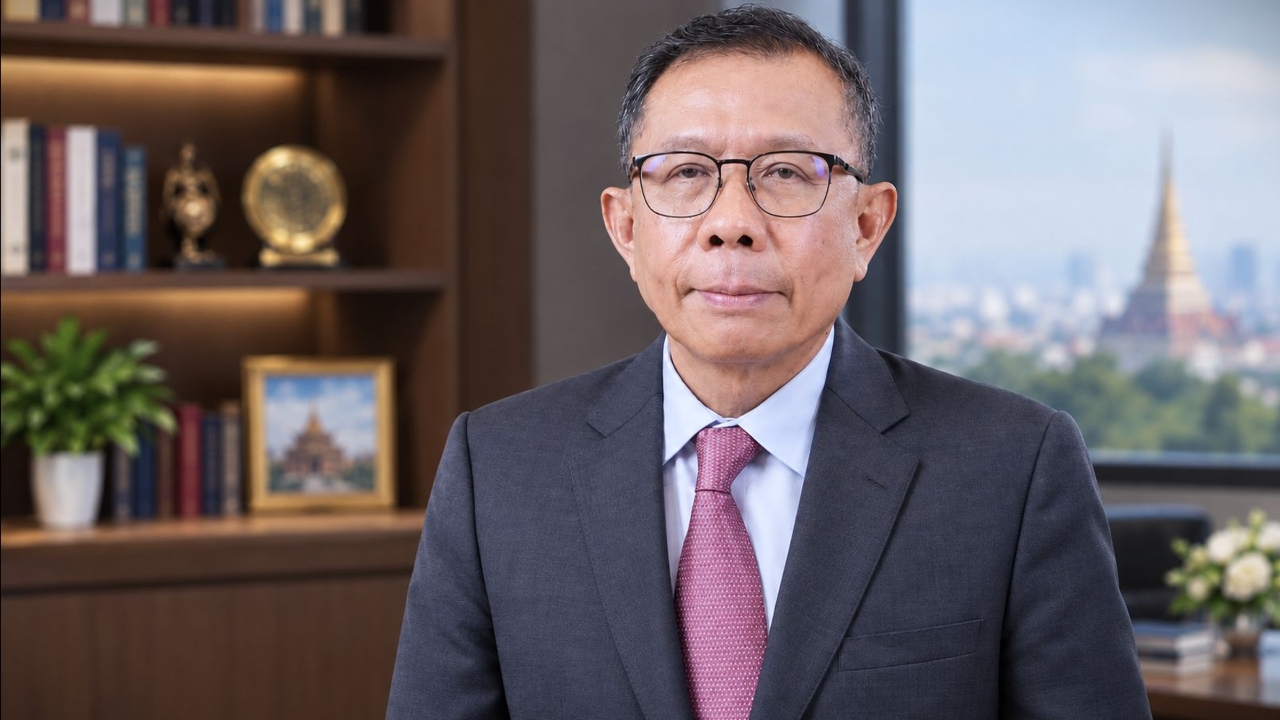
Supachai clarifies that the four draft laws do not dissolve organizations or cut missions but change the public funding system to flow into the budget, emphasizing that all units must comply with the same financial discipline standards.
On 2 Oct 2026 GMT+7, Supachai Jaisamut, party-list MP and legal chief of the Bhumjaithai Party, posted on Facebook to clarify why he and party MPs proposed amendments to laws related to the Thai Health Promotion Foundation (ThaiHealth), the Elderly Fund, the National Sports Development Fund, and the Public Broadcasting Service of Thailand (Thai PBS). He addressed questions about the need to amend all four laws and explained the facts and intentions clearly.
First, this is not about dissolving funds or organizations, nor denying the importance of their missions. The proposal concerns the “method of funding”—specifically, the current system where laws assign excise tax revenue from liquor and tobacco directly to these organizations without routing through the state treasury. For example, Thai PBS currently receives maintenance funding at 1.5% of excise tax on liquor and tobacco, capped by law. The draft proposes eliminating this mechanism and shifting funding to come from the annual budget.
Second, why consider this now? In 2018, Thailand enacted the State Fiscal Discipline Act, which in Section 26 established the principle that laws cannot impose new taxes or fees for specific agencies’ use except for local government bodies.
Supachai emphasized that current funding for these four organizations is not illegal, since Section 82 of the fiscal discipline law exempts pre-existing laws. Thus, the old mechanism remains legally valid. The question now is whether, under the new fiscal rules, past exceptions should continue or if all public revenues should enter a unified system to ensure consistent public fund allocation standards. This is the main reason for the four draft bills.
Third, why propose all four bills simultaneously? Supachai said he does not want the impression that the proposal targets any single organization. If the principle is to uphold state fiscal discipline, it must apply uniformly. Therefore, amendments cover ThaiHealth, the Elderly Fund, the National Sports Development Fund, and Thai PBS—each funded by excise taxes on liquor and tobacco under similar legal structures. So claims this targets Thai PBS specifically do not reflect the full truth.
Fourth, what do the public and country gain? Supachai said the country gains a unified fiscal system where revenues flow into national finances. When the government deems health promotion, elderly care, sports, or public media important, it can allocate budget accordingly. The difference is that funding, previously automatic via excise tax bases, will now be subject to budget approval processes requiring justification of amounts, purposes, and public outcomes. At the same time, Parliament will oversee overall public fund allocation.
Fifth, addressing concerns about organizational independence, Supachai acknowledged worries, especially for Thai PBS, that shifting from direct legal revenue to annual budget funding could make organizations reliant on the government and threaten public media independence.
These concerns merit consideration during public hearings and legislative processes because changing funding sources alters revenue certainty. However, it is important to separate organizational independence from government funding mechanisms. If society deems additional safeguards necessary to prevent budget allocation from becoming a tool for interference, such protections can be designed during lawmaking.
Therefore, Supachai urged that the debate focus on the fundamental question of how Thailand should manage public funds sustainably in the long term.
He stressed that the proposal does not seek to dissolve ThaiHealth, stop elderly support, halt sports funding, or close Thai PBS. "I propose changing the funding system, not canceling missions." The four drafts remain open for public input, allowing supporters and critics to suggest improvements.
"Although these four organizations have different missions, they all use public funds. My principle is simple: essential missions should be supported, but state fund allocation must adhere to a financial discipline system that is transparent, accountable, and subject to oversight," Supachai said.