

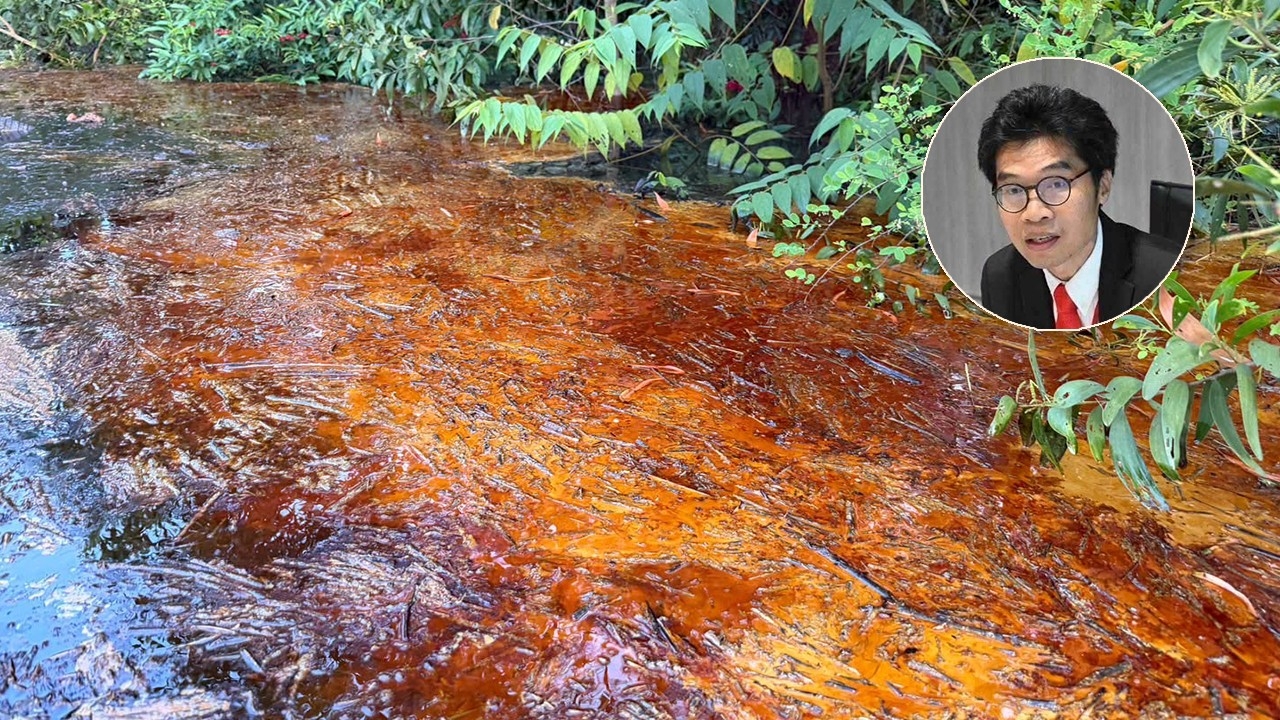
Poon Sak urged the government to expedite the investigation of the chemical leak in Prachinburi, fearing the spread of hazardous waste. He proposed suspending increases of factory raw materials until the pollution control system is verified to be effective.
On 2 Oct 2026 GMT+7, Poon Sak Chanjampee, a party-list MP and chairman of the People's Party's Environmental and Disaster Issues Committee, spoke about the chemical leak incident in Prachinburi province. The facility operates an industrial waste landfill, mixed fuel and alternative fuel production, and brick manufacturing from industrial waste. According to the Burana Nivek Foundation, the area shows not only oil stains but also dispersed hazardous industrial waste, suspected to have leaked during waste mixing for cement factory disposal. He emphasized the urgent need to verify facts and environmental impacts promptly.
Poon Sak noted that the public found that the Prachinburi Provincial Industry Office announced a public hearing regarding the factory's expansion, specifically about increasing raw materials and products. The announcement was made on 22 Sep 2026 GMT+7, with a deadline for comments by 8 Oct 2026 GMT+7.
"Since no government agency has yet controlled or managed the problem on site, I believe urgent actions are needed in the short, medium, and long term to prevent pollution from spreading and harming local residents," Poon Sak stated.
For urgent measures, he proposed that Prachinburi province and its Disaster Prevention and Mitigation Office take control of the area to prevent further pollution spread. Meanwhile, the Pollution Control Department must promptly inspect water, soil, and sediment, focusing on hazardous substances and heavy metals. If risks are found, immediate warnings should be issued to downstream communities. They should also verify the types and quantities of industrial waste received by the factory.
Poon Sak emphasized that the Prachinburi Provincial Industry Office should postpone processing the factory's application to increase raw materials and products until the incident and the effectiveness of pollution control systems are clearly investigated.
For medium-term measures, he suggested a comprehensive engineering and environmental audit of the entire factory system, not just the problematic areas. This should include evaluating site suitability, flood control systems, wastewater and leachate collection, waste storage areas, leak prevention systems, and verifying that waste intake, processing, export, and landfill volumes are consistent and compliant.
Regarding long-term measures, Poon Sak proposed that the Department of Industrial Works review its regulatory oversight of industrial waste management factories, especially type 106. He also recommended improving public consultation processes to ensure community access to information and genuine participation.
Additionally, he suggested upgrading the Environmental and Safety Assessment (ESA) process to include independent audits, verification of consultant qualifications, and public disclosure of assessment results before implementation. He added that if any licensing errors are found, responsible authorities should also be held accountable.