

Niphit met with former Senate candidates and joined forces with the Democrat Party legal team to fight Senate vote rigging by filing petitions to the Constitutional Court, National Anti-Corruption Commission, and Anti-Corruption Court under Section 157. He vowed to reveal the truth, asserting that a major conspiracy aims to seize control of the country's governance.
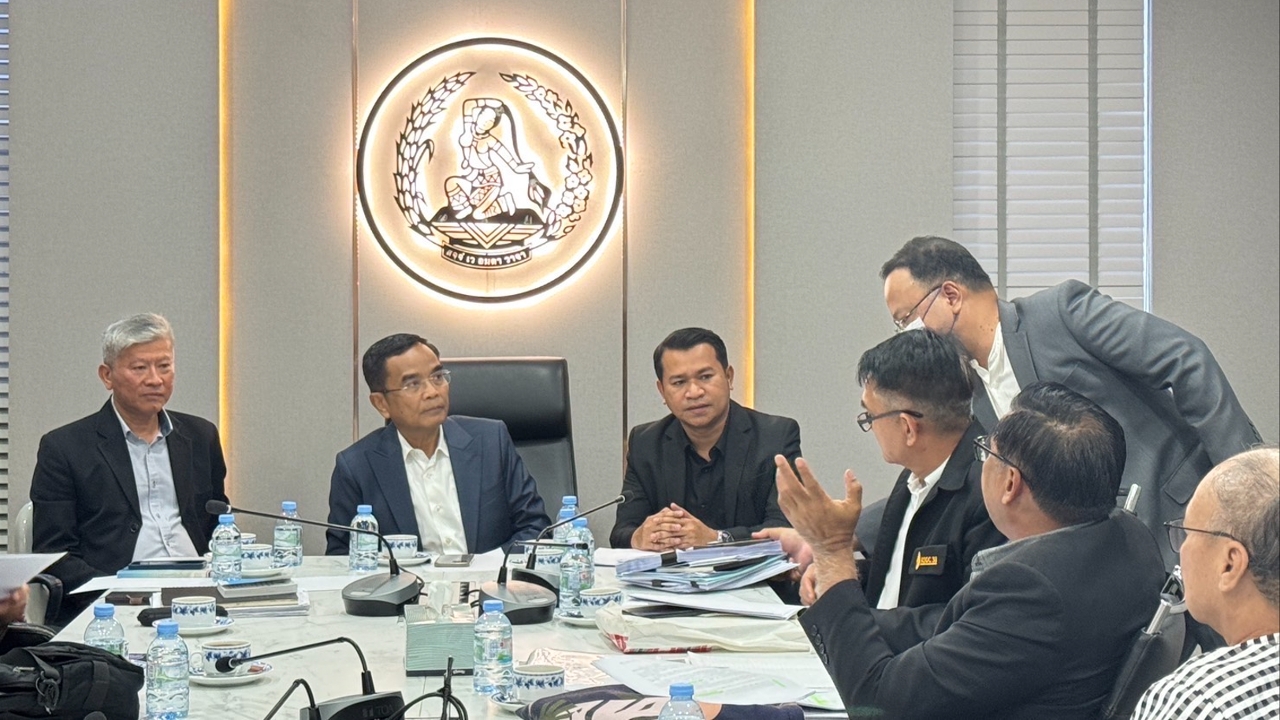
At 10:00 a.m. on 2 October 2026, the Democrat Party held a meeting of its legal working group on the second floor of the Khuang Aphaiwong Building. More than 10 reserve Senators and Senate candidates joined to discuss strategies for filing lawsuits over Senate vote rigging. The meeting lasted nearly two hours. Niphit Intarasombat, legal advisor to the Democrat Party's legal working group and former Minister of Culture, said after the meeting that it was a consultation to hear suggestions from various parties, especially recommendations from a seminar hosted by the Royal Institute.
At the seminar, Mr. Charan Pakdeethanakul, a former Constitutional Court judge, kindly offered advice. The party's legal team has roughly set a timeline: the Supreme Court has already received three petitions from former Senate candidates challenging the Election Commission's orders and practices as unlawful, including candidate qualifications. Evidence review is scheduled for late October. Niphit believes the court will not focus solely on candidate qualifications because the team plans to request investigation files from the 26th Subcommittee and the Department of Special Investigation, which the EC has not considered. He expects the Supreme Court will see the full picture clearly, like an elephant composed of trunk, tusks, ears, tail, body, and four legs. The court will consider the whole rather than isolated parts. They hope the court will rule the Senate election improper. If proven to that extent, many other issues will follow.
"I compare this to the case at Police Hospital involving former Prime Minister Thaksin Shinawatra. When he returned to prison, everyone rejoiced, thinking it was over and they had won, then went home. But we, the party's legal team following this, believe it is not over. The Supreme Court has ruled that Thaksin was not truly ill and that a conspiracy involving the hospital director, doctors, and prison officials sent him there. Therefore, there will be a second phase where those involved will face criminal charges under Section 157 of the Penal Code due to the Supreme Court's ruling. I believe the Supreme Court will look at the full picture, not just parts, and such cases take time," Niphit said.
Niphit added that on 7 October, Rames Rattanachewang of the Democrat Party's legal team will submit additional petitions to the Supreme Court to strengthen the case. They will request the court to summon investigation files from the 26th Subcommittee and the DSI to supplement the case. They will also petition the Election Commission next week for a central ruling. On 19 October, they will file a complaint with the Ombudsman requesting the case be forwarded to the Constitutional Court for consideration. Meanwhile, the Election Commission is expected to issue a central ruling regarding its decision not to prosecute 229 senators but to prosecute only 77. After receiving this ruling, they will sue the EC and its secretary at the Central Anti-Corruption Court under Section 157. This will proceed alongside a petition to the NACC to investigate whether the EC acted improperly. They will demonstrate that the entire Senate election process violated the constitution and election laws.
"Frankly, the petition to the Constitutional Court aims to have it rule on whether the Senate election process under the constitution, as described by Professor Charan Pakdeethanakul, is valid. If it reaches that point, it will be considered a coup d'état because it unlawfully obtains governing power. Should the Constitutional Court rule in our favor, any politicians and political parties involved will face dissolution. We have warned politicians and parties not to seek power by such means. Anyone involved, including party executives, must be dissolved," he said.
They will submit the case via the Ombudsman. The legal team has substantial evidence from the candidate registration stage, such as Senate candidates who did not sign their own documents but had others sign for them, financial trails linking multiple people repeatedly, and crucially, vote ballots or documents related to vote rigging as ordered. These have been investigated by the Department of Special Investigation (DSI). Some individuals involved have participated in the rigging, and orders from authorities dictated which candidates to select. Some senators were involved and have provided testimony in the complaint, including reserve senators and former candidates offering clear evidence," Niphit explained.
Niphit added he told former Senate candidates attending the meeting that the Democrat Party's legal team currently faces significant constraints due to fewer staff compared to previous cases. However, they are fully committed and meet weekly every Friday to monitor case progress.
For fairness and national rules, he is hopeful about the case as it seeks to reveal the truth. He warned that if they do not win, corrupt actors will multiply exponentially. He hopes to prove that the Senate election was rigged by a major conspiracy aiming to seize civilian governance power, unlike past military coups, which allowed them to appoint members to independent organizations and distort the system.