

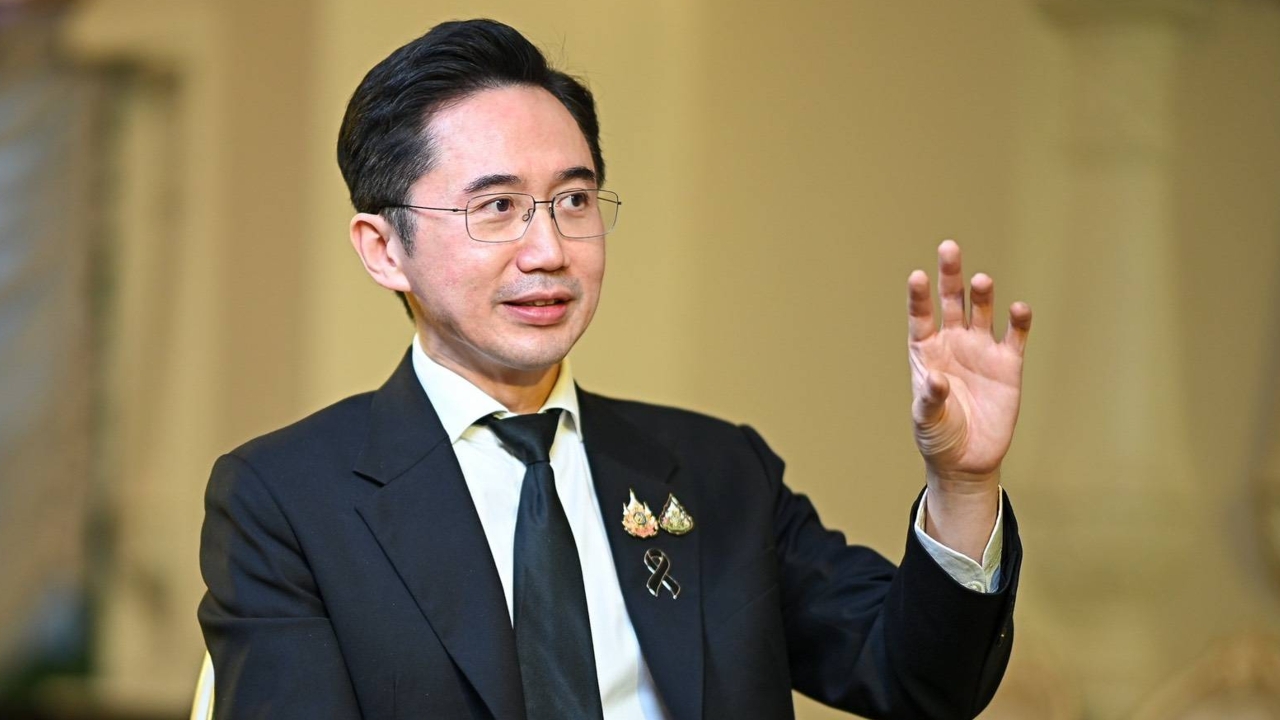
“Yotsanan” revealed plans to use Digital Twin technology to issue hazard warnings at the subdistrict level alongside marking bedridden patients’ locations in the thaiwater.net system to identify which homes are at risk and when evacuation is necessary, while highlighting AI to customize education by aptitude and launching a Credit Bank to convert experience into academic credits.
On 3 Oct 2026 at 9:05 a.m., Mr. Yotsanan Wongsawat, Deputy Prime Minister and Minister of Higher Education, Science, Research and Innovation, disclosed on the program “Talk with the Cabinet, Anutin” the approach to applying science and technology to solve problems affecting people’s lives, from flood hazards and education to creating future jobs for the country.
Mr. Yotsanan said that for the northern flood situation, a joint command system has been prepared with the Department of Disaster Prevention and Mitigation, provincial governors, the Royal Irrigation Department, NSTDA, the Meteorological Department, GISTDA, and universities for about two months, including a 24-hour war room monitoring the situation using data from multiple agencies; if assessments differ, the worst-case scenario will be the basis for preparedness.
Lessons from Nan Province found that rain in highland areas may flow into communities faster than river monitoring detects, so rain gauges and sensors are being rapidly installed in highland areas, along with community alert systems triggered when rainfall exceeds thresholds. Citizens and community leaders are trained to access data, interpret the situation, and know evacuation plans independently, with shelters at universities and government agencies ready at all times.

Mr. Yotsanan said the next goal is to develop hazard warnings from the subdistrict level down to communities and households using Digital Twin technology to simulate terrain, elevation, water routes, and dredging points, while marking bedridden patients’ locations in the thaiwater.net system to know which homes are at risk, when evacuation is needed, and who is responsible for relocating patients during emergencies.
Regarding education, the Deputy Prime Minister proposed the concept of Precision Education, tailoring learning to each child's aptitude, emphasizing that children do not need to excel in the same ways, and grades alone should not determine ability, as skills in arts, crafts, agriculture, or other fields can lead to careers.
AI will assist children in learning content suited to their interests, while teachers transition from instructors to facilitators who help discover each child's unique talents, which is easier now as technology can customize content and learning methods to individuals.
Mr. Yotsanan also believes education paths should not force everyone to follow the same route. Some children may need to support their families and choose vocational tracks that allow them to study and work simultaneously, earning income while learning, with pathways to university available later with equal respect and dignity as general education tracks.
The TCAS university admission system is being adjusted to increase fairness by reducing interview weight to about 30% in some places and standardizing Portfolio use to lessen advantages for applicants with more resources to prepare application materials.
Another approach close to working adults is the Credit Bank system, which will allow work experience and skills to be recognized as qualifications or credits, accumulating toward university degrees. Those who previously lacked educational opportunities can return to study without starting from scratch.
Mr. Yotsanan said Thailand has entered an aging society, and the labor market must improve productivity while opening opportunities for people with disabilities and those not yet fully able to work to participate more through regulatory adjustments, skills development, and assistive technology enabling them to work to their potential.
The broader human development vision will be driven by the Thailand Nation of Mastery concept, connecting individual expertise into national capabilities—from farmers, community enterprises, SMEs to factories and innovative businesses—using data, science, and technology to add value to local resources.
Mr. Yotsanan said Thailand must leverage its strengths in medicine and health to become a Clinical Trial Hub attracting international-standard drug and medical device testing, linking Thai companies, herbal products, food, and medical technology to generate knowledge, investment, and access to new health innovations.
Mr. Yotsanan mentioned preparations to attend the STS Forum in Kyoto, Japan, an event akin to the World Economic Forum for science. He will present the Nature Positive concept to promote Thailand’s natural resources, biodiversity, and forests as economic assets alongside Net Zero goals, emphasizing that economic growth and environmental conservation must progress together.
