

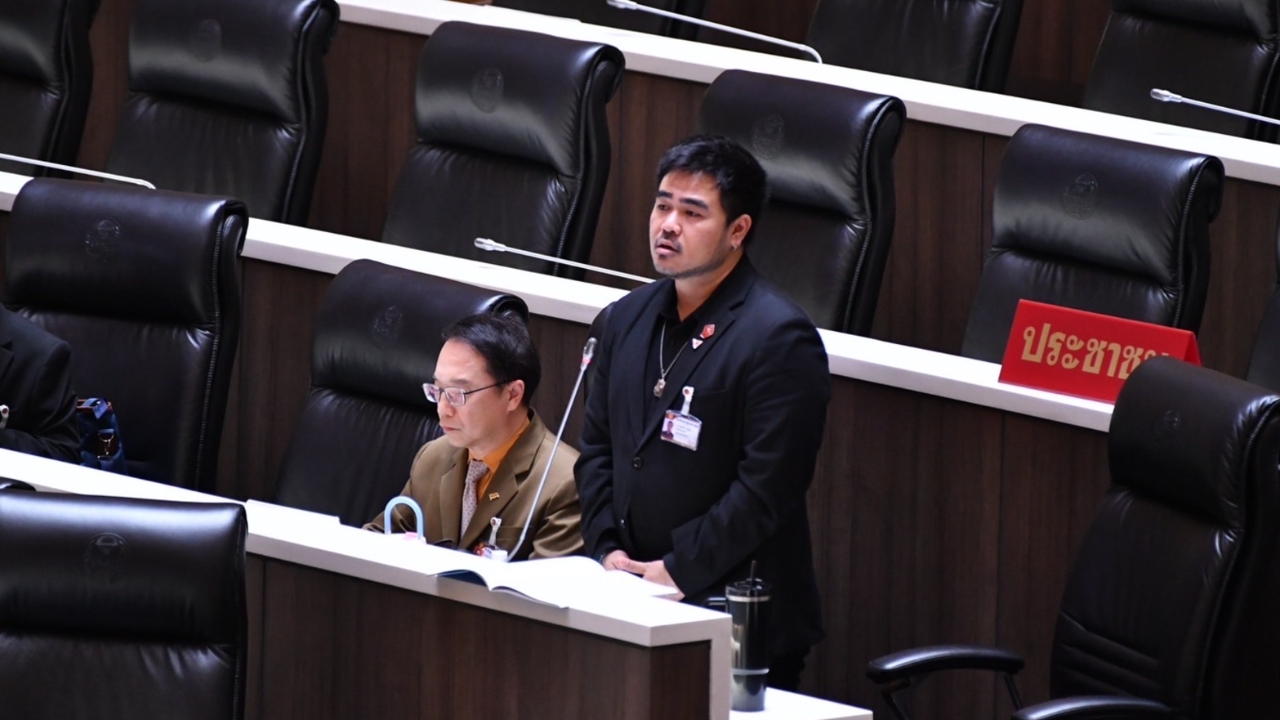
Sahatwat, a People’s Party MP, has proposed that the Social Security Election Commission allow voters to change their polling stations again following the election postponement to 11 October, emphasizing that changes in the election date also change citizens' life plans and arrangements.
On 3 October 2026, Sahatwat Khumkhong, MP for Chonburi district 7 from the People's Party, proposed that the Social Security Election Commission and the Social Security Office open a short period during which eligible voters can check and change their designated polling areas again before the social security election on 11 October 2026. This follows the postponement from 27 September due to flooding and travel difficulties faced by the public.
Sahatwat said postponing the election was a suitable decision because of the flood situation and travel challenges citizens face. But when the election date changes, people's life plans also shift. For example, voters who originally chose a polling station near their workplace might now need to return to their hometown on the new election day. Others who found it convenient to vote in one area may no longer be in that area, including those with prior commitments or travel plans, especially since the new election date is close to a holiday period.
"If the reason for postponing the election is to preserve the public’s opportunity to exercise their voting rights as fully as possible, then we should follow through completely. After changing the date, people should also be allowed to adjust their polling stations to match the new schedule," Sahatwat said.
Sahatwat proposed opening the system with a defined period for voters wishing to change their voting locations to do so, allowing the Social Security Election Commission and the Social Security Office to prepare updated voter lists. The principle remains that each eligible voter is registered at only one polling station.
He pointed out that the Social Security Election Commission regulations of 2021 provide a way to proceed, especially Article 6 (7), which authorizes the commission to "extend, shorten, or waive election-related procedures when necessary," and Article 6 (9), which permits other necessary election-related actions.
"The regulations do not lock in polling stations once assigned with no possibility of change. On the contrary, if there is necessity, the commission has the authority to adjust processes to ensure the election proceeds properly. This time, the necessity is undisputed because the commission itself accepted the need by postponing the nationwide election," he added.
Sahatwat continued that the election organizers' duty should not be limited to simply completing the election process, but must ensure that eligible voters can actually travel to vote as much as possible. Allowing a brief period to change polling stations is another measure to reduce obstacles for citizens.
"If it can be done, it should be done. There is no need to turn a simple matter into a complicated one or let administrative barriers block people’s rights," he said.
He suggested a feasible approach is to quickly open the system for voters to check and change their polling stations, set a clear deadline, and prepare updated voter lists before election day. This will help those affected by the election date change to exercise their rights conveniently.
"The goal of the election should not be merely to complete the process but to maximize voter turnout. If we postpone the election to protect citizens’ rights, we should also allow them to adjust their polling stations according to the new date," Sahatwat said.