

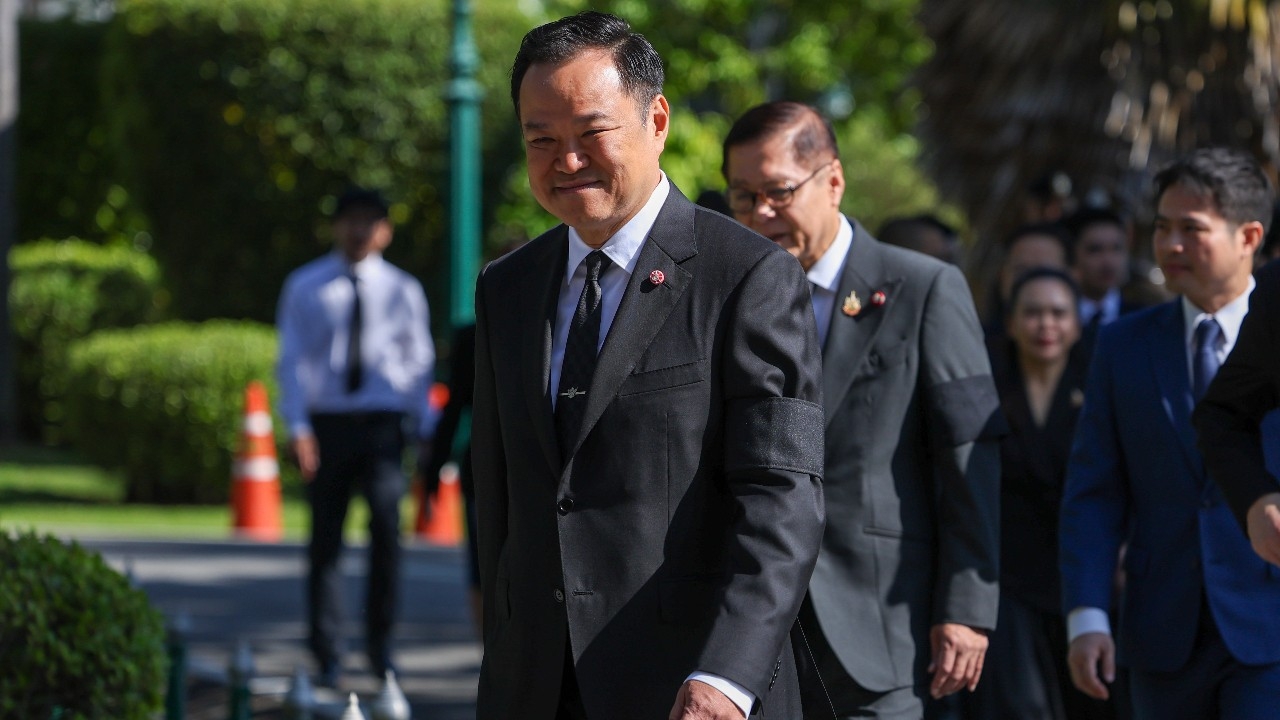
The chairman of the Anti-Corruption Organization summarized the first year of the 'Anutin government,' finding Thailand's corruption situation contradictory: the Prime Minister's rhetoric creates obstacles, but new energy from all Thai sectors is joining the fight against corruption.
On 5 Oct 2026, ACT (Anti-Corruption Organization of Thailand), through its chairman, reflected on the corruption situation over the past year under the administration of Prime Minister Anutin Charnvirakul. He described it as contradictory because the Prime Minister's mindset on at least three corruption cases became obstacles to anti-corruption efforts, yet Thai society has seen a new phenomenon where all sectors unite with clear goals and systematic approaches to move toward international standards.
Mr. Mana Nimitmongkol, chairman of the organization, published an article titled '1 Year of Prime Minister Anutin: What Is Corruption Like?' on his personal and organizational Facebook pages. He summarized that corruption over decades did not arise from a few individuals but grew deeply rooted in the power structure throughout the bureaucracy and politics. Currently, some major business groups and individuals wield such influence that they intervene in nearly all state organs. Meanwhile, during the first year of Prime Minister Anutin's government, numerous corruption-related scandals emerged—some old cases resurfaced due to slow investigations and lack of transparency, which contradict public expectations.
Three major concerns
Looking at the overall picture of the 'Anutin government' over the past year, there are three major concerns:
1. Multiple corruption scandals involved individuals from coalition government parties.
2. Severe issues with nominees, shadow capital, and proxy accounts, often linked to elite groups, power holders, and politicians.
3. Public dissatisfaction with the performance of independent agencies, especially the Election Commission and the National Anti-Corruption Commission, with widespread doubts about legality, fairness, and political domination.
Prime Minister’s rhetoric identified as major obstacle
"Each time the Prime Minister commented on these issues, his rhetoric reflected his mindset and beliefs, becoming a major obstacle to anti-corruption efforts," Mr. Mana said, citing three cases that sparked public debate:
(1) "Anyone who dares to speak about bribery must be ready to be sued back." The Prime Minister said this to the media after business groups (such as the Joint Standing Committee on Commerce, Industry and Banking and 'Friends Against Intolerance') revealed surveys on bribery demands by state officials. This stance caused fear among Thais as it appeared to encourage lawsuits to silence the public.
(2) "Local exam cheating is caused by individuals, not the system, so there is no need to overhaul or dismantle the Ministry of Interior." This denies the fact that repeated, long-standing, networked cheating nationwide requires major systemic reforms, not just punishing a few caught red-handed.
(3) "Rejecting or disbelieving poll results like the CPI because they are based on perceptions and harm the country." Despite international acceptance of these surveys, such rejection deprives state agencies and Thai society of shared reference points and motivation to urgently address issues.
Contradictory point: private sector unites against corruption
Mr. Mana also noted a notable change that led to this contradictory corruption situation under the current government: the emergence of new energy as all Thai sectors push to strengthen the country. Corruption, like a surrounding fire, now has a spark of hope from civil society, business, and state officials who agree it is time to take anti-corruption seriously before it is too late. He highlighted examples of active groups:
The Joint Standing Committee on Commerce, Industry and Banking and 'Friends Against Intolerance': A business network campaigning and acting together against corruption, refusing to let bribery become a cost and burden for Thais.
The Human Rights Commission: Campaigning to raise awareness of human rights abuses connected to corruption and citizens' rights.
The Consumer Organizations Council: Fighting for consumer interests to prevent exploitation.
The Institute for Justice (TIJ): Promoting adherence to the rule of law in the justice system and Thai society, while connecting with international organizations for mutual understanding and cooperation.
"The government has also used a special mechanism to fight corruption by involving the private sector and civil society through the Coordinating Committee for Anti-Corruption (CCAC), supervised by Deputy Prime Minister Pakorn Nilphan. This mechanism listens, builds cooperation, understanding, and confidence to develop laws, bureaucracy, and public services. This open approach contrasts sharply with the previous two governments, especially in transparency and prioritizing public benefit."
Another noteworthy trend involves Thailand advancing to join four international organizations:
The OECD, progressing about 60% but facing key obstacles such as corruption, unfair law enforcement, unequal economic competition, and an outdated state system. All reforms must withstand periodic OECD reviews to prove genuine action.
The OECD Anti-Bribery Convention, for which Thailand has applied but must still amend laws, mechanisms, and enforcement processes to comprehensively punish corruption according to OECD standards. Membership in the Open Government Partnership (OGP) requires Thailand to adopt international standards on transparency and public access to government-held information across all agencies.
The Thai-EU Free Trade Agreement (FTA), aiming for completion in 2026, with careful consideration of benefits and impacts on all population groups.
The pressure from these new social forces has resulted in many state and private agencies taking leading roles, with no signs of opposition or conflict. There is a collective belief that the country must undergo comprehensive change and development after over a decade of discussion.
"The organization is very hopeful that with serious and determined support from the Prime Minister, the anti-corruption movement could truly take place," the chairman of the Anti-Corruption Organization of Thailand said. .
