

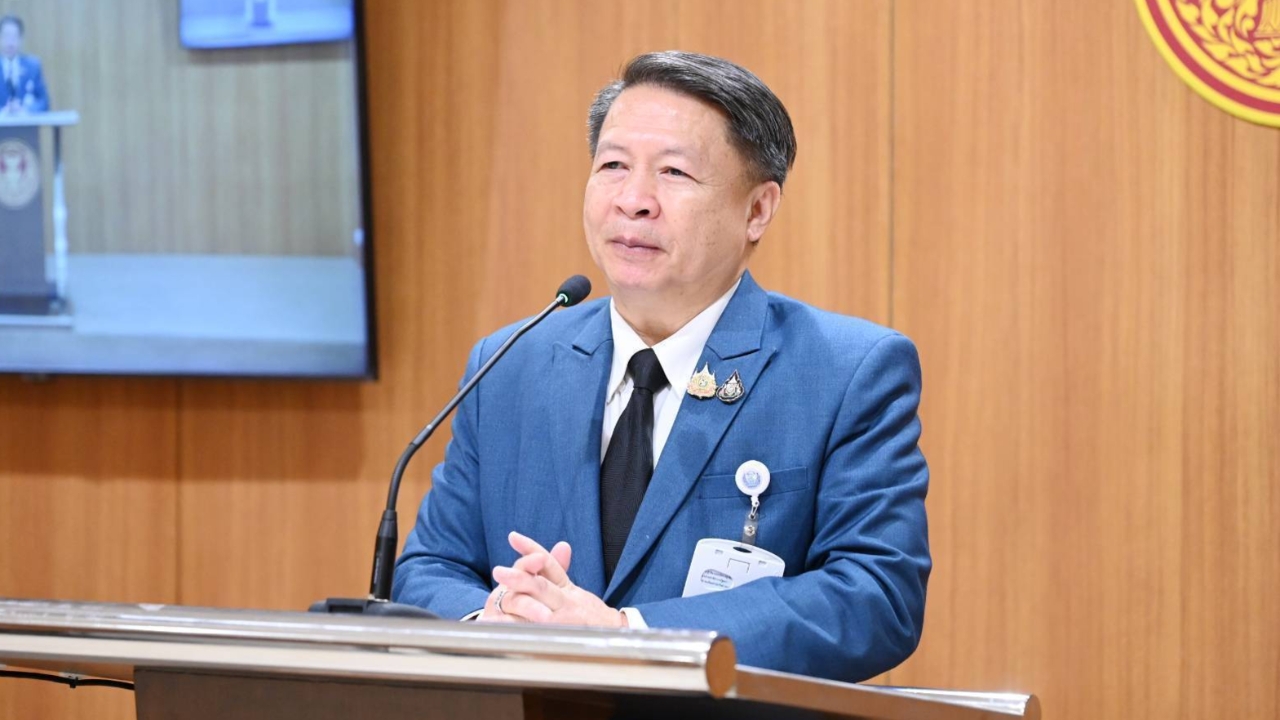
Dr. Prem criticizes the amendment to redirect Thai PBS's sin tax funding, warning it risks turning the independent media outlet into a government mouthpiece. He advises restructuring Thai PBS to be truly public media, not serving the interests of certain groups.
5 Oct 2026 GMT+7 Dr. Premsak Peayura, Senator (Senate Member). He commented on a proposal by a Member of Parliament from the Bhumjaithai Party. This proposal seeks to amend the law to change Thai PBS's funding source from sin taxes on alcohol and tobacco to the regular state budget. He questioned the impact on the independence of public media and urged the government to carefully consider organizational structure, personnel, assets, and long-term direction.
Dr. Premsak added that Thai PBS should not be seen merely as a television station, since public media encompass all forms that benefit and promote national development. Removing sin tax funding and making Thai PBS rely on regular budgets might make it indistinguishable from state television, undermining its crucial independence in performing its media role.
He recalled the push for independent media after the May 1992 political crackdown, when news censorship led society to demand media free from suppression, forming the context for the transition from ITV to Thai PBS. He stressed preserving the stance of independence in public media is essential; otherwise, keeping the organization is pointless and it should be dissolved, as there would be no need for another state media outlet, just wasting budget.
"If Thailand still wants public media, the solution is to reform Thai PBS to operate comprehensively across all media systems and genuinely be owned by the people, unlike today. From what I know, Thai PBS suffers from internal power groups dominating, irregularities, and internal conflicts that require investigation and public explanation."
Dr. Premsak also revealed he had raised these issues in the Senate and was told by Thai PBS executives they would provide detailed explanations within one month. However, this deadline has long passed without receiving the promised report, especially regarding his suspicions about executives receiving dual salaries and procurement processes often favoring specific vendors amid widespread doubts.
He affirmed the need to urgently submit clarifications, including investigation results, whether penalties have been imposed, how they were enforced, and who is responsible. These questions are for the public interest, and the organization must answer clearly. Without clarity, it shows disrespect for oversight systems, making it no different from typical government agencies, which can no longer be called public media. How can the public be expected to defend it?
"As a senator representing the Thai people, I ask these questions for the public good, not personal benefit. I have no business interests involved in this matter."