

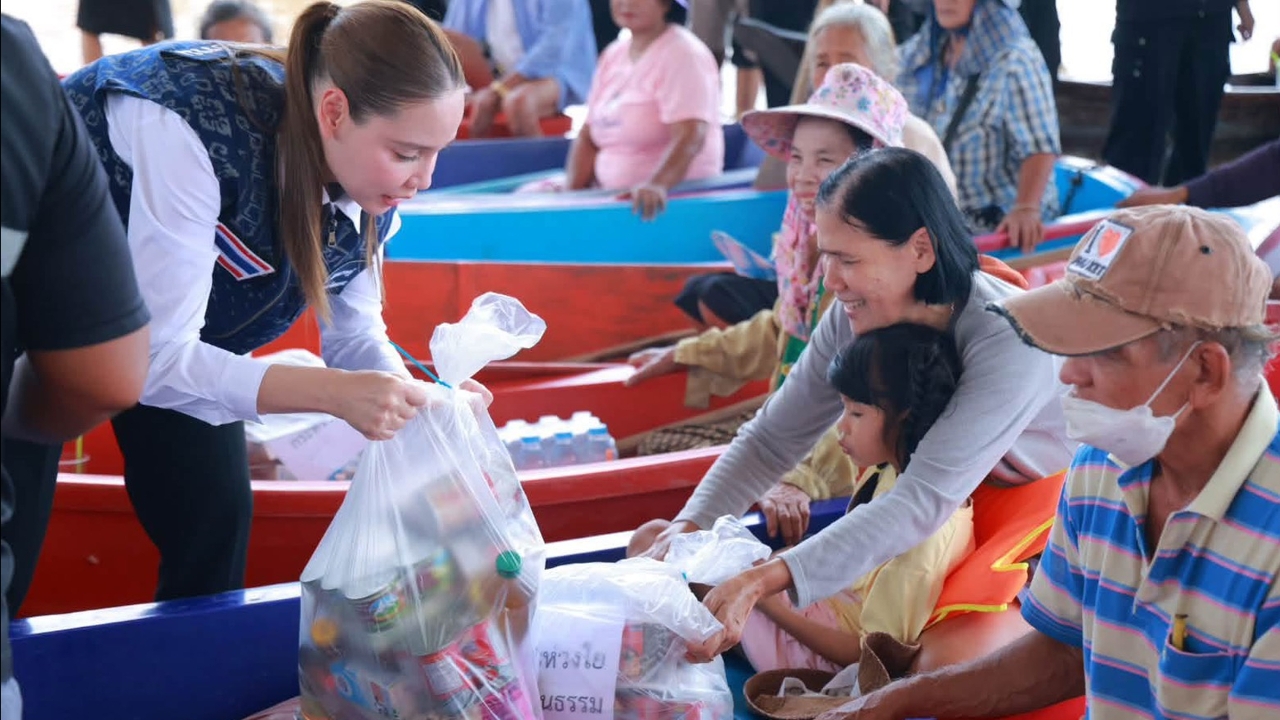
Sabida visits Phak Hai to encourage flood victims, distributes relief bags to alleviate hardship, and monitors damage to historical sites, museums, and temples in the Ang Thong area.
At 1:00 p.m. on 5 Oct 2026 GMT+7, Ms. Sabida Thaiset, Minister of Culture, along with Ms. Puttiporn Ploypakwan, Deputy Governor of Phra Nakhon Si Ayutthaya Province, Mr. Panombut Chantrachot, Director-General of the Fine Arts Department, Mr. Pradit Sangkhajai, Member of Parliament for Phra Nakhon Si Ayutthaya District 5, Ms. Rinlita Adisa, party-list MP from the Bhumjaithai Party, the Provincial Department of Public Works and Town & Country Planning, and Ministry of Culture executives visited Phak Hai District to support and assist residents affected by the flood situation.
In Ban Yai Subdistrict, Phak Hai District, Phra Nakhon Si Ayutthaya Province, home to Wat Yan Ang Thong (formerly Wat Chulalok), flooding has impacted daily life and local livelihoods. The Ministry of Culture has therefore prepared 500 relief bags to distribute to affected residents to ease their hardship and provide initial support while the situation remains critical.
The delegation then visited Wat Yan Ang Thong, which houses both ancient historical sites and a museum preserving valuable artifacts, to monitor the situation and inspect damage caused by the flooding.
Regarding restoration plans, the Ministry of Culture through the Fine Arts Department will approve emergency funds to repair walls, drainage systems, walkways around the ubosot, viharn, and historical structures as soon as the waters recede. Additionally, they will prepare budget requests to construct flood prevention measures and drainage systems around the area, in coordination with the Provincial Department of Public Works and Town & Country Planning of Phra Nakhon Si Ayutthaya. This includes building flood protection walls along the Noi River to safeguard the temple and surrounding community from future flooding in the long term.
These actions reflect the Ministry of Culture's role in caring for and assisting the public during disasters, while also promoting temples and religious sites as integral community spaces for mutual aid, support, and encouragement—especially during times that impact residents' livelihoods.

