

The Prime Minister held a meeting to monitor the water situation, announcing that over 600 compensation payments have been transferred. He urged vigilance in the South during the 10 dangerous days from today until 14 October.
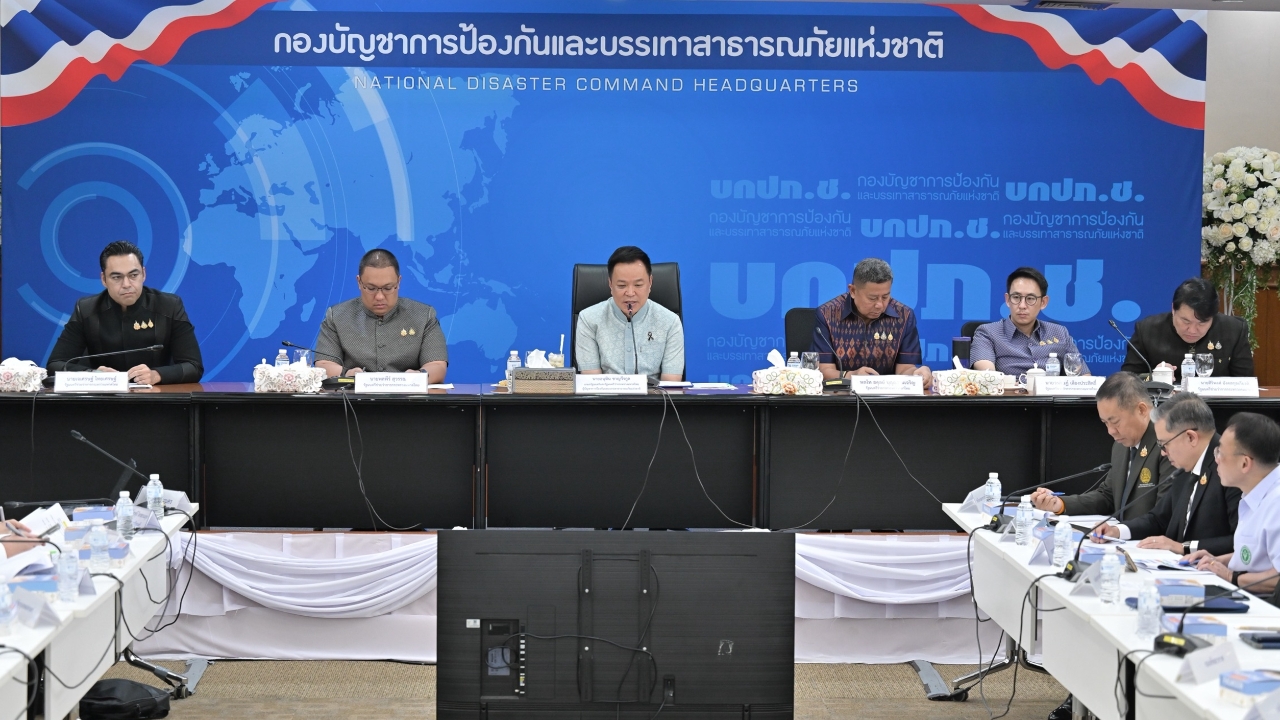
At 08:30 on 6 October 2026 at the Department of Disaster Prevention and Mitigation (DDPM), Prime Minister and Interior Minister Anutin Charnvirakul chaired a meeting of the National Disaster Prevention and Mitigation Command Center to review the situation and aid efforts for flood victims. Attending were Defense Minister General Udom Boonmtha-cherng, General Peer Suwannachavi, Worasit Liangprasith, Deputy Interior Minister Jedsadeth Thaiset, Deputy Transport Minister Siripong Angkasakulkiatti, Bangkok Governor Chadchart Sittipunt, Permanent Secretary of the Interior Arsit Sampanrat, and military commanders.


The Prime Minister said this was the seventh continuous meeting. While many situations have improved, monitoring continues, especially in Prachinburi and Chachoengsao provinces, where flooding is severe and drainage is difficult, causing foul odors. He urged the provinces to mobilize full efforts. Areas such as Bang Ban and Ban Sang districts in Ayutthaya and Prachinburi; Bang Khla and Bang Nam Priao in Chachoengsao; Ongkharak in Nakhon Nayok; Bang Pla Ma and Song Phi Nong in Suphanburi also report persistent rising floodwaters, with some transport routes cut off.
Anutin added that although public attention is less intense than during Bangkok floods, complacency must be avoided. Close assistance and continuous monitoring at the community level are essential to identify those not yet reached and vulnerable groups needing evacuation. Evacuations must be expedited, and shelters should report any shortages to the Department of Disaster Prevention and Mitigation promptly.
He praised the Governor of Samut Songkhram for appropriately representing local residents, noting that effective management enables comprehensive aid coverage. He also stressed that communication is vital not only with the public but also efficiently among agencies themselves.


Another critical issue is preparing for future water conditions, especially heightened monitoring in the South. He noted widespread public sharing of infographics about rainfall vigilance during the 10 dangerous days from 4 to 14 October. He urged the Meteorological Department, DDPM, and related agencies to continuously update the public with attention-grabbing communication. As conditions evolve, reminders should be issued promptly. Communication must be constant without lapses. The South should urgently prepare short-, medium-, and long-term emergency response plans, as rainfall aligns with meteorological forecasts.
The Prime Minister also said that in recovery zones, cleanup or Big Cleaning efforts remain essential. This includes clearing public spaces, walkways, and flooded household items and large debris such as mattresses, sofas, beds, and wooden cabinets. Trucks and loaders must be ready to clear routes and improve traffic flow. Officials should facilitate residents' requests for assistance as much as possible, as this is the period when people return home and require clean, orderly conditions.

Regarding compensation, he reported that Interior Permanent Secretary Arsit informed him that names are coming in and over 600 payments have been transferred so far, with more ongoing. He emphasized that governors and district chiefs must survey and submit lists to the DDPM promptly and carefully to avoid duplication and delays. The budget was approved by the Cabinet last week and allocated to the DDPM, which has already transferred funds to the bank for disbursement. He urged swift action without waiting for the situation to stabilize first. Under his policy, submissions and transfers should be expedited. The DDPM should coordinate with Government Savings Bank to speed transfers directly to recipients’ accounts. Officials must handle this promptly, verifying processes only within the DDPM, not sending back for additional bank checks. The DDPM is the main account holder to ensure speed.
In closing, the Prime Minister reiterated that in flooded and waterlogged provinces, governors should coordinate closely with local agencies and provincial administrative organizations to accelerate assistance. They must care for residents relocating to shelters, ensuring the highest standards of convenience and hygiene as previously agreed.