

Trump sent a message to Anutin, signaling plans to sign a major tax agreement to close a deal during his Asia visit this November. Meanwhile, the Cabinet approved revamping the 2028 budget calendar by adopting zero-based budgeting and involving public and opposition participation.
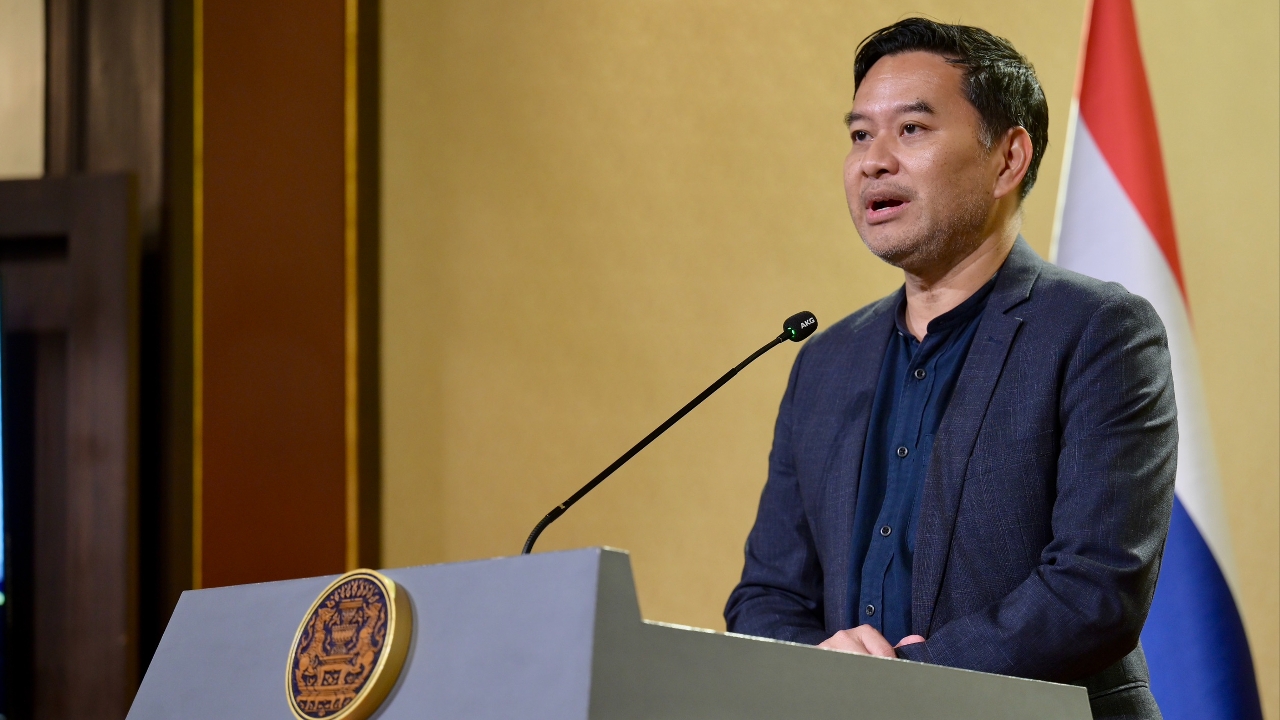
At 13:30 on 6 Oct 2026 at the Government House, Ekaphop Pianpiset, spokesperson for the Prime Minister’s Office, revealed that Prime Minister and Minister of Interior Anutin Charnvirakul said before the Cabinet meeting that U.S. President Donald Trump had sent a letter expressing hope to sign a tax agreement with the Thai government soon. Trump wants the deal completed and signed, ideally during his visit to Asia. The Prime Minister assigned Deputy Prime Minister and Minister of Commerce Supachai Sutthipan to continue the negotiations, as they are now in the final stage. The meeting between the Prime Minister and the U.S. President is expected during the 49th ASEAN Summit hosted by the Philippines from 16 to 18 Nov 2026, or the APEC Economic Leaders’ Meeting in China from 18 to 19 Nov 2026.
The Prime Minister’s Office spokesperson also said that the Cabinet approved the proposed 2028 fiscal year budget calendar from the Budget Bureau. Notably, by the end of October, a new budget preparation process called Pre-budget Consultation will be introduced. This stage allows all sectors — government, coalition and opposition parties, relevant agencies, the Joint Public-Private Sector Committee, academic institutions, and the public — to participate in setting budget directions.
"This marks a significant change in Thailand’s budgeting system, opening the process to all sectors for input from the very beginning, instead of agencies preparing budget requests alone. The new calendar also extends the time agencies have to prepare detailed budget accounts, expanding by about 2-3 months to allow for more detailed data and decision-making information, including improved coordination between ministries to reduce duplication."
This revised budgeting approach aims for the 2028 budget to be zero-based budgeting, meaning starting from zero rather than using the previous year’s budget as a baseline. Instead, the budget is based on planned activities going forward. The budget will be transparent in both income and expenditure, with public participation in every step.
The main focus of the 2028 budget is to drive key policies addressing public issues, economic and social restructuring, and continued fiscal strengthening in line with the national strategy and the 14th National Economic and Social Development Plan. Emphasis is placed on mitigating economic volatility, ensuring food security, transitioning to bioenergy and green energy, reducing inequality, and developing infrastructure for quality of life. The government will prioritize urgent and necessary projects, reviewing and postponing, reducing, or canceling less essential programs to ensure cost-effectiveness, efficiency, and fairness in budget spending.
The 2028 budget process is divided into three main phases: review and planning (Oct–Dec 2026), during which the Cabinet approved the budget approach and calendar (6 Oct 2026), began Pre-budget Consultation (Oct 2026), approved the medium-term fiscal plan (24 Nov 2026), allocation strategy (1 Dec 2026), budget policies and ceilings (8 Dec 2026), and Prime Minister’s policy direction (Dec 2026). The next phase is preparation and submission of details (Dec 2026–Jun 2027), with agencies submitting budget requests via e-Budgeting by 12 Feb 2027. The Cabinet will approve budget details (7 Apr 2027), approve draft budget bill (25 May 2027), and submit the draft bill to Parliament (8 Jun 2027). The final phase is parliamentary review and enactment (Jun–Sep 2027), including House of Representatives readings (16–18 Jun and 25–27 Aug 2027) and Senate consideration (6–7 Sep 2027), before royal endorsement and promulgation from 16 Sep 2027 onward.