

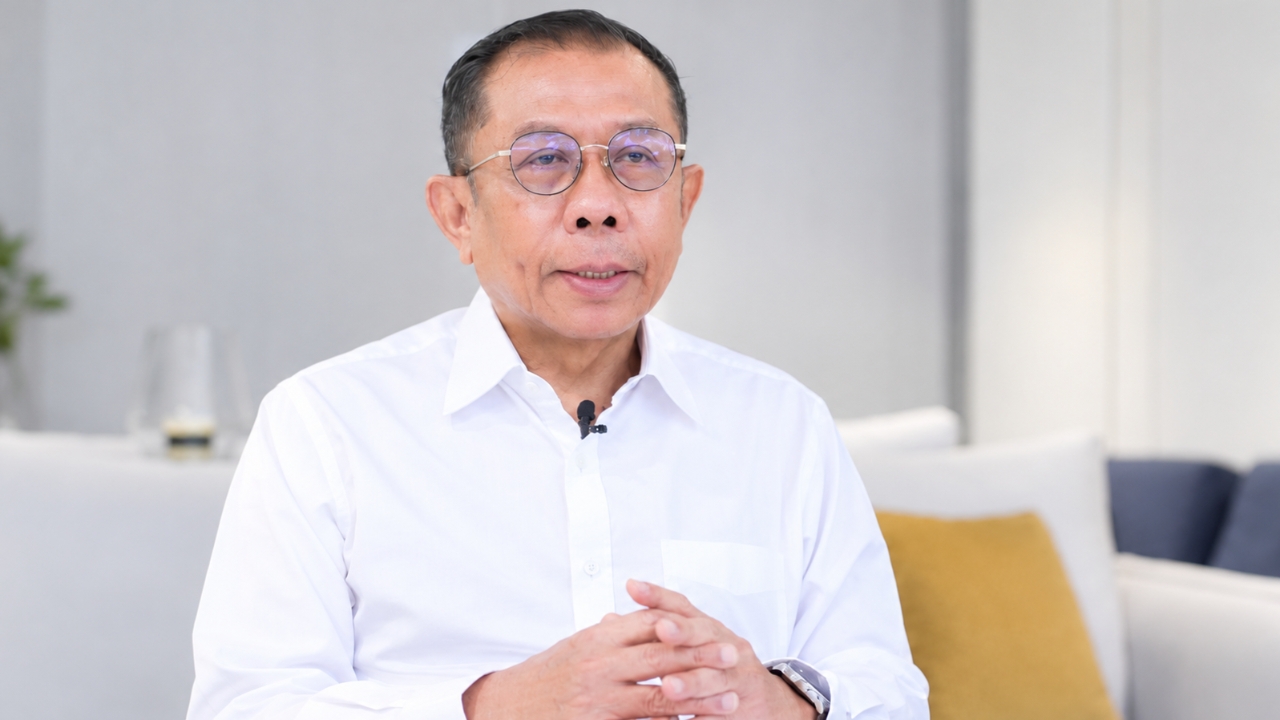
Supachai defends 'Idea MP,' criticizes Rom for arbitrarily using the Law Committee chair's authority, points out the MP's husband's case lacks power, warns of potential complaints, and rebukes Theng for confusing proposing legal amendments with domination in the Thai PBS issue.
At 09:40 today, 7 Oct 2026 GMT+7, at the Parliament, Mr. Supachai Jaisamut, party-list MP of Bhumjaithai Party and vice-chairman of the House's Committee on Law, Justice, and Human Rights, gave an interview before the committee meeting. He said he had sent a letter to Mr. Rangsiman Rome, party-list MP of the Move Forward Party and chairman of the Law Committee, asking him to reconsider the chair's use of authority in placing agenda items on the committee's meeting schedule without the consent of other committee members. He noted that several issues had been unilaterally added or submitted by others and then placed on the agenda, or even added without anyone submitting them, such as the case involving Ms. Suchada Sangtanthap, MP from Chaiyaphum for Bhumjaithai, which the committee has no jurisdiction or authority to handle. He also pointed out that the meeting dates and times had been changed from the committee's agreed schedule on Thursdays.
"Previously, meetings have been arranged arbitrarily on other days, neglecting that committee members have other commitments and meetings, causing many members to be unable to attend. Such use of power gives the impression that the committee belongs solely to the chairman, who is only one of 15 members. This abuse of the chair's authority has caused problems, such as in Ms. Suchada's case, where the committee has no jurisdiction or authority. If complaints about rule violations arise, all committee members could be implicated. Previously, there was discomfort and fear of the chairman, so we must dispel that fear and today we need answers on how to resolve this. Earlier, I also sent a letter to Mr. Sopon Sarum, Speaker of the House, to consider cases where the committee overlaps or duplicates work with other committees beyond its authority," said Supachai.
Supachai rebukes Theng to distinguish clearly between proposing legal amendments and dominating Thai PBS.
Mr. Supachai also responded to opposition leader Mr. Natthapong Ruangpanyawut's concerns about amending laws related to Thai PBS's revenue sources and three other funds, questioning whether this could lead to power consolidation or enable government control over public media. He said that questioning and oversight are opposition rights and that public media independence can be fully debated. However, as opposition leader and MP, he should distinguish between "proposing legal amendments" and "interfering with or dominating an organization," as these are different matters.
Mr. Supachai stated that Mr. Natthapong, as opposition leader and MP, should be well aware that Article 133 of the Constitution grants at least 20 MPs the right to propose bills to the House. If the bill concerns financial matters, it must have the Prime Minister's endorsement, as stipulated by the Constitution.
"When MPs believe the current law needs improvement—whether regarding revenue sources, budgeting systems, or oversight mechanisms—and propose amendments through parliamentary processes, that is the exercise of legislative power under the Constitution. It is not in itself evidence of attempting to seize or dominate any organization."
Mr. Supachai said that if the opposition finds the bill inappropriate or worries it might affect Thai PBS's independence, they can fully perform their roles by debating, questioning, scrutinizing, proposing changes, opposing, or even voting against it, as these are normal parliamentary mechanisms.
"Disagreeing means debating in Parliament. You can oppose, propose amendments, or vote against freely, but reasons must be presented. It is improper to jump from disagreement with a bill to concluding the proposers intend to dominate the media."
Mr. Supachai added that this bill concerns "methods of revenue acquisition," while the government clarified it does not change Thai PBS's management structure or board. The Prime Minister stated the matter must proceed through parliamentary procedures. If one claims domination, they must specify where domination occurs, who is issuing orders, or what structural or administrative changes have been made. Amending laws about revenue sources is not the same as controlling an organization's operations.
Mr. Supachai emphasized that opposition has the right to question and scrutinize public media independence, but debate should focus on the bill's content and actual impact, not hastily interpret intent based on constitutional rights. If the logic is that proposing amendments related to an organization equals dominating it, then one day when the opposition proposes changes affecting state or independent organizations, they too could be accused of trying to dominate those bodies.
Mr. Supachai said laws do not belong to any single organization, and the authority to amend laws does not reside with the organizations governed by those laws but with the legislature under the Constitution. Whether a law passes depends on parliamentary consideration, debate, and voting. Laws belong to Parliament, not any organization. Those who disagree can fully exercise their rights but must adhere to the same rules.
Mr. Supachai concluded that as opposition leader, Mr. Natthapong understands these principles well and should help maintain Parliament as a space for "proposing, amending, opposing, and debating" laws based on reasoned arguments. Democracy in Parliament does not mean everyone agrees but that all can exercise their rights under the same rules.