

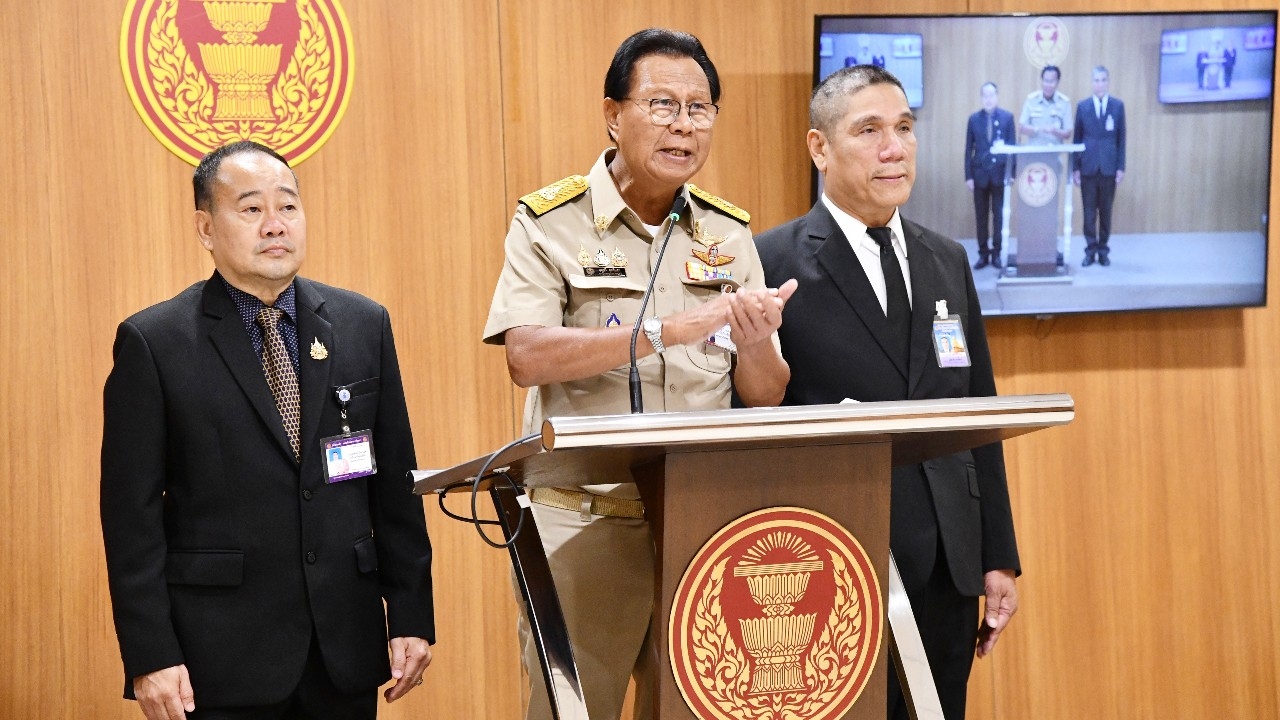
Boonrawi exposes grey capital groups using Thai nominees to buy monkey cheek land in several provinces, burying electronic waste and causing flooding impacts in multiple provinces. He urges the Prime Minister to stop praying and focus on urgently verifying the facts.
At 10:30 a.m. on 7 Oct 2026 GMT+7 at the Parliament, Mr. Boonrawi Yomjinda, party-list MP and leader of the Ruam Jai Thai Party, called on the government to promptly investigate grey capital groups acquiring land across several provinces. He said current flooding problems in many Thai provinces partly stem from the loss of monkey cheek areas designed to absorb floodwater. For example, in Bangkok, the Governor cut 95% of monkey cheek areas, such as the 130-rai Bueng Koo Bon and Bueng Bang Chan ponds, which is a management failure causing public hardship. He also received complaints nationwide that grey capital groups are using Thai nominees to rapidly buy land in central and eastern regions, including Rayong, Chonburi, Ayutthaya, Pathum Thani, and Prachinburi. Many of these lands have potential for monkey cheek development to address flooding under royal initiatives but are instead purchased by grey capital groups to build housing and covertly dump electronic waste, harming the environment and public quality of life. For instance, in Prachinburi, some floodwaters turned rainbow-colored due to electronic waste burial. In Rayong, Thai nominees for grey capital groups have bought 50-100 rai plots, then excavate pits 50 meters deep to illegally dump electronic waste, cover it with soil, and build factories on top to hide the activity.
Mr. Boonrawi urged the Prime Minister to urgently verify the facts and stop merely praying, as many areas bought by grey capital groups could be developed as monkey cheeks to manage floodwaters but are neglected by the government. Allowing grey capital land purchases impacts the nation's future. Therefore, strict investigation of land ownership is necessary to prevent the wrongdoers' interests from becoming environmental and flood burdens borne by the public in the future.