

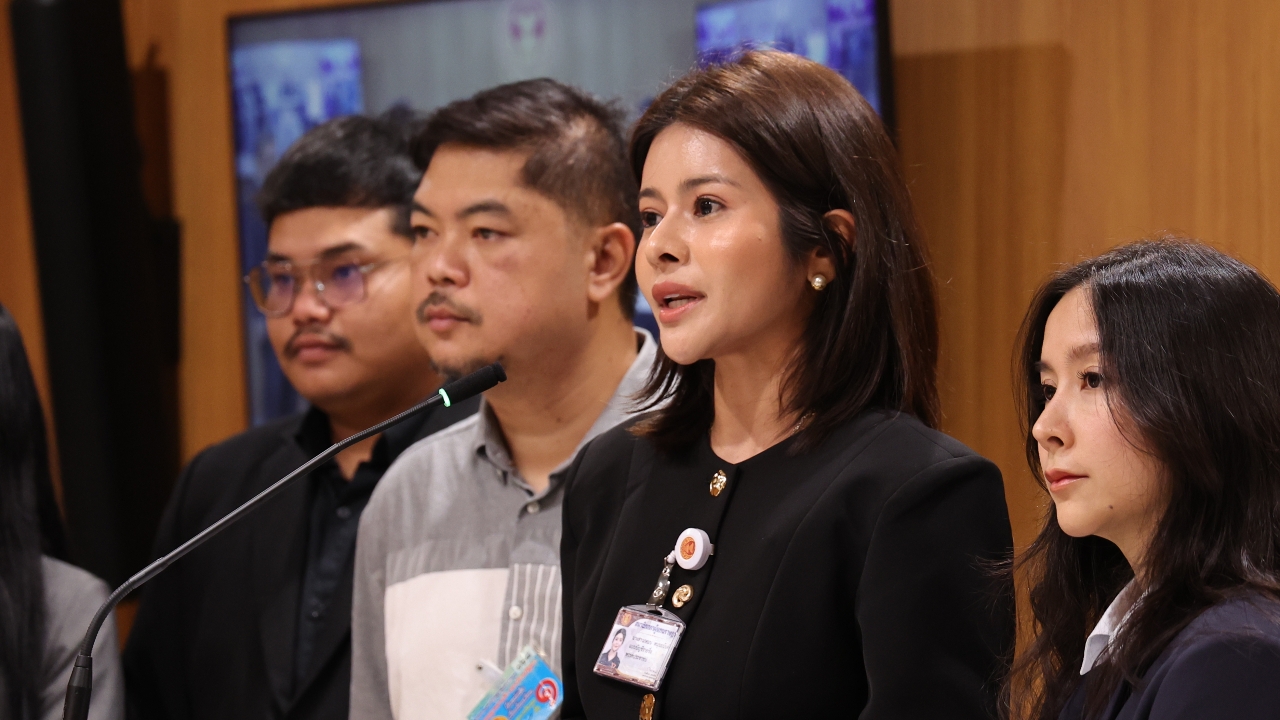
Lisa Phakaman, Chair of the Political Development Committee, received a letter from the Thai PBS Viewers Council and plans to invite the bill proposers to explain the change in revenue source from sin taxes, expressing concern over its impact on the independence of public media.
On 7 Oct 2026 at 13:00, Ms. Phakaman Nun-anun, Member of Parliament (MP) from the People's Party via party-list and Chair of the Committee on Political Development, Mass Communication, and Public Participation, received a letter at the press conference room, 1st floor, Parliament Building, from Mr. Nattawut Uppa, representative of the Thai PBS Viewers and Listeners Council (generations 1-7) and the Public Media Friends Network. The letter requested the committee to invite those involved with the draft Public Broadcasting Organization of Thailand Act (draft no. ..) B.E. .... to attend a meeting and clarify key points regarding the proposed change in Thai PBS's revenue source—from funds raised by levies on alcohol and tobacco taxes to funds from the annual government budget.
The draft Public Broadcasting Organization of Thailand Act (draft no. ..) B.E. ...., proposed by Supachai Jaisamut, party-list MP of Bhumjaithai Party, and colleagues, focuses on changing Thai PBS's revenue source by abolishing the levy collected by law from those liable for alcohol and tobacco taxes (sin taxes) and replacing it with funds from the annual government budget. The Thai PBS Viewers and Listeners Council (generations 1-7) and the Public Media Friends Network expressed concerns about the bill, highlighting several points for consideration.

1. The draft bill may conflict with the principles and intent of the 2008 Public Broadcasting Organization of Thailand Act, which established public media to promote citizens' rights and freedoms to access information, foster a democratic society, and emphasize serving the public interest, operating free from political bias and vested interests.
2. Shifting to an annual government budget system might undermine the guarantees for public media independence, including its role in presenting information and overseeing government power for the benefit of citizens and society. It could also open the door to interference through the budget approval process, potentially turning Thai PBS into a state-controlled media outlet.
The Thai PBS Viewers and Listeners Council and the Public Media Friends Network, representing citizens nationwide and involved in the development of public media established under the 2008 Public Broadcasting Organization Act, requested the committee to invite the MPs who proposed the draft bill to clarify the facts. They emphasized the bill's importance for the future of public media in Thailand, a collaboration of civil society sectors aimed at promoting citizens' rights to information and building a democratic society.

Ms. Phakaman stated that the committee will include this matter on the agenda for the meeting on 22 Oct 2026 to review it as the responsible committee. She emphasized that media should have rights and freedoms and that public media remains essential in Thailand, especially amid questions about government performance and corruption issues—a challenge for all media, not just public media. The committee's review will cover financial discipline and Thai PBS's future, noting past criticisms of budget efficiency. She believes Thai PBS should be given the opportunity to explain its necessity as public media and demonstrate budget efficiency, as relying solely on oversight by the Viewers and Listeners Council may be insufficient for accountability.
Additionally, the People's Party plans to introduce a companion bill when Supachai's draft is considered by parliament, continuing efforts from the previous parliamentary session. This bill aims to enable Thai PBS to operate and sustain itself as an independent public media organization, including amending the Public Broadcasting Organization of Thailand Act (draft no. ..) B.E. .... to allow Thai PBS to generate income independently from its intellectual property. The committee will discuss Thai PBS's future, addressing its weaknesses, strengths, and advantages to develop Thailand's public media to operate independently and free from domination.