

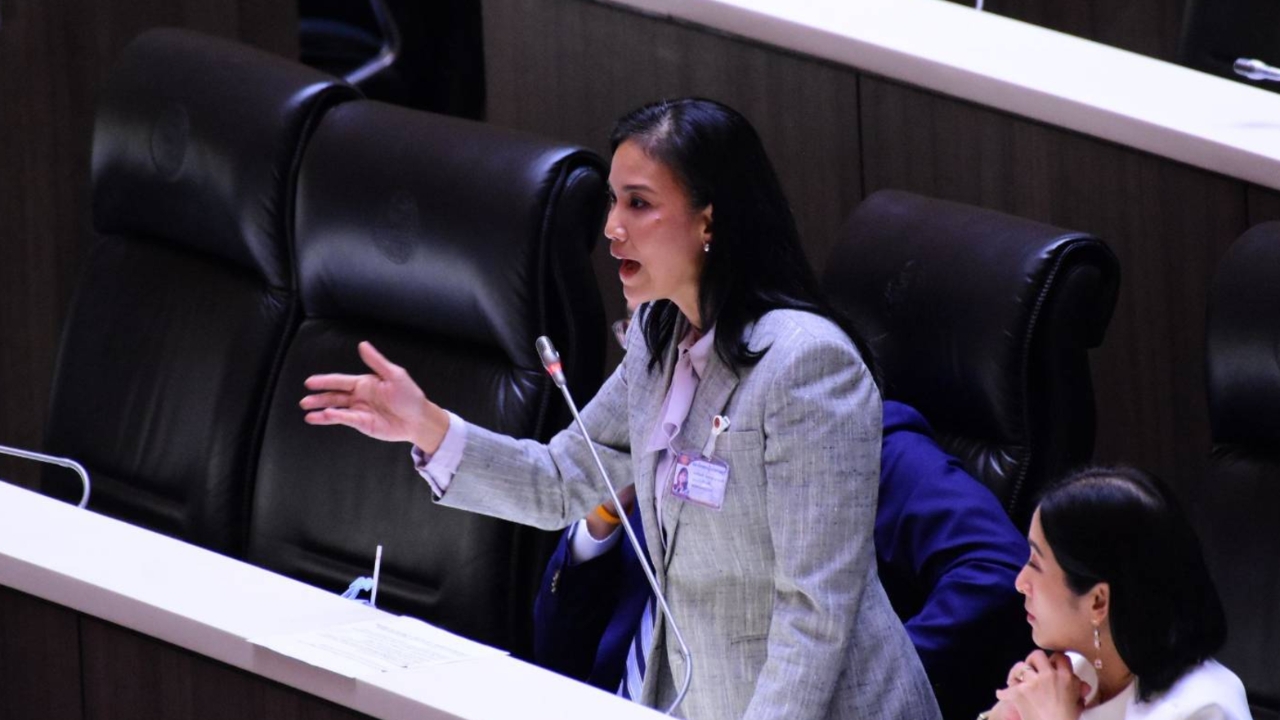
Radklao strongly questioned whether the government would have known about the issues without prominent media attention, insisting the government must proactively uncover problems rather than wait for news reports. She called for an investigation into corruption at Sothornchai Nursing Home, where elderly residents suffer amid tears.
On 8 Oct 2026 GMT+7, Radklao Intarawong Suwankiri, party-list MP and deputy leader of the Democrat Party, addressed parliament through the Speaker to the Prime Minister regarding Sothornchai Nursing Home. Complaints had arisen about elder care there, including confinement, use of metal cages, and living conditions potentially violating the dignity and rights of elderly residents. She urged the government to promptly and systematically verify the facts.
Radklao said the bigger question than just fixing the immediate problem is whether the government has mechanisms to discover such issues on its own without media exposure. The government must act proactively rather than wait for news to surface. She proposed forming a multidisciplinary team to visit elderly care facilities and privately speak with residents without owners or caregivers present, so the elderly can safely speak the truth and the government can hear voices that might otherwise go unheard.
She also questioned the oversight system: who last inspected the facility before the issue became public, and how previous inspections failed to detect the problems? She emphasized that even if residents have mental health issues or risks of falling from beds, care methods must be appropriate and respect human dignity, such as providing suitable and safe bedding—not using excessive measures that infringe on elderly rights.
"I want a serious investigation into what happened in the oversight process—whether there was negligence or conflicts of interest involved in caring for dependent elderly people. We must not allow their suffering to become a channel for profiteering," she said.
Radklao added that this case highlights the need for laws to prevent and address domestic violence, which Thailand is currently considering, especially violence rooted in economic hardship and family vulnerability. It shows domestic violence is not only physical abuse but also linked to economic dependence and control within families. This underscores why laws must keep pace with current forms of social violence.
Solving this problem cannot be left to a single agency; it requires cooperation among the Ministry of Social Development and Human Security, the Royal Thai Police, the Ministry of Public Health, and local governments. This collaboration should cover risk detection, protection, treatment, prosecution, and post-incident follow-up in a connected system. She appealed to the Prime Minister through the Speaker to push the government to ensure all ministries work seriously because those in care facilities or dependent families often lack sufficient voice to protect themselves.
"Regardless of who the perpetrator is—even if a child—if wrongdoing occurs, it must enter the justice process. Forgiveness from victims should not erase legal responsibility. The state's duty is to protect the dignity and safety of all citizens, especially dependent elderly people. We should not wait until elderly people have to complain through the media before the government hears their voices."