

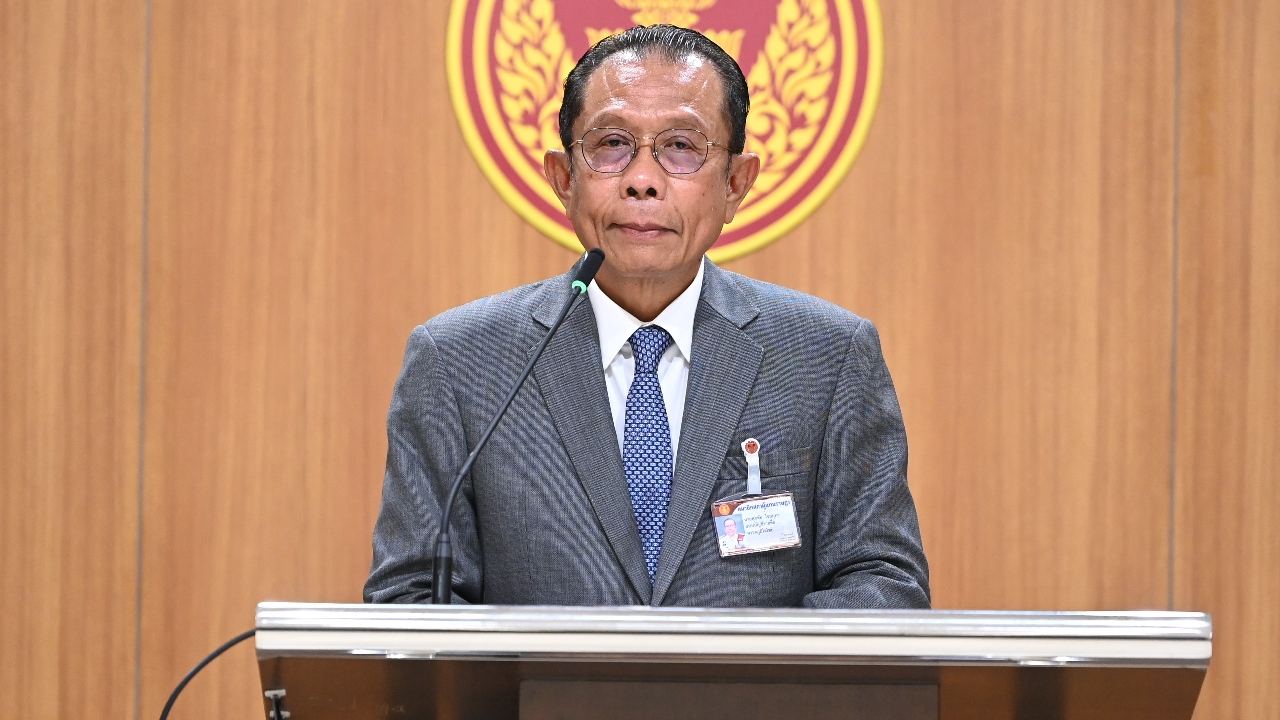
Supachai criticized Rom for his hunger for power, calling it "Entertainmentocracy," and warned that the parliament is not his personal home. He urged against abusing authority by issuing orders summoning the Prime Minister and MPs to explain matters, describing such actions as bypassing proper procedures and overstepping authority.
On 8 Oct 2026 GMT+7, Supachai Jaisamut, party-list MP from Bhumjaithai and Deputy Chair of the Parliamentary Committee on Law, Justice and Human Rights, held an urgent press conference. He said the agenda concerned corruption in local examinations, with an order issued to summon the Prime Minister to explain before the committee. The Prime Minister assigned the Deputy Secretary-General for Administration to notify the parliamentary speaker and committee chair that the summons exceeded the authority and duty granted.
Six government coalition committee members and some opposition members resolved that the committee chair's conduct might violate parliamentary rules. They therefore boycotted the meeting, citing improper procedure by the chair. Although there was an attempt to issue a summons for the Prime Minister, the committee lacked a quorum—fewer than half the members were present per the rules—so no resolution could be passed. Despite this, the chair tried to present it as a consensus among opposition parties. Supachai expects the parliamentary speaker to act on the Prime Minister's letter.
Comparing to past practices, committee reviews were collaborative among all parties. Now, with the chair from an opposition party, there is a crisis due to failure to follow proper parliamentary rules. The majority committee members plan to write to the parliamentary speaker to urgently resolve this issue. If the chair exceeds legal limits, it will negatively affect the committee's work, the public, and parliament itself.
Supachai added that the committee must assess whether issues fall within its jurisdiction or overlap with other committees. This principle must be followed. The media has observed the same matters repeatedly examined by multiple committees, with the same witnesses summoned again and again.
“The intention is political gain—what people call ‘Entertainmentocracy.’ If this continues, parliament should not become a tool for any political faction to exploit the committee. The work must be brought back to proper parliamentary rules,” Supachai said.
Supachai noted that summoning orders can be issued if legal procedures are followed, based on whether the issuer has authority over the matter. For example, cases involving Ms. Suchada Sang Tanthap, Bhumjaithai MP for Chaiyaphum, and others are unrelated to the Law Committee and were added by the chair personally. Therefore, rules must be reviewed to ensure proper procedure so work for the public can continue.
Most committees have a government majority, but the Law Committee is distorted in this regard due to some members’ personal reasons. If an issue is truly important, the government side would not oppose it. Decisions require consensus and transparent adherence to rules without hidden agendas. Currently, the agenda openly seeks to politicize the committee’s work.
Asked about accusations of protecting the Prime Minister, Supachai said, “It’s unrelated. The Prime Minister is ready to attend and has no problem. Similarly, Minister Chaiyachon Chidchob of the Digital Economy and Society Ministry and Deputy Minister Worasit Liangprasit of the Interior Ministry are willing to come. However, within the committee, other issues are raised, and the chair holds separate press conferences, which is improper under the rules. If the chair returns to proper procedures, there will be no problem. But if the current Entertainmentocracy approach continues, we will use the rules to address it, although we prefer not to reach that point.”
When asked if the problem lies with Rom, party-list MP from the Move Forward Party and committee chair, Supachai said, “From what has appeared, yes. But if he performs his duties honestly, the committee can return to a warm and cooperative atmosphere. Right now, it’s not cold but hot—I don’t want it to get hotter.”
Regarding whether personal reconciliation is needed to move forward, Supachai said, “Having been a committee chair myself, the common principle is that the chair is not an authority figure—everyone is equal. This parliament house is not the chair’s personal home, nor is there any special privilege. The chair must act honestly, recognizing the chair’s seat is symbolic. If the chair treats it as personal property, controlling who speaks or silencing dissent, or expelling members, that is wrong. If we return to the previous respectful state, that’s fine. Personally, I have no issues with Rom—we greet each other politely. I urge him to act kindly within the law and rules.”