

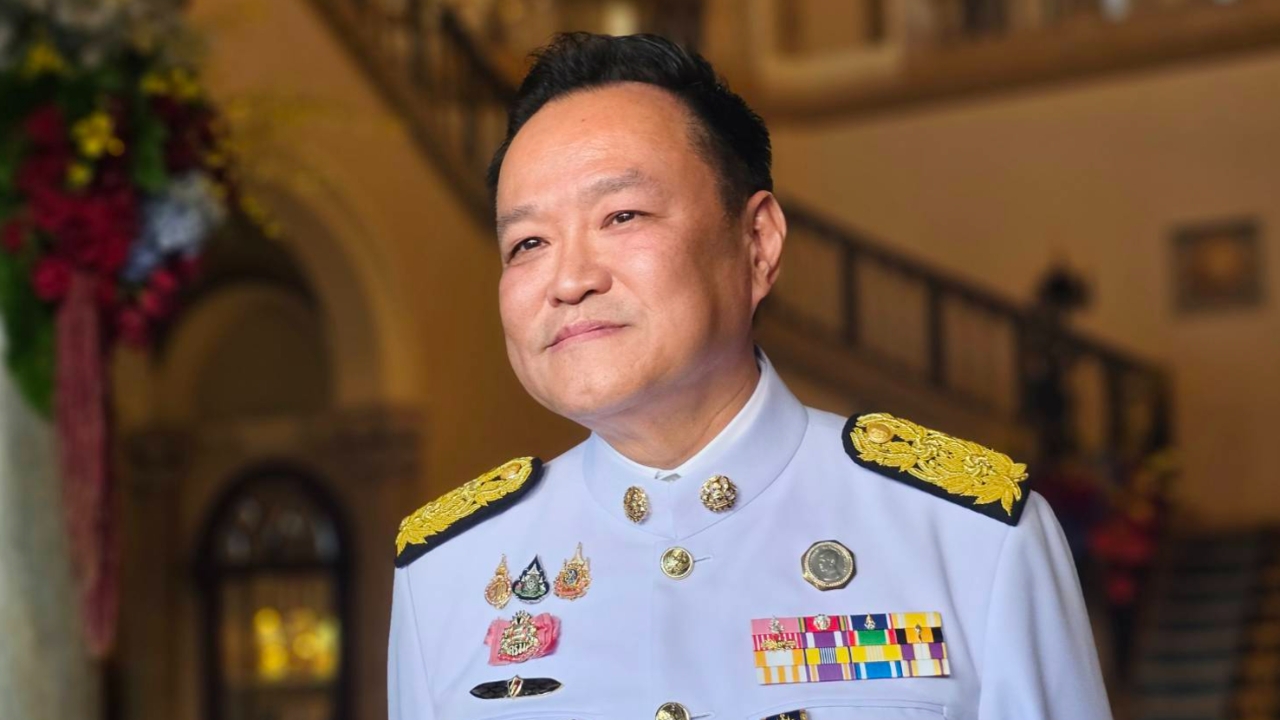
The Prime Minister clarified the transfer order of the Ban Sang District Chief, stating no investigation committee was established. He said the official had been in the same position for five years and urged to move on. He trusted the Prachinburi provincial commander who said the officer was ineffective. He asserted there was no harassment or political motive and disregarded the former Interior Permanent Secretary's opinion.
At 17:00 on 8 Oct 2026 GMT+7, Prime Minister and Minister of Interior Anutin Charnvirakul gave an interview at the Government House regarding the social media controversy about the Department of Provincial Administration's order to transfer Mr. Setthawut Wonglerwut, Ban Sang District Chief, in Prachinburi Province on 7 Oct. When asked about the matter, the Prime Minister pointed to Mr. Assisit Sampanrat, Permanent Secretary of the Ministry of Interior, standing behind him, and said, “Please ask the person standing behind.”
The Prime Minister continued that he did not order the transfer. The transfer was decided by Mr. Naruecha Kosasivilai, Director-General of the Department of Provincial Administration, and the Permanent Secretary of the Ministry of Interior. That morning, a meeting was held. Currently, provinces declared as disaster zones must have a situation commander according to the law, similar to the emergency law. Just as during martial law the military commander is the highest authority, in disaster situations the provincial governor acts as the situation commander. Thus, the highest authority lies with the governor who can issue orders, transfers, or report on all personnel under their jurisdiction. In this case, the Prachinburi governor requested the Director-General of the Department of Provincial Administration to transfer this district chief, which was considered appropriately.
“There was no time to establish an investigation committee. It is an emergency disaster situation requiring immediate integrated cooperation. I instructed the Permanent Secretary of the Ministry of Interior to verify if the governor's claims are true. If not, the position must be restored. The Permanent Secretary explained to me that the official had been in the same post for five years, exceeding the normal term since last year. Since the governor requested personnel reassignment, the transfer to another district and position swap occurred. There was no damage caused; he remains a senior administrator. This matter should be concluded with no further issues.”
When asked if the Director-General of the Department of Provincial Administration should explain due to the social media criticism, the Prime Minister replied that it was unnecessary. The matter falls within the authority of the Director-General and the transfer order was signed by the Permanent Secretary of the Ministry of Interior, without Cabinet involvement. It is under the supervision of the Permanent Secretary, the head of the civil service.
When asked about villagers saying the district chief was active in the field, while the Prime Minister said he was not, Anutin said he must trust the governor’s official report, noting it was time for the transfer as per senior management reports in the Ministry of Interior meeting.
“There is no issue. The important thing is not to let work suffer. Now, efforts focus on flood relief in several provinces where water has not yet receded—almost all provinces except Chachoengsao and Nakhon Nayok. It is better to spend time fixing the problem quickly. Support is being mobilized specifically to those points. Everything should be in order. The governor is the commander in solving problems. So if the commander says this officer is ineffective, we must trust the commander according to administrative principles.”
Regarding former Interior Permanent Secretary Sutthipong Juljarern’s comment that the transfer was inappropriate, the Prime Minister said he expressed a personal opinion as a citizen, no longer holding the position for two years. He has the right to his views but they are irrelevant to government administration. The key issue remains the Prachinburi provincial disaster director’s decision to reject this officer and request a replacement.
“During the Ban Sang flood, while water elsewhere has receded, here it remains at neck level. I will not wait around asking questions. I asked the Permanent Secretary and the Director-General what was done. As the national Disaster Prevention and Mitigation Commander, I must trust the highest authority in the area. Don’t overthink it. There is no political issue or harassment. What benefit would I gain by harassing a district chief?”
“I am familiar with Prachinburi Province. All three Bhumjaithai party MPs won elections there. There is no reason for me to harass or show dominance. On the contrary, I must do everything possible to help the people effectively. I admire the Prachinburi Provincial Administrative Organization chief who works diligently and cooperates fully with the governor. He knows everything and solves almost every problem efficiently. Therefore, we are accelerating all efforts to assist the people as quickly as possible.”
When asked again if the Prime Minister was confident in his firm statements at the meeting and whether investigations were complete, Anutin said the governor is the disaster situation commander and thus the 'commander.' If the commander says the officer cannot perform, we must trust the commander first. As stated, no punishment is involved; this is a position swap. The district chief remains in office, and both the Permanent Secretary and Director-General have managed the reassignment and reported to me. They need not report to me as it is under ministry responsibility. We should not rely on past examples; they are unrelated to current government administration.”
