

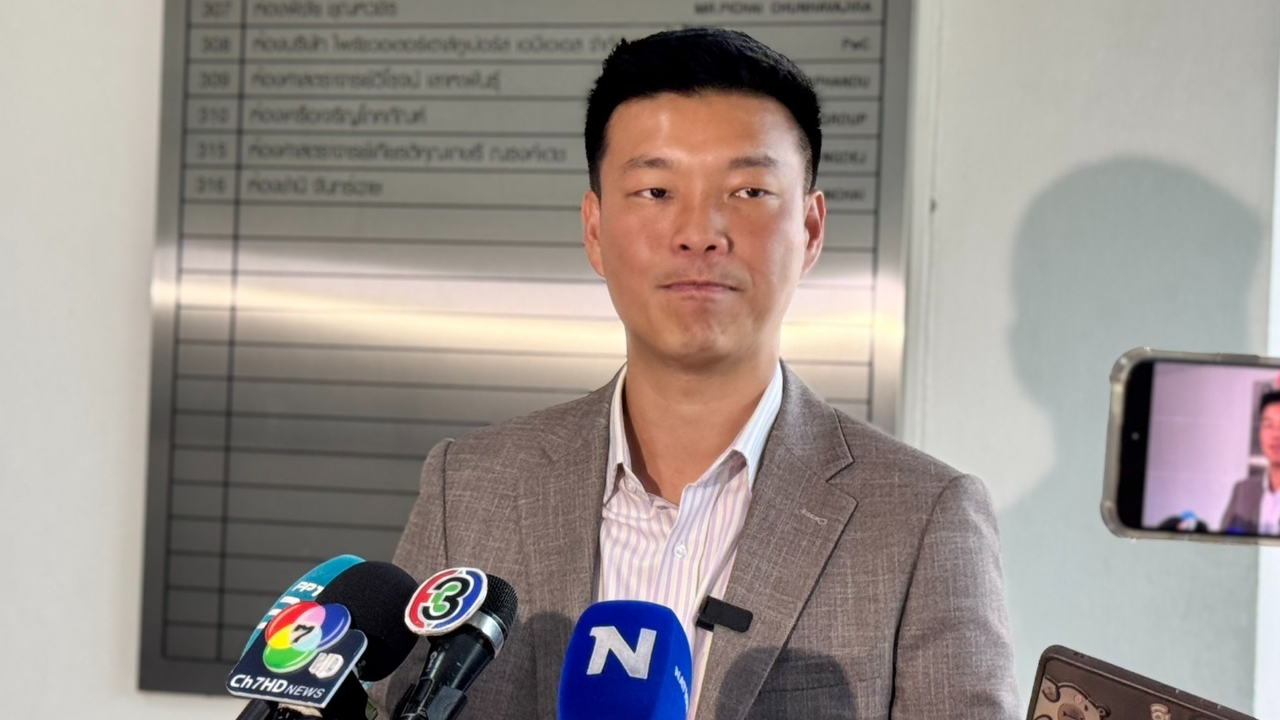
"Teng" insists that a five-day opposition interrogation is appropriate, countering claims that the impeachment motion is political theater, and is confident that receipts to prosecute ministers have already been submitted.
At 13:30 on 9 Oct 2026 GMT+7, at Thammasat University, Tha Prachan campus, Nattapong Ruangpanyawut, leader of the Pa-chan Party and opposition leader in the House of Representatives, spoke about submitting a no-confidence motion against the government under constitutional Section 151. He said he is waiting for the House Speaker to consider scheduling the motion, expecting it to be included by the end of October. He anticipates at least five days of debate due to the large number of ministers involved. Compared to previous governments under former Prime Ministers Prayut Chan-o-cha and Paetongtarn Shinawatra, debating 18 ministers over five days is reasonable.
When asked about the government's suggestion to reduce the debate to three days, Nattapong said it is not a bargaining tactic like haggling over a sale but should be based on facts. Given the numerous allegations and number of ministers named, the time allocated should be appropriate and consistent with the ministers under scrutiny.
Rebutting claims that the impeachment motion is political theater.
When asked about several ministers calling the motion political theater and disconnected from reality, Nattapong said he believes the submission is not for entertainment. He urged waiting to see the motion enter parliament and to hear the ministers’ responses and explanations first. When asked if the allegations, such as being hypocritical or having a corrupt mind, resemble theatrical performance, he said these are accusations. Every no-confidence debate questions the government’s performance. Often, credible evidence suggests corruption or failed administration, though this does not necessarily mean there is conclusive proof to prosecute the government fully. However, legal actions often arise from parliamentary proceedings.
Boasts of having receipts to prosecute ministers already.
Asked whether the debate will include receipts to prosecute each minister, Nattapong said there are such receipts. Following judicial standards, no-confidence debates use different criteria because accountability is key. For example, in the Senate selection process, official procedures might produce results that contradict public expectations. But when combining related information, it becomes clear that collusion occurred. Therefore, the opposition sees this as the proper venue to interrogate the government on these issues. When asked about the government's apparent lack of concern and mocking if the opposition has any evidence, Nattapong expressed confidence that Pa-chan Party MPs have done their homework. It is normal for the government side to assert their innocence. Although the opposition expects limited parliamentary votes, they hope to expose information for the public to judge politicians.
No ministers from Pheu Thai Party included due to lack of evidence.
When asked if the Kla Tham Party will request time to debate, Nattapong said Kla Tham is no longer part of the opposition coalition, so it remains to be seen how they will vote on the no-confidence motion. Regarding the absence of any Pheu Thai Party ministers in the list, Nattapong said the opposition selected names based on evidence. The list emerged from coalition parties collectively proposing ministers and issues for consideration. After gathering input from all parties, only these 18 ministers were named. Similarly, Bunthida Somchai, Deputy Minister of Digital Economy and Society, was not included despite allegations that she mentored Chaiyachon Chidchob, Minister of Digital Economy and Society, and involvement in the Senate collusion case. He emphasized that all names were chosen based on evidence and proposals from coalition parties. He personally does not want the focus to target one specific issue because if there is a narrow scope, not all names can be addressed.