

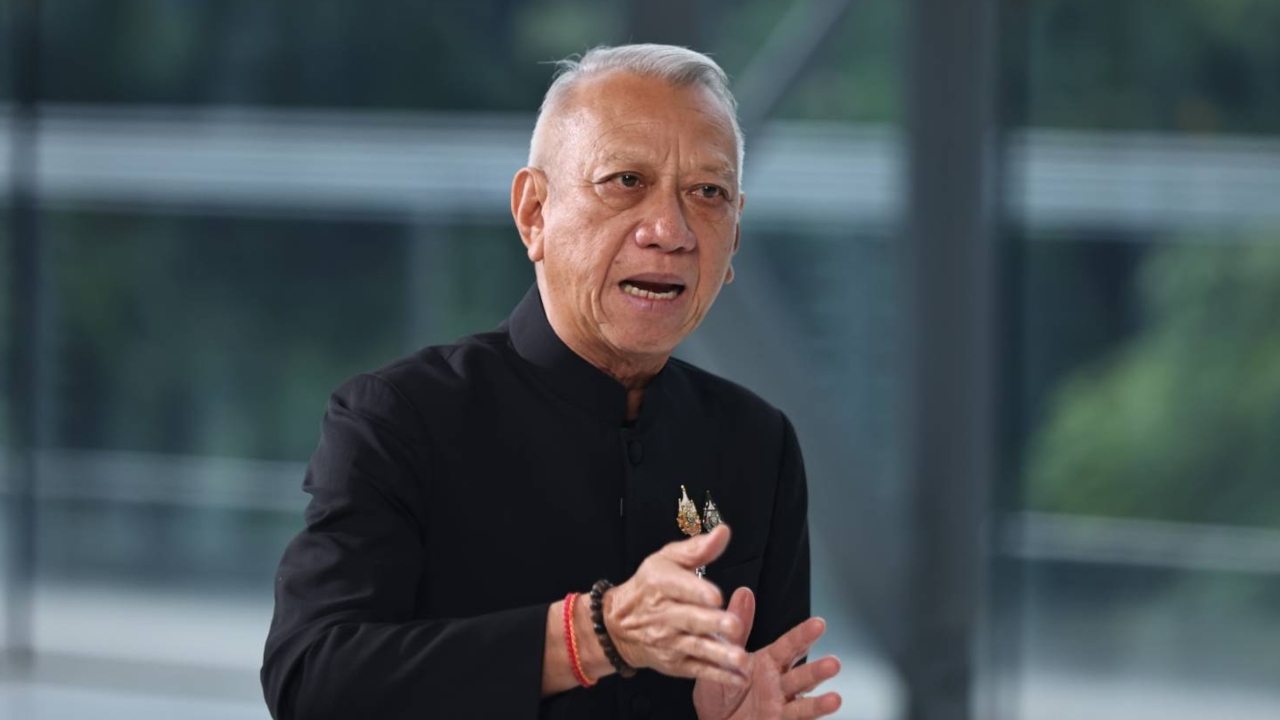
“Phiphat” unveils plan to reduce living costs for Bangkok residents starting 1 Jan 2027, with BTS entry fare set at 17 baht and maximum fare capped at 45 baht per trip. Buses will be converted to EVs totaling 2,320 units, and existing buses will be repurposed as feeder services, aiming to provide convenient travel within a unified system.
At 09:05 on 10 October 2026 GMT+7, Deputy Prime Minister and Minister of Transport Phiphat Ratchakitprakarn revealed on the program “Talk with the Cabinet and Anutin ” that the government is preparing to launch a unified ticketing system for Bangkok and its vicinity's BTS rail starting 1 January 2027, to make connecting travel easier and reduce transportation costs for the public.
The key feature of the new system is an initial entry fare of 17 baht and a maximum fare of 45 baht per trip. Even if passengers transfer across multiple BTS lines, they will not pay multiple entry fees. The Mass Rapid Transit Authority of Thailand (MRTA) will manage the central system.
Phiphat added that the unified ticketing system will support payments via EMV, the international standard payment cards, allowing foreign tourists to use compatible cards to access BTS services directly. Krungthai Bank will manage the back-end system and calculate fares among service providers.

Currently, the priority is to integrate the Green Line, which now uses Rabbit cards. The Ministry of Transport is negotiating how to connect it to the EMV system by 1 January 2027, as the Green Line is the main hub linking other key lines such as Purple, Blue, and future routes.
Travel costs are a significant expense for many Bangkok residents, some paying 60 to over 100 baht daily. Setting a maximum fare of 45 baht per trip is intended as a direct cost-saving measure, leaving more money in people's pockets. The Ministry expects lower fares and easier transfers will encourage more public transport use, reducing cars on roads, easing congestion in Bangkok and its vicinity, and lessening environmental impacts.
Phiphat also disclosed changes regarding BMTA buses: In 2027, 1,520 electric buses will be received between March and May, with another 800 buses arriving by late December, totaling 2,320 units. The goal is to have all BMTA buses converted to electric by the end of 2027.
These new EV buses will be fully air-conditioned, wheelchair accessible with ramps, and offer a 50% fare discount for seniors, students, with free rides for children under 7.

Additionally, the Ministry plans to revise bus routes to better match the evolving city and communities, replacing many old routes. Buses will serve as feeders, bringing passengers from neighborhoods and main roads to BTS stations. Frequency standards will be set to determine how often buses should arrive on each route.
The Ministry’s goal extends beyond buses and BTS trains to integrate seamless travel by water, road, and rail. Smart Pier development aims to complete 16 of 29 piers by Q4 2027, allowing those ready to connect immediately to the unified ticketing system.
Furthermore, the Khlong Saen Saeb boat service will join the system to ease transfers between boats, buses, and BTS, eliminating the need for multiple tickets or payment methods, making seamless travel tangible in 2027.
Regarding safety, the State Railway of Thailand (SRT) plans to progressively eliminate level crossings in inner Bangkok by elevating railway tracks and routing vehicles and buses underneath, reducing risks. The target is to complete this within six to ten years.

Phiphat also mentioned improving national logistics efficiency: the Ministry has been tasked with restructuring freight transport to rely primarily on rail for long-distance routes across northern, northeastern, central, and southern regions, while trucks will serve as feeders for distances under 150 km from factories or industrial zones to rail stations, reducing long-haul truck traffic on major roads.
The network will link double-track lines from Nong Khai through the northeast to Laem Chabang, connect the north, and expand double tracks in the south from Chumphon–Surat Thani–Hat Yai to Padang Besar, linking to Malaysia’s rail system and enabling direct freight transport to Singapore. The goal is to increase interregional and international freight options, lower costs, and reduce road burdens.
At the end, Phiphat said that with rail as the main transport backbone, road space will be freed for private vehicles, especially on main highways. Thailand’s advantageous location between the Pacific and Indian Oceans is prompting studies to enhance maritime transport capacity and discussions with the private sector about additional deep-sea ports on the Gulf of Thailand.
“The big picture for transport development is not just building BTS lines or buying new vehicles, but enabling people to travel conveniently from home by bus, train, or boat within an integrated system, reducing expenses, travel time, and long-term pollution from transport,” Phiphat concluded.
