

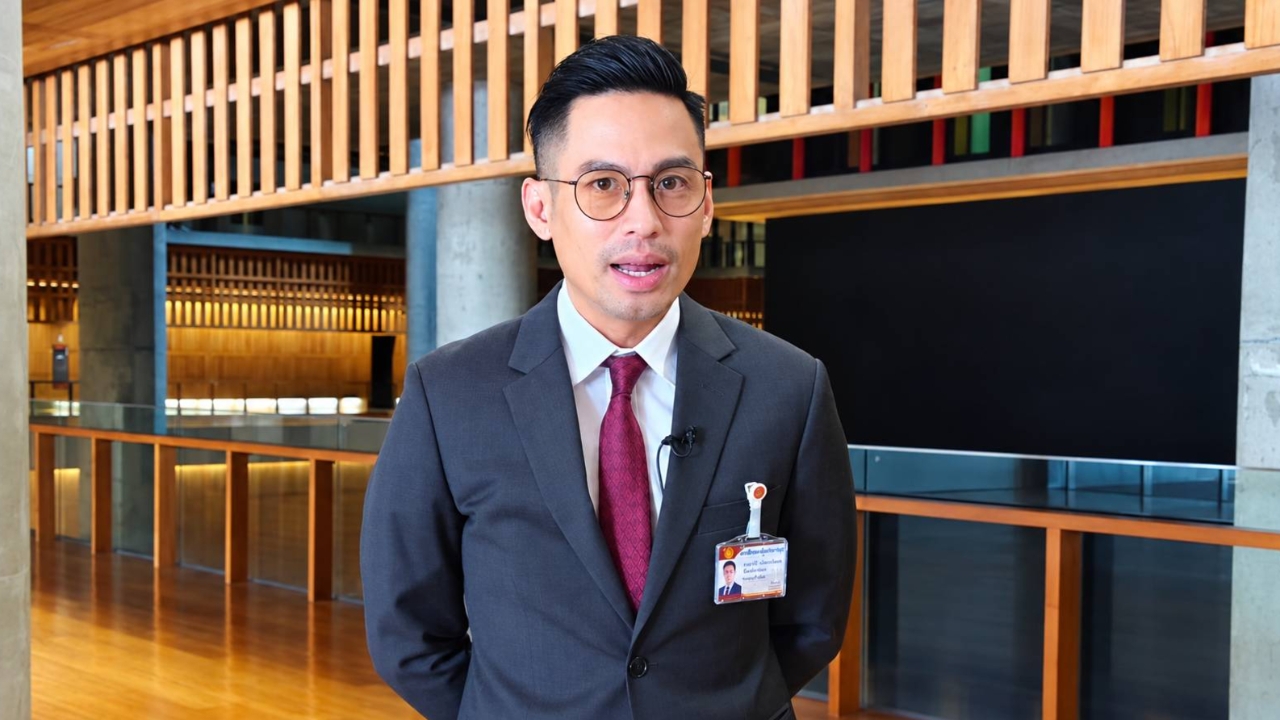
Kravit, Ang Thong MP from Bhumjaithai Party, proudly supports moving forward with the mega project of the Chai Nat-Pa Sak-Gulf of Thailand drainage canal to divert water to the sea, a crucial key to sustainably reducing flood and drought risks.
On 10 October 2026, Mr. Kravit Prisanantakul, Ang Thong MP from the Bhumjaithai Party and government whip chairman, revealed that the Cabinet under Prime Minister and Interior Minister Anutin Charnvirakul has approved the Chai Nat-Pa Sak-Gulf of Thailand drainage canal project. He said this project is a large-scale, long-term infrastructure initiative that several governments have jointly pushed and planned continuously until this administration brought it forward for Cabinet approval.
Mr. Kravit stated that if the project proceeds as planned, it will significantly enhance the ability to divert water and ease the drainage burden from the Chao Phraya River. Currently, during flood seasons, upstream water often flows directly into the Chao Phraya, causing prolonged impacts on the central plains, especially in Chai Nat, Sing Buri, Ang Thong, Phra Nakhon Si Ayutthaya, Pathum Thani, Nonthaburi, and Bangkok. Under normal conditions, the Chao Phraya Dam can handle a maximum outflow of 2,500 cubic meters per second, but the existing canals can only drain about 200 cubic meters per second.
He added that with the new drainage canal system, the capacity to divert water from the Chao Phraya will increase by about 800 cubic meters per second, diverting water away from the direct downstream flow toward the sea through the Gulf of Thailand. This will reduce the water volume entering the lower Chao Phraya to just 1,000 cubic meters per second, greatly minimizing damage to economic and agricultural areas.
Mr. Kravit further explained that the project involves digging a new canal parallel to the Chao Phraya River, starting from upstream areas like Chai Nat, Sing Buri, Lop Buri, and Nakhon Nayok, then cutting straight out to the Gulf of Thailand. Besides optimizing flood management and mitigation, during dry seasons the canal will also serve as a water reserve route to support agriculture along its course.
He said the project will require about 7-8 years to complete due to its large scale, high budget needs, and the necessity of conducting an Environmental Impact Assessment (EIA) and public hearings to gather local opinions. However, he is confident that once the government communicates the long-term benefits clearly, this project will be a key to elevating Thailand's water management standards for greater security.