

The government will hold the IMF–World Bank meeting as a Green Meeting, using 320 electric vehicles (EVs) to reduce greenhouse gas emissions by an estimated 95.8 tons. It will also manage food waste, reduce plastics and paper use, and build on educational cooperation to create job opportunities for Thai youth.
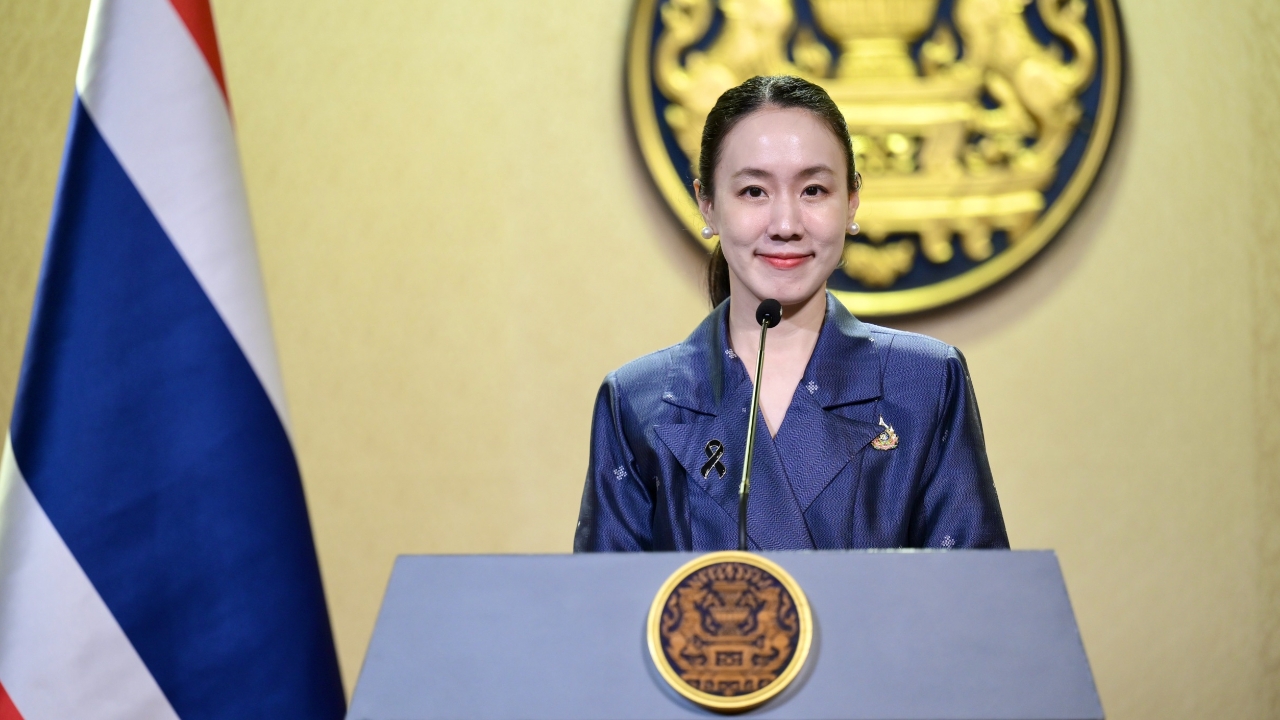
On 10 October 2026, Ms. Lalida Pertwivatana, Deputy Spokesperson of the Prime Minister’s Office, announced that the government is preparing to host the 2026 IMF–World Bank Annual Meetings from 12 to 18 October 2026 at the Queen Sirikit National Convention Center in Bangkok. The event will follow environmentally friendly (Green Meeting) guidelines. The Ministry of Finance, together with the Bank of Thailand and related agencies, has established concrete environmental measures, including using over 320 electric vehicles for participant transportation, managing food waste, reducing single-use plastics, and adopting digital systems to cut paper usage.
Ms. Lalida stated that for transportation measures, over 320 electric vehicles (EVs) have been arranged to shuttle participants, which is expected to reduce greenhouse gas emissions by more than 95.8 tons of carbon dioxide equivalent. This figure is an estimated reduction from EV use, not a measured result after the event or the total greenhouse gas reduction from the meeting.
Additionally, food waste from the meetings and banquets will be processed into organic fertilizer to reduce waste and make efficient use of resources. Efforts also include cutting down single-use plastics at banquets and using digital meeting systems instead of paper documents to lessen resource consumption and waste throughout the event.
The Deputy Spokesperson said these measures reflect the government's approach to applying sustainable development principles to international events. The aim is not only to discuss green economics at the meeting but also to minimize environmental impact in practice, from transportation and food management to digital technology use.
The government intends for this IMF–World Bank meeting to serve as an example of environmentally conscious international event management, with measures that can be applied to future large-scale activities in Thailand, focusing on resource savings, waste reduction, and tangible greenhouse gas emission cuts.
Using the World Bank–IMF platform to expand educational cooperation and create job opportunities for Thai youth.
Meanwhile, Second Lieutenant Phatdarasmi Thongsaluaykorn, Deputy Spokesperson of the Prime Minister’s Office, revealed that Thailand is preparing to welcome participants to the 2026 IMF–World Bank Group Annual Meetings from 12 to 18 October 2026 in Bangkok. The government emphasizes leveraging international cooperation to drive national development, especially in education and human capital, which are key foundations for long-term economic growth.
The Deputy Spokesperson stated this meeting is a vital opportunity for Thailand to exchange knowledge and experiences with other countries and to further cooperation with the World Bank in workforce development to meet economic and labor market changes. The Ministry of Education is advancing collaboration with the Equitable Education Fund and the World Bank under a five-year memorandum of understanding (MOU) to enhance vocational education, improve teacher capacity, and expand educational opportunities for all youth.
This cooperation uses the Office of the Vocational Education Commission as a key mechanism to connect development efforts to vocational schools nationwide, aiming to equip learners with skills aligned with labor market demands, including professional expertise, critical thinking, problem-solving, and digital technology use. The Equitable Education Fund supports expanding opportunities for youth from low-income families, vulnerable groups, and remote areas, while the World Bank provides global knowledge and experience to adapt to Thailand’s educational context.
The Deputy Spokesperson said the government prioritizes turning international cooperation into tangible development benefits for citizens, especially in vocational education, which is a crucial pathway to skill development and job opportunities. The Ministry of Education plays a role in encouraging schools to develop curricula and teaching methods aligned with the working world and supports teachers in effectively imparting essential knowledge and skills to learners.
“The IMF–World Bank meeting in Thailand is not only a global economic discussion forum but also an opportunity to expand cooperation to develop the Thai people. The government prioritizes education because the skills of the population form the foundation of national competitiveness, especially enabling youth to access quality learning, acquire skills demanded by the labor market, and apply knowledge to build careers and incomes for themselves and their families,” said the Deputy Spokesperson.
The government is coordinating with relevant agencies and international partners to make this meeting a platform for knowledge exchange and to expand continuous cooperation in national development, aiming for education and human resource development to benefit the population broadly and support Thailand’s long-term economic growth.